
Genetic Clues to History
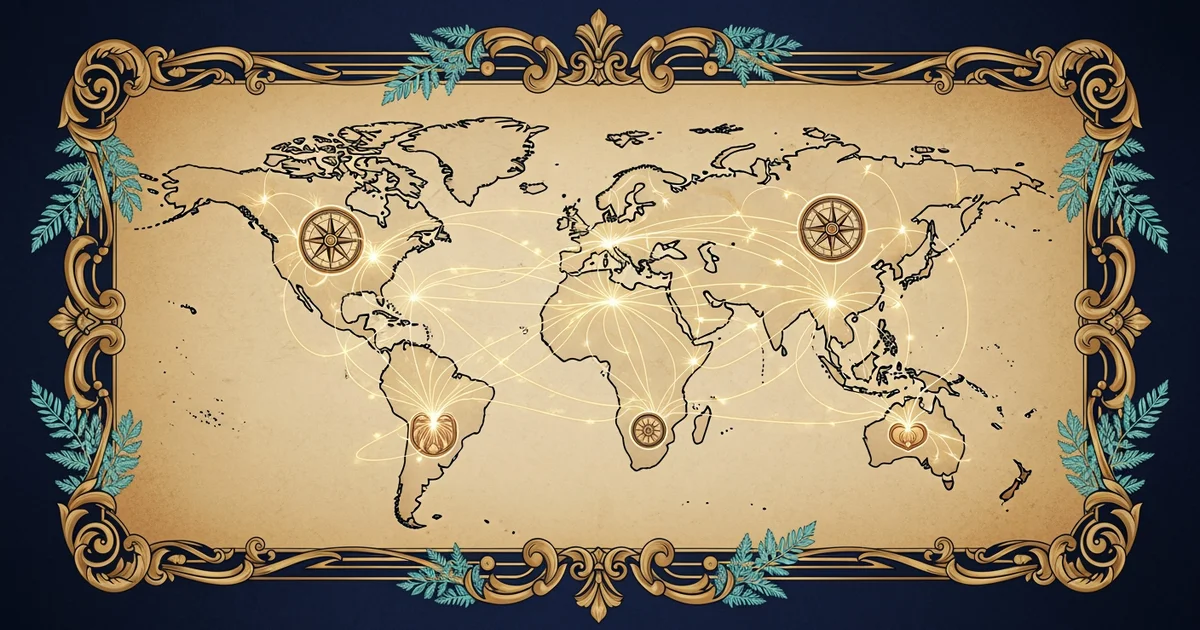
Imagine your family tree as a giant, sprawling map that stretches back thousands of years across the globe. You might know your grandparents or great-grandparents, but the full story of your ancestors is written directly into your own cells. Every person carries a unique biological record that acts like a compass, pointing toward the places where their ancient ancestors once lived and thrived. By studying these tiny chemical instructions, scientists can trace the paths human groups took as they moved across continents long ago.
Unlocking the Secrets of DNA
When researchers look at human history, they focus on specific segments of our code that change very slowly over time. These small variations act like milestones on a long road trip, helping us see where different groups branched off from one another. Think of these markers like the specific regional accents you hear in different parts of a country. Just as an accent can tell you where a person grew up, these genetic markers reveal the deep history of where a population originated. By comparing these markers across the world, we can build a detailed picture of how humans expanded from their original homes to populate every corner of the earth. This process is much like piecing together a complex puzzle where each piece represents a group of people who moved toward new horizons.
Key term: Genetic markers — specific, inherited variations in DNA that serve as unique signposts for tracking the ancestral history of human populations.
Scientists track these changes by looking at how they accumulate within a group over many generations. If two groups share a rare marker, it provides strong evidence that they share a common ancestor from a specific time in the past. This allows experts to map out the dispersal of humans with incredible precision, turning abstract history into concrete biological data. It is fascinating to realize that our own bodies act as living archives, preserving the movements of people who lived thousands of years before we were born. This method gives us a way to verify the stories that were never written down in books or on stone tablets.
Tracking Ancient Migrations
Beyond just identifying where groups came from, these markers help us understand the timing of these great human movements. By calculating the speed at which these small genetic changes occur, researchers can estimate when certain groups split apart and started their own unique journeys. This creates a timeline that aligns with what we know about ancient climates and changing landscapes. The following table highlights how different types of genetic data provide unique insights into our collective past:
| Genetic Type | Primary Use | Insight Provided |
|---|---|---|
| Y-Chromosome | Paternal lines | Tracks male lineage movement |
| Mitochondrial | Maternal lines | Tracks female lineage dispersal |
| Autosomal | Broad ancestry | Shows mixed heritage patterns |
These different layers of data allow researchers to cross-check their findings, ensuring that the history they construct is as accurate as possible. It is much like verifying a bank transaction by checking both the sender and the receiver to ensure the money arrived where it was supposed to go. When all these different lines of evidence point in the same direction, we gain a clear view of how our ancestors shaped the modern world.
As we continue to refine these techniques, we discover that human history is far more connected than we once believed. Every individual today is a living testament to the survival and movement of those who came before us. By looking at these genetic clues, we are not just studying the past, but we are also learning more about the shared journey that connects every human being on the planet.
Human history is encoded within our DNA, allowing us to reconstruct ancient migration patterns through the biological markers we inherit from our ancestors.
Next, we will examine how our ancestors navigated the challenging coastlines of the ancient world to reach new lands.