
Linguistic Expansion Patterns
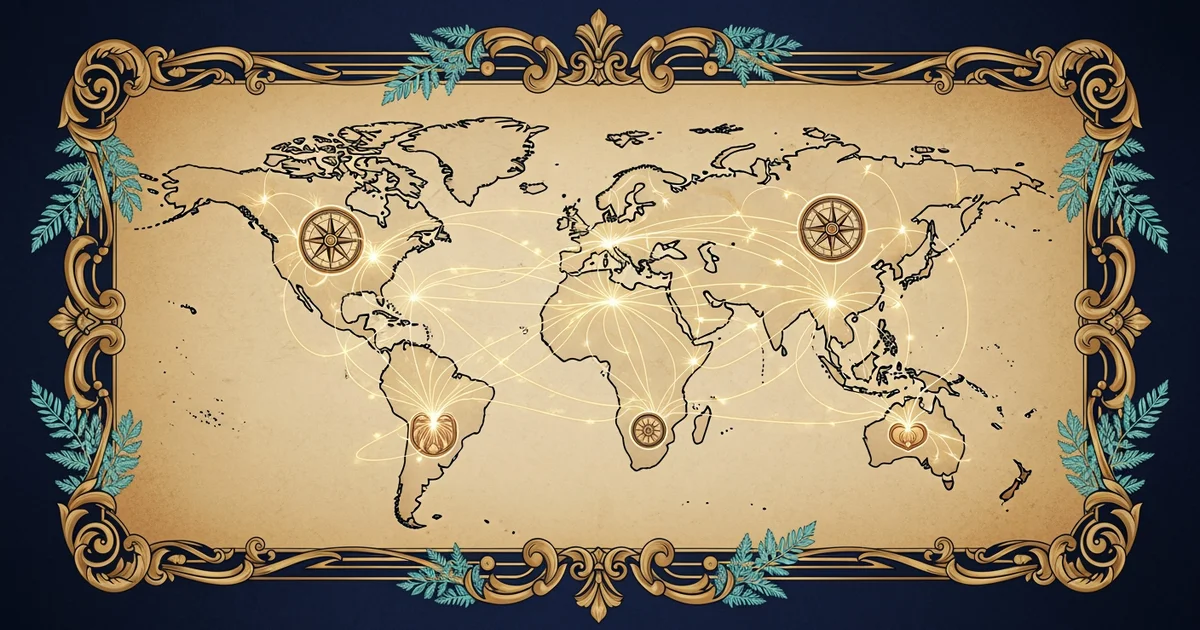
Language acts like a living map that reveals the ancient paths taken by our ancestors. Every word we speak today carries echoes of the groups who walked across continents thousands of years ago.
Tracking Human Movement Through Speech
When early humans moved into new territories, they brought their languages along with them as a primary tool for survival. These groups often split into smaller units as they encountered natural barriers like mountain ranges or vast oceans. Over many generations, the speech patterns within these isolated units began to shift and drift from the original tongue. This process is much like a game of telephone played across vast distances and centuries of time. If you imagine a single language as a sturdy tree trunk, the various dialects and separate languages are the branches that grow outward. By studying these branches, experts can reconstruct the original trunk and trace the direction in which the ancestors migrated. This method allows us to see human history even when physical evidence like tools or bones is missing from the archaeological record. Comparing shared vocabulary across different regions helps us pinpoint where and when groups diverged during their long journey across the globe.
Key term: Language families — large groups of languages that share a common ancestral origin and show systematic similarities in their structure.
Migration patterns left distinct marks on the maps of human speech that we can still observe today. When a group migrated into a new area, they often replaced or influenced the existing local tongues. This process was not always a simple replacement of one language by another through total conquest. Instead, it frequently involved complex interactions where trade, marriage, and shared resources led to the blending of different speech patterns. Think of this process like the way a local currency changes when two different market economies begin to trade with each other. The new coins enter the system, but the old ones often leave traces behind in the way people calculate their daily costs. Similarly, the grammar and core vocabulary of a migrant group might become the dominant form of communication. Meanwhile, the original inhabitants might keep specific words for local plants or tools that the newcomers had never encountered before in their own home regions.
Linguistic Patterns and Cultural Shifts
Studying these patterns requires looking at how language families spread alongside the physical movement of the people who spoke them. Many of the major language groups we recognize today correspond with historical waves of migration that transformed entire landscapes. We can see these trends clearly when we compare the spread of agricultural techniques with the expansion of specific language groups. As groups moved to find better soil or more reliable water sources, their language spread as a package deal with their way of life. The following table shows how different factors influence the way languages evolve during these long periods of migration:
| Factor | Impact on Language | Resulting Change |
|---|---|---|
| Isolation | Prevents contact | Distinct new dialect |
| Trade | Encourages mixing | Borrowed vocabulary |
| Migration | Spreads roots | New language families |
These factors ensure that no language remains static for long periods when people are on the move. When a large population migrates, they carry their linguistic identity like a heavy backpack filled with cultural tools. They use this backpack to name the world around them, define their social roles, and organize their collective memories. Even as the environment changes, the core structure of their language often remains resilient enough to keep their identity intact. This resilience is why we can still identify the ancient connections between languages spoken thousands of miles apart today.
Human migration acts as a primary engine for linguistic change because the movement of people forces languages to adapt, blend, and evolve in response to new environments.
The next Station introduces technological advancements, which determines how migration speed and language spread changed over time.