
Mapping Ancient Landscapes
Imagine you are trying to navigate a dense forest without a map or a compass. You would likely follow the path of least resistance, such as a dry riverbed or a flat valley floor, to save your energy. Ancient humans faced this exact challenge when they migrated across unfamiliar continents thousands of years ago. They did not wander aimlessly across the harsh terrain, but instead made calculated choices based on the physical features of the earth. By studying these landscapes, we can reconstruct the invisible highways that guided our ancestors toward new homes. The environment acted as both a gateway and a gatekeeper for early human populations.
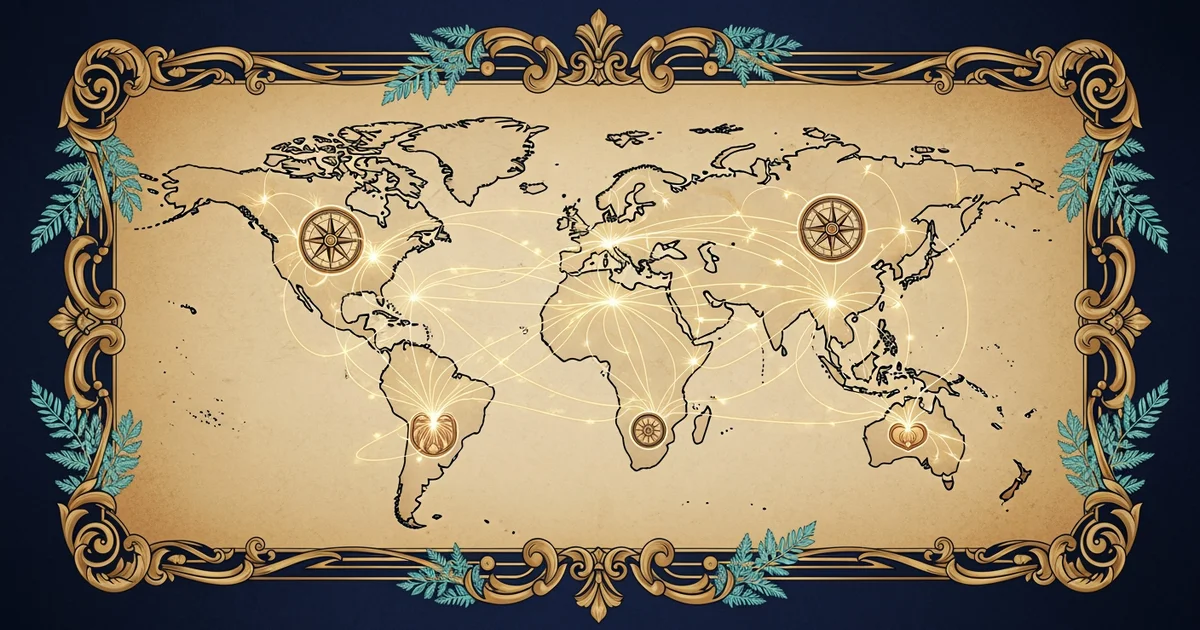
Geographic Barriers and Travel Routes
Geographic barriers like towering mountain ranges or vast, arid deserts forced early travelers to stick to specific migration corridors. Think of these physical features like the walls of a maze that channel a person toward a single exit. If a group encountered a high mountain pass, they would only cross it if the climate allowed for safe passage during warmer seasons. Rivers served as essential lifelines, providing water and creating flat pathways through otherwise rugged environments. These natural routes were the primary infrastructure for movement, much like how modern highways connect major cities today. When these paths were blocked by shifting glaciers or rising sea levels, entire groups had to change their plans or settle in new areas.
Key term: Migration corridor — a natural geographic pathway that facilitates the movement of people or animals between different regions.
Climate shifts played a massive role in whether these corridors remained open or became impassable for migrating groups. During periods of intense cold, large ice sheets expanded and covered land bridges that were once walkable. This forced humans to adapt by moving along coastlines or finding refuge in warmer southern pockets of the continent. The following table highlights how different environmental conditions influenced the accessibility of various ancient migration routes:
| Environmental Factor | Impact on Movement | Typical Human Response |
|---|---|---|
| Advancing Glaciers | Blocks northern paths | Shift toward coastlines |
| Riverbed Drying | Limits water access | Abandonment of routes |
| Rising Sea Levels | Submerges land paths | Adoption of sea travel |
The Influence of Climate on Ancient Travel
Beyond simple barriers, the long-term changes in global climate dictated the survival of human groups on the move. When rainfall patterns shifted, lush grasslands could turn into dry deserts within just a few generations. Humans had to be highly observant of these changes to ensure their families had access to enough food and water. This constant need to track resources meant that migration was not just a one-time event, but a continuous process of adjusting to a changing world. By observing the distribution of stone tools and other artifacts, researchers can map out where these climate-driven shifts occurred. This evidence proves that our ancestors were experts at reading the land to survive.
Understanding these ancient landscapes requires us to look at the earth as a dynamic and changing stage. The movement of early humans was a complex dance between the desire to explore and the physical limits of the planet. We can trace their journey by looking for the markers they left behind in the soil and rock. These clues reveal that the human experience has always been defined by our ability to overcome environmental obstacles. Every step taken by those who came before us was a response to the challenges posed by the world around them. We are the descendants of those who successfully navigated these ancient, shifting landscapes through persistence and careful planning.
The survival and spread of early humans depended on their ability to interpret geographic features and climate shifts as vital guides for movement.
Building on these physical maps, we will now examine how the hidden genetic signatures within our own cells provide further evidence of these ancient journeys.