
Climate Driven Shifts
When the local grocery store suddenly runs out of food, you immediately look for a new shop in a different part of town. Humans have acted in this exact way for thousands of years whenever their natural environment failed to provide necessary resources.
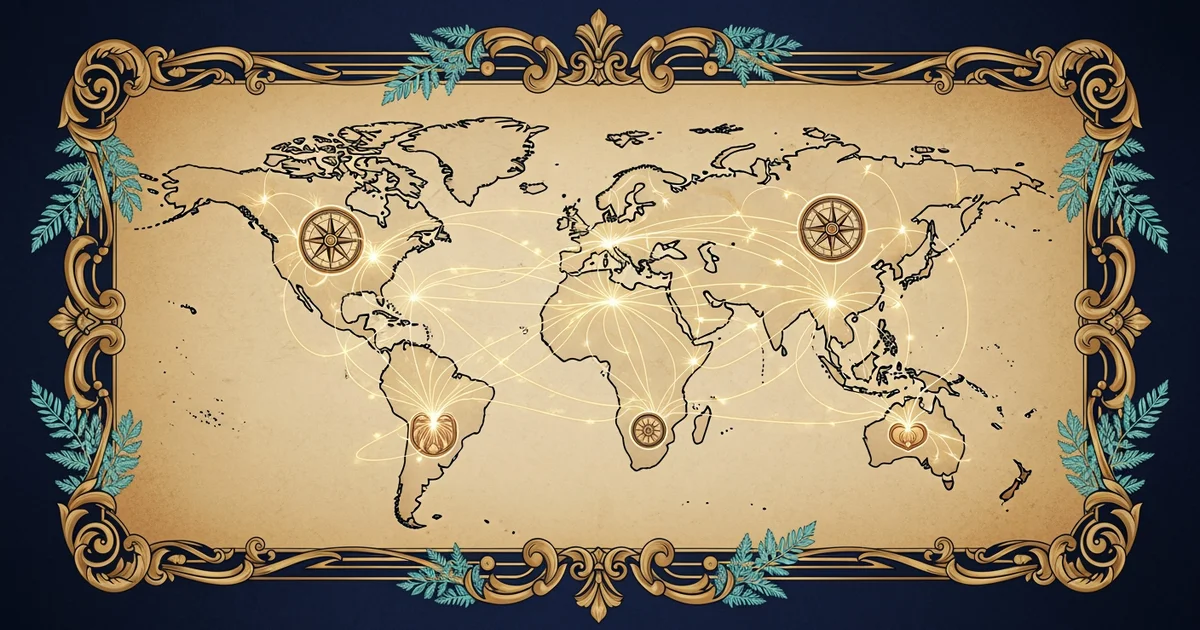
Environmental Drivers of Human Movement
Because our ancestors relied on the land for survival, they remained sensitive to shifts in weather patterns. Significant changes in temperature or rainfall often forced groups to leave their homes in search of better conditions. This process of environmental migration happens when a population moves because the local area can no longer support their basic needs. Think of this like a household budget that suddenly loses half its income. If you cannot pay the rent or buy groceries, you must find a cheaper place to live or move to a city with more jobs. Early humans faced this same economic reality when droughts or cooling periods destroyed their food supplies. They did not move out of curiosity but out of a desperate need to find a sustainable home.
Key term: Environmental migration — the large scale movement of human populations triggered by changes in climate or natural resources.
When these shifts occurred, they created a ripple effect across vast regions of the globe. As one group moved into a new territory, they often displaced or interacted with the people already living there. This forced movement changed the population density in different areas, leading to new social structures and cultural exchanges. These shifts were not always sudden disasters, but often slow processes that unfolded over many generations. As the climate fluctuated, human groups learned to adapt their tools and social habits to survive in new environments. This constant cycle of moving and adapting helped our ancestors populate diverse corners of the world while refining their survival strategies.
Patterns of Historical Population Shifts
To understand how these shifts occurred, we can look at the specific environmental factors that pushed populations to relocate. These factors often acted as a chain reaction that changed the way societies functioned over time. The following list explains the primary environmental pressures that historically triggered large scale human migration events:
- Persistent drought conditions reduced the available water supply, which forced agricultural communities to abandon their established settlements and move toward river valleys or coastal regions where water remained accessible throughout the year.
- Rapid temperature drops shortened the growing seasons for wild plants and crops, requiring groups to migrate toward warmer latitudes to ensure they could gather enough food to survive the winter months.
- Rising sea levels flooded low-lying coastal areas that served as primary hunting grounds, compelling human populations to retreat inland and compete for resources within already occupied territories further away from the rising water.
These pressures forced humans to become experts at reading the natural landscape to predict future resource availability. By tracking these patterns, we can see that migration was a calculated response to the changing world. The following table outlines how different climate events impacted the choices made by early human societies across the globe.
| Climate Event | Impact on Resources | Human Response Strategy |
|---|---|---|
| Severe Drought | Water and crops fail | Move to river basins |
| Global Cooling | Shorter growing season | Migrate toward equator |
| Coastal Flooding | Loss of fishing areas | Settle in higher ground |
By analyzing this data, we see that the history of human movement is deeply tied to the stability of the Earth. When the climate stayed consistent, populations grew and built permanent structures. When the climate became unstable, the pressure to survive pushed humans into new territories. This constant movement served as the primary engine for the spread of human culture across the entire planet. Every major shift in the environment acted as a nudge that changed the map of human settlement forever. We are the descendants of those who successfully moved and adapted to these intense environmental challenges.
Human migration is a logical response to environmental instability that forces populations to seek new resources when their current home can no longer sustain their survival needs.
The next Station introduces linguistic expansion patterns, which determines how these migrating groups shared their unique languages and cultural traditions with others.