
Trade Route Dynamics
Imagine you are trying to trade a heavy stone tool for a soft woven blanket. You walk across a vast desert landscape to find a person who wants what you have. This simple act of swapping goods connects two different worlds through a shared need for survival. Ancient humans did not just trade items to gain wealth or luxury goods for their homes. They traded to bridge the gap between isolated groups living in very different environments. By moving across mountains and plains, these early explorers created paths that linked distant populations together forever.
The Economic Engine of Ancient Exchange
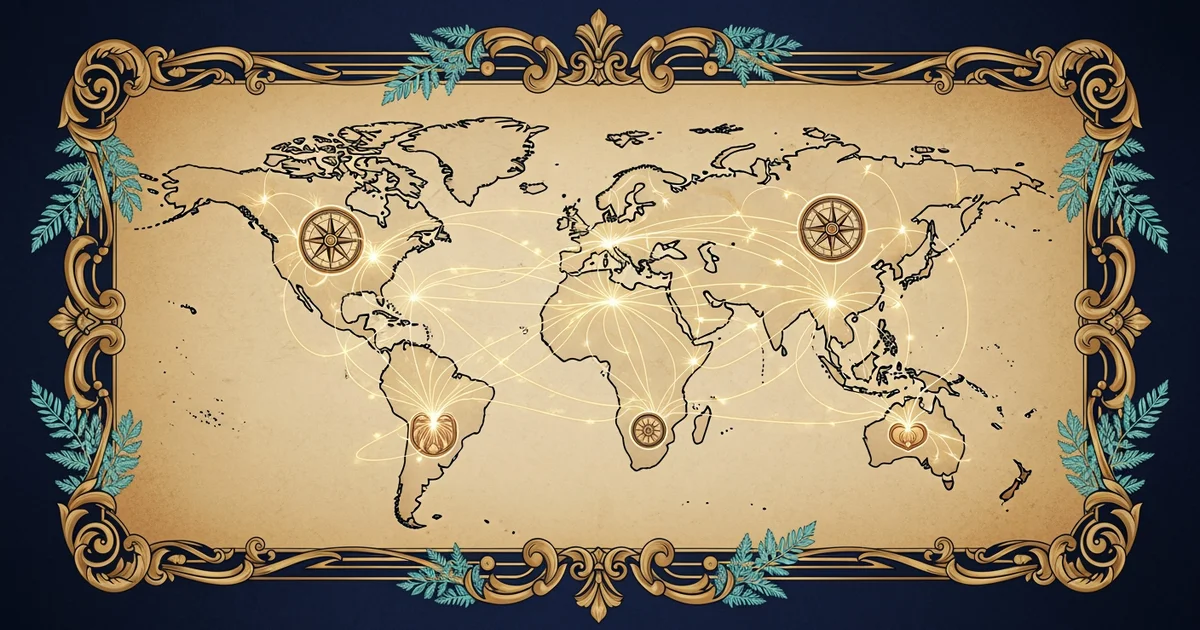
When humans began to trade, they acted like a giant living network of resource distribution. Think of these trade routes as a circulatory system for the ancient world. Just as blood carries nutrients to every part of the body, these routes carried vital goods to every corner of the human range. If one region had an abundance of high-quality flint but lacked salt, they traded with neighbors who had salt deposits. This movement of goods encouraged people to settle in areas that were not naturally rich in all resources. By relying on others, humans could survive in harsh climates that were once considered impossible to inhabit.
Key term: Trade networks — the interconnected paths and systems that allowed early human groups to exchange goods, resources, and cultural knowledge over great distances.
These networks were not just about physical items like obsidian, shells, or animal skins. They were also highways for new ideas and different ways of solving common problems. When a trader arrived from a distant camp, they brought stories, techniques, and new perspectives. This constant flow of information meant that a better way to trap fish or build a shelter spread quickly across the globe. The exchange of goods acted as a catalyst for rapid innovation among groups that might never have met otherwise.
Cultural and Genetic Blending
As these paths became more established, they fostered deep cultural and genetic mixing between diverse human populations. When traders spent time in foreign camps, they shared meals, rituals, and languages with their hosts. This social interaction often led to marriages and the merging of family lines between previously distinct groups. Over thousands of years, this process of mixing created a broad genetic tapestry that defines modern humanity. We are the descendants of these ancient travelers who saw value in connecting with people outside their own immediate circle.
The following table shows how different types of trade items influenced the development of early human social connections:
| Item Category | Primary Purpose | Social Impact | Distance Traveled |
|---|---|---|---|
| Raw Materials | Tool production | Skill sharing | Long distance |
| Food Staples | Daily survival | Group alliances | Short to medium |
| Symbolic Goods | Status building | Cultural mixing | Very long range |
These categories highlight how trade was never just about simple survival needs. Symbolic items like rare shells or colorful stones were often used to mark alliances between distant tribes. These tokens served as a physical reminder of a promise to help a neighbor in times of future trouble. By maintaining these long-range relationships, human groups could call upon allies during times of severe drought or resource scarcity. The stability of these networks was essential for the expansion of human populations into new territories across every continent.
- Exploration: Groups identified regions with unique resources that were not available in their home territory.
- Establishment: Trailblazers mapped paths that minimized physical effort while connecting reliable water sources and food stops.
- Exchange: Regular meetings occurred at central points where goods were swapped and social bonds were strengthened.
- Integration: Marriage and cultural exchange occurred, leading to the gradual blending of genetic traits and social customs.
This sequence shows how trade evolved from a desperate search for goods into a structured social system. Each step required a high level of cooperation and trust between groups that spoke different languages. Without this foundation of mutual benefit, human expansion would have been much slower and far more dangerous. The ability to cooperate through trade is perhaps the most important trait that allowed our ancestors to thrive in a changing world.
The movement of goods across ancient landscapes served as the primary catalyst for the widespread exchange of genetic, cultural, and technological knowledge among early human groups.
But what does it look like in practice when these trade networks begin to change the way people organize their societies?