
Future Migration Trends
Imagine a world where the map of human settlement shifts as rapidly as the weather patterns change. Future migration will likely mirror the way investors move capital between different markets during a volatile fiscal year. Just as money flows toward stable economies, people will navigate toward regions that offer the highest security and resource availability. This movement represents a fundamental shift in how we define our home and our future across the planet.
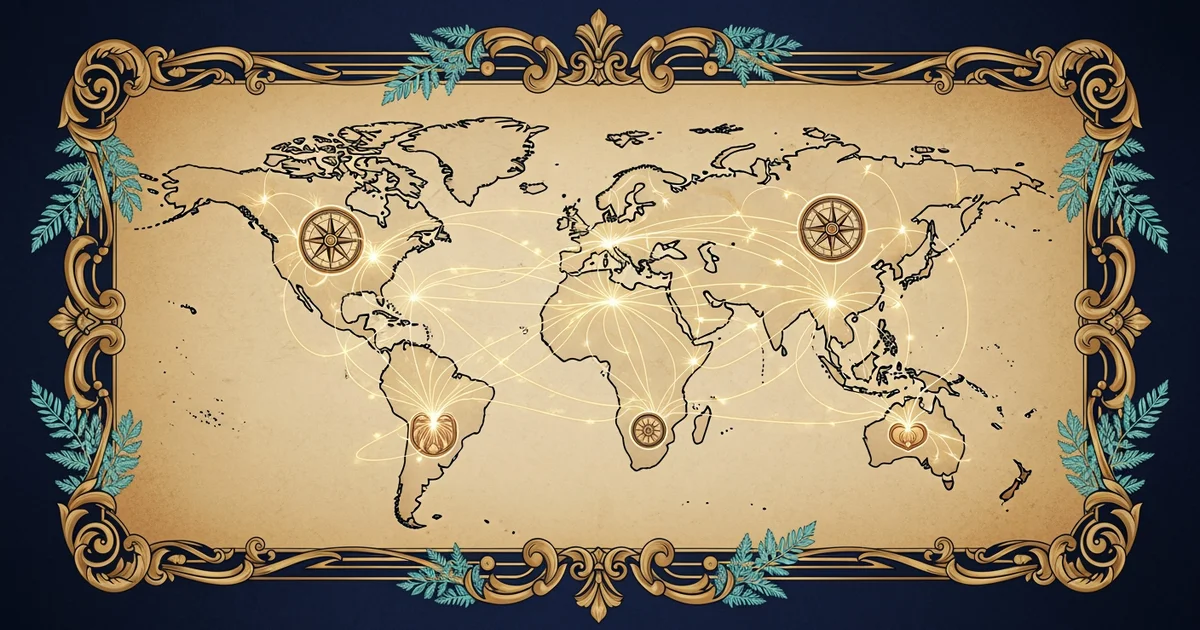
Drivers of Global Human Movement
Modern migration patterns rely on a complex web of environmental, economic, and social triggers that push individuals to relocate. When we consider the history of our species, we see that movement has always been a survival strategy against changing local conditions. Today, the primary catalyst for future shifts involves the accelerating reality of climate change and resource scarcity. These factors create pressure points that force populations to seek new areas for long-term habitation. Unlike the slow migrations of our ancestors, future movement will likely happen in rapid, concentrated bursts as specific regions reach their threshold for sustainability.
Key term: Environmental displacement — the involuntary relocation of human populations caused by sudden or gradual changes in the local ecosystem.
As we look at these trends, it becomes clear that the infrastructure of cities must adapt to handle these incoming shifts. If a region loses its primary water source, the residents must move to survive, much like a business must pivot when its primary revenue stream vanishes. This comparison highlights that migration is not merely a choice but a necessary response to shifting survival requirements. We must understand that these future trends are deeply rooted in the same survival instincts that guided our ancestors out of Africa thousands of years ago.
Future Patterns and Global Stability
Predicting the next century requires us to map how current geopolitical tensions intersect with the physical limitations of our shared environment. We can categorize the main triggers for future movement into three distinct areas that will dictate where and how people travel across the globe:
- Economic instability acts as a primary driver, pushing workers to seek regions with stable labor markets and reliable infrastructure to ensure their basic needs are met.
- Technological advancement enables movement by providing better data on habitable zones, allowing people to plan their relocation based on long-term sustainability metrics.
- Resource competition creates tension between regions, as the demand for clean water and arable land forces populations to abandon depleted areas for better prospects.
These factors do not exist in isolation, but instead, they create a feedback loop that accelerates the rate of human displacement. When we compare these drivers, we can see how they interact to form a global picture of potential future settlement patterns.
| Trigger Type | Impact Level | Primary Outcome |
|---|---|---|
| Climate | High | Mass relocation |
| Economic | Medium | Labor shift |
| Political | High | Border pressure |
By examining this table, we can see that climate-related issues carry the highest potential for mass movement, while economic factors influence the direction of that flow. This structural approach helps us understand why certain regions will see population booms while others face significant decline. Our ancestors moved to find food and safety, and modern humans will follow that same pattern, albeit with more sophisticated tools and data. The fundamental question remains: how will our global societies adapt to this constant state of flux?
Future migration will be defined by a calculated search for environmental stability and resource security as populations respond to global changes.
The human legacy depends on our ability to integrate these shifting patterns into a cohesive global narrative.