
Urbanization and Migration
In 1950, when Tokyo began its rapid post-war expansion, millions of families left rural villages to find work in the growing industrial sector. This massive shift represents the core of urbanization, which is the movement of people from agricultural settings into dense, city-based environments for better economic prospects. Just as a magnet pulls metal shavings toward its center, the promise of higher wages and modern services draws people away from their ancestral lands. This is the primary mechanism of human movement in our modern era, building upon the patterns of colonial expansion discussed in Station 11.
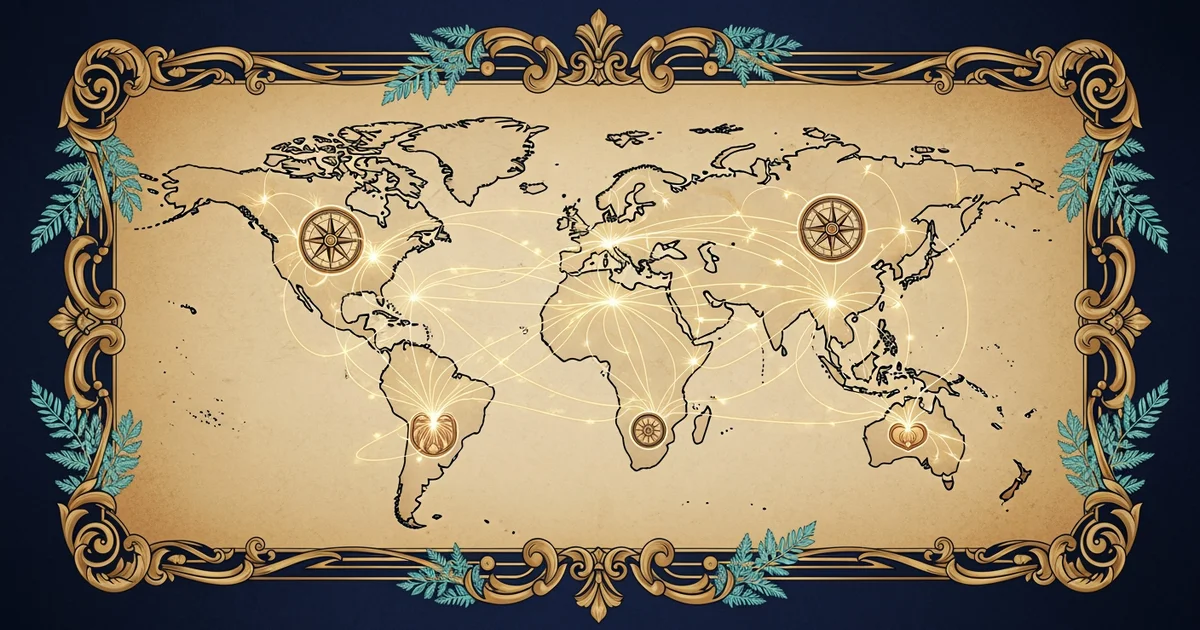
The Economic Drivers of Modern Migration
When people decide to leave their rural homes, they usually weigh the potential for a better life against the comfort of their familiar surroundings. This process involves specific economic motivators that push individuals toward large metropolitan areas where job opportunities remain concentrated. Cities function like high-speed processors for human labor, allowing individuals to access diverse industries that do not exist in smaller, isolated farming communities. This concentration of work creates a cycle where more people move to cities, which then attracts more businesses to relocate there as well.
Key term: Push-pull factors — the social and economic forces that drive people to leave their current homes while simultaneously attracting them to a new destination.
Rural areas often struggle to provide the same infrastructure that cities can offer, such as reliable electricity, advanced medical care, and specialized education. Many families view the move as a necessary step to secure a brighter future for their children, even if the transition requires leaving behind deep cultural roots. This choice reflects a rational economic calculation that prioritizes long-term stability over short-term comfort. As global economies shift toward service and technology, the necessity for physical proximity to urban hubs becomes even more pronounced for those seeking social mobility.
Global Trends in Urban Growth
While industrialization once drove the growth of older cities, today’s expansion is often fueled by the service sector and digital connectivity. We can observe distinct patterns in how different regions manage this influx of new residents, as shown in the table below.
| Region | Primary Driver | Infrastructure Challenge | Future Outlook |
|---|---|---|---|
| East Asia | Manufacturing | Housing density | High growth |
| Sub-Saharan Africa | Service sector | Resource access | Rapid expansion |
| North America | Tech hubs | Transit systems | Slow growth |
These patterns demonstrate that urbanization is not just a historical event, but an ongoing process that continues to reshape our global geography. The speed of this transition can often outpace the ability of local governments to build the necessary support systems for the new population. When cities grow too fast, they face significant hurdles in maintaining quality of life for all residents, leading to the development of informal settlements on the outskirts of major urban centers.
Several factors contribute to the speed at which rural populations choose to migrate into these expanding urban environments:
- Climate instability in agricultural regions forces farmers to seek new livelihoods when their traditional crops fail due to changing weather patterns.
- Technological advancements in farming allow fewer people to produce more food, which reduces the total number of jobs available in the rural labor market.
- Access to global communication networks allows rural residents to see the benefits of city life, which creates a strong desire to participate in modern urban culture.
These drivers create a persistent flow of people toward cities, permanently altering the demographic balance of entire nations. By studying these trends, we can understand why the modern human experience is increasingly defined by living within these dense, interconnected urban networks. The transition is rarely easy, yet the perceived benefits of the city continue to outweigh the risks for millions of people every single year.
Modern urbanization acts as a global economic engine that reshapes human geography by concentrating labor and resources into dense, interconnected urban centers.
But this model of rapid city growth faces a critical limitation when urban infrastructure fails to keep pace with the massive influx of people seeking better lives.