
Colonial Expansion Impacts
When the British East India Company established a presence in Bengal during the eighteenth century, they fundamentally altered local trade routes and land ownership. This shift mirrors how a new, dominant plant species can reshape an entire forest floor by consuming resources previously available to native flora. This is an example of colonial expansion affecting local ecosystems, similar to the economic pressures described in Station 10 regarding social structure changes.
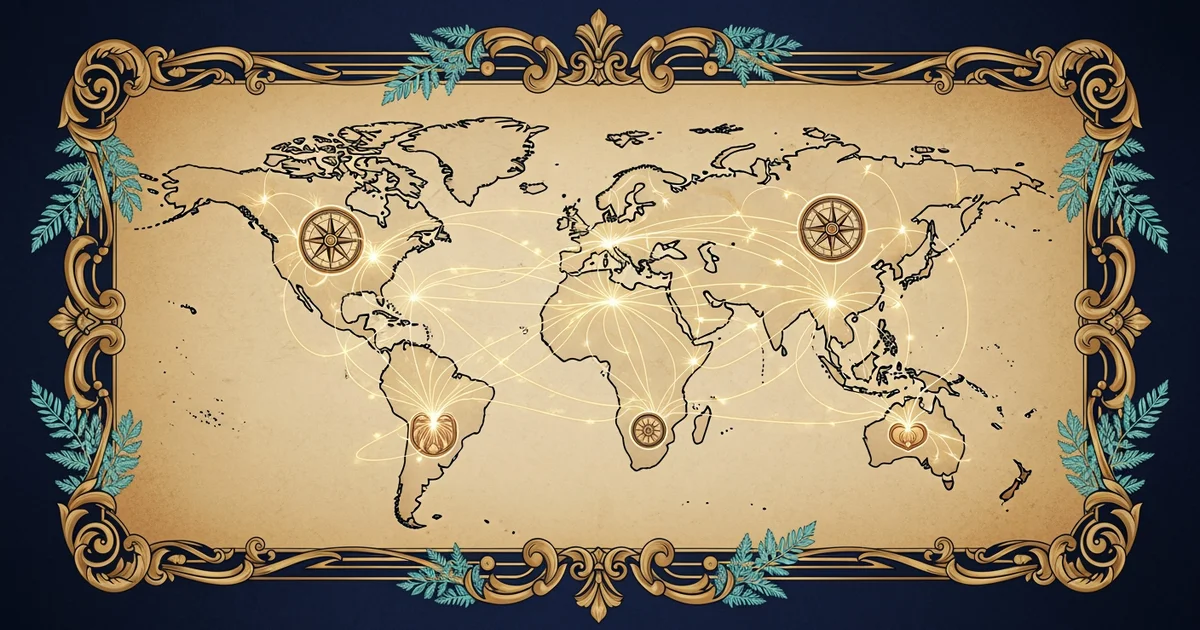
Economic Restructuring and Resource Extraction
Expansion often begins when a powerful group seeks to extract raw materials from a new territory to fuel their own home industries. By enforcing new tax systems and land laws, these groups force local populations to abandon traditional farming methods in favor of cash crops. This process effectively turns a self-sufficient region into an export-oriented economy that serves distant markets. Local people lose control over their food security because their labor is redirected toward products they cannot consume or sell locally.
Key term: Colonial expansion — the process where a nation extends its control over foreign territories to exploit resources and establish political authority.
This economic transition creates a deep dependency where the colony relies entirely on the colonizing power for finished goods. The transformation of raw materials into high-value products happens elsewhere, ensuring that the wealth generated stays with the dominant group. This system functions like a one-way valve that allows resources to flow out while only expensive, manufactured goods flow back in. This imbalance prevents the development of local industries and keeps the population in a state of perpetual economic struggle.
Social and Cultural Displacement
Beyond economic control, these movements fundamentally reorganize how people interact with their environment and each other. When authorities impose new languages, legal systems, and religions, they intentionally erode the traditional social fabric that previously held communities together. This cultural pressure forces individuals to adapt to foreign standards just to survive or participate in the new economy. Over time, these changes lead to the loss of indigenous knowledge and unique social practices that had been preserved for many generations.
To understand the long-term reach of these policies, consider these common consequences for local populations:
- Forced migration occurs when people are displaced from their ancestral lands to make room for plantations or mines, leading to the breakdown of extended family networks and community support systems.
- Political marginalization happens when local leaders are replaced by foreign administrators, which prevents the community from having a voice in how their own resources are managed or distributed.
- Demographic shifts arise as new groups arrive, often leading to a stratified society where the original inhabitants are pushed into lower social tiers with fewer opportunities for growth or advancement.
These impacts create lasting divisions that persist long after the formal control of the colonizing power has ended. The structural changes leave behind a legacy of inequality that continues to shape modern migration patterns and urban development. When a region has been hollowed out by centuries of resource extraction, its residents often feel forced to move toward cities or other countries to find better economic security. This ongoing movement is a direct response to the historical pressures established during the height of colonial rule.
The legacy of colonial expansion is a permanent shift in local economic and social systems that forces populations to adapt to global markets while losing their ancestral autonomy.
But this model of top-down influence becomes much more complex when we examine how urban centers grow and attract these displaced populations in our next station.