
Noise Pollution Impacts
Imagine trying to have a private conversation while someone blasts a loud vacuum cleaner right next to your ear. This constant, overwhelming drone makes it impossible to hear your own voice or understand the words spoken by your friends. Deep sea mining creates a similar crisis for marine animals that rely on sound to navigate, hunt, and find mates in the dark ocean depths. The industrial machinery used to scrape the seafloor generates intense, low-frequency vibrations that travel much further underwater than they do through the thin air we breathe.
The Disruptive Nature of Underwater Sound
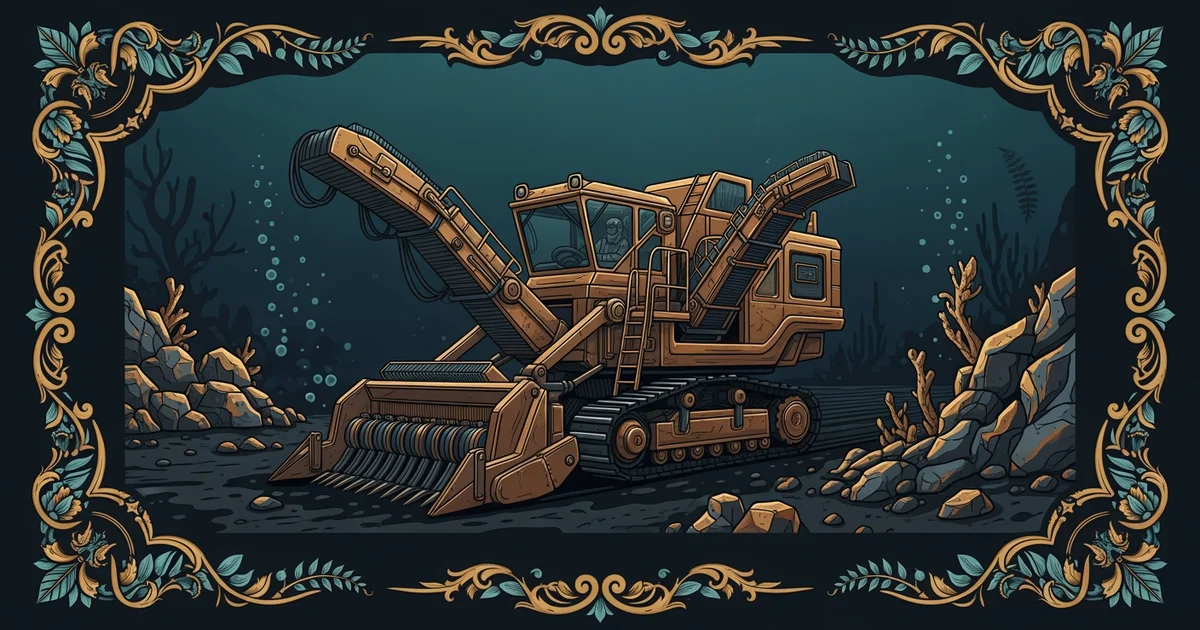
Sound travels nearly five times faster through water than it does through air, allowing noise to propagate across vast oceanic distances. When mining equipment operates on the seabed, it creates a persistent acoustic footprint that blankets the surrounding environment in unnatural, mechanical pulses. Marine mammals, particularly large whales, depend on these acoustic channels to maintain contact with their pods over hundreds of kilometers of open water. Because these industrial sounds often overlap with the frequencies used by whales for communication, the noise acts like a physical barrier that fragments their social structures. Just as a loud construction site makes it difficult to coordinate work in an office building, constant mining noise forces animals to expend extra energy just to be heard by their kin.
Key term: Acoustic masking — the process where background noise interferes with the ability of an animal to detect or interpret important biological signals.
This disruption creates a ripple effect throughout the entire marine ecosystem, altering behaviors that have evolved over millions of years. When whales cannot hear their calves or potential mates, they may abandon critical feeding grounds or travel further to find quieter areas. This displacement is not merely an inconvenience; it represents a loss of vital habitat that could lead to decreased survival rates for entire populations. The following list details the specific ways that constant industrial noise impacts the daily lives of deep-sea inhabitants:
- Persistent sound levels force animals to increase the volume of their calls, which requires significant metabolic energy that would otherwise be used for growth or reproduction.
- Chronic noise stress triggers the release of stress hormones, potentially weakening the immune systems of marine species and making them more susceptible to disease or environmental changes.
- Masking effects prevent predators and prey from sensing each other, leading to a breakdown in the natural hunting patterns that keep oceanic populations in balance.
Measuring the Impact on Marine Communication
To understand the severity of this issue, researchers compare the sound of mining to natural ocean noise levels. The table below illustrates how different sources of sound contribute to the total acoustic environment of the deep sea.
| Sound Source | Frequency Range | Potential Impact on Wildlife | Duration |
|---|---|---|---|
| Mining Drill | Low Frequency | Long-distance masking | Continuous |
| Shipping Lane | Mid Frequency | Behavioral avoidance | Seasonal |
| Natural Waves | High Frequency | Minimal interference | Constant |
This comparison demonstrates that mining equipment introduces a unique, persistent threat that differs from transient sounds like passing ships or natural weather patterns. Because mining operations are intended to run around the clock, they eliminate the quiet periods that animals need to recover from acoustic stress. If we view the ocean as a shared telecommunications network, industrial noise acts as a permanent jammer that prevents critical information from passing between members of the same species. Without the ability to communicate clearly, the complex social lives of whales and other deep-sea creatures begin to unravel at an alarming rate. We must determine if the minerals we gain are worth the cost of silencing the natural symphony of the deep ocean.
Persistent industrial noise functions like a permanent communication jammer, forcing marine animals to sacrifice vital energy and social cohesion just to survive in their own habitat.
But what does it look like in practice when these companies shift their focus toward new supply chain alternatives to avoid these environmental costs?