
The Ocean Floor Mystery
Imagine you are standing on a beach, looking out at the vast, blue horizon. You see waves crashing on the sand, but you cannot see the rugged mountains hidden deep beneath those miles of dark water. Most people assume the ocean floor is just a flat, muddy plain, but that is a major mistake. It is actually a landscape filled with massive canyons, giant volcanoes, and deep trenches. Understanding this hidden world is essential because it is now the center of a massive global debate about resources. We treat the ocean like a mystery box, yet we are ready to open it before we even know what is inside.
The Hidden Architecture of the Seabed
When we look at the ocean floor, we are essentially looking at a landscape that remains mostly untouched by human activity. The abyssal plain covers much of the deep sea, acting like a vast, flat desert of sediment that stretches for thousands of miles. However, the seabed is not uniform, as it contains mountain ranges that dwarf anything found on land. These underwater features form through plate tectonics, which is the movement of the massive crustal plates that shape our planet. Think of the ocean floor like a giant, messy attic in an old house that has not been opened for centuries. You might find valuable treasures hidden under piles of dust, but you also risk breaking fragile items if you move too quickly without a map. This geological complexity makes the deep sea a difficult place for scientists to explore, yet it is exactly where industries want to start their search for rare metals.
Key term: Abyssal plain — the vast, flat, and sediment-covered area of the deep ocean floor that makes up the majority of the seabed.
Why the Deep Sea is a Frontier for Extraction
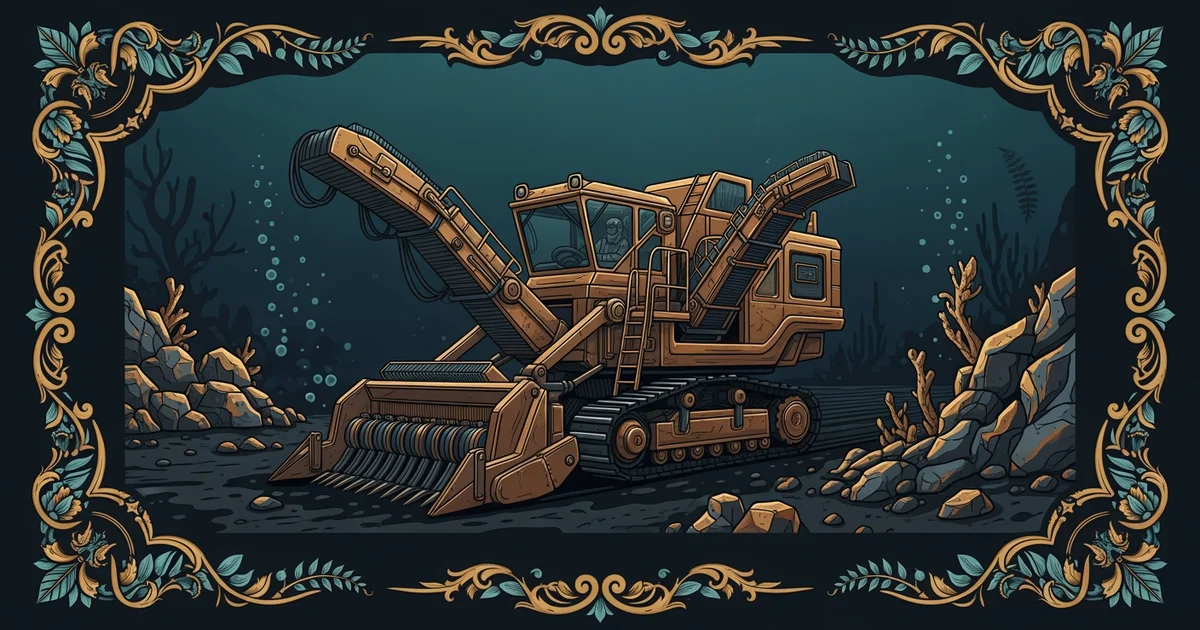
Industries are now turning toward the ocean because the resources on land are becoming harder to find and more expensive to extract. We use minerals like cobalt and nickel for everything from batteries to smartphones, and the demand for these items grows every single year. The deep sea holds massive deposits of these materials in the form of polymetallic nodules, which are small, potato-sized rocks that sit right on the surface of the seafloor. These nodules represent a massive economic prize, but extracting them requires technology that can operate under extreme pressure. We are currently deciding if the potential wealth from these minerals is worth the risk of damaging a habitat we barely understand. The following table shows the primary features of the deep sea that attract interest from mining companies:
| Geological Feature | Description | Potential Resource |
|---|---|---|
| Abyssal Plains | Vast, flat areas | Metallic nodules |
| Hydrothermal Vents | Hot, mineral-rich gaps | Copper and gold |
| Seamounts | Underwater volcanoes | Rare earth elements |
This table highlights why companies view the ocean as a gold mine waiting for the right technology. By focusing on these specific areas, industries hope to secure a steady supply of materials for the future. However, these areas are also home to unique ecosystems that have evolved in total darkness over millions of years. We must balance our need for new technology with the need to protect the health of our global oceans.
The Balance of Risk and Reward
The push to mine the ocean floor creates a conflict between economic growth and environmental protection. Because we lack a complete map of the seafloor, we cannot predict how mining will affect ocean currents or marine life. If we start mining before we understand the long-term impact, we might cause permanent damage to the largest habitat on the planet. The debate is not just about the minerals, but about who owns the ocean and who gets to decide how we use it. We are essentially deciding the fate of a frontier that belongs to everyone, yet is controlled by a few powerful groups. By learning about these geological features, you are gaining the tools to understand why this debate is so important for the future of our planet.
The intense global debate over deep sea mining exists because we are rushing to extract valuable mineral resources from a fragile, poorly understood, and massive underwater landscape.
By the end of this path, you will understand the complex relationship between global mineral demand, the unique geology of the ocean, and the policies that govern the deep sea.