
Biological Diversity Risks
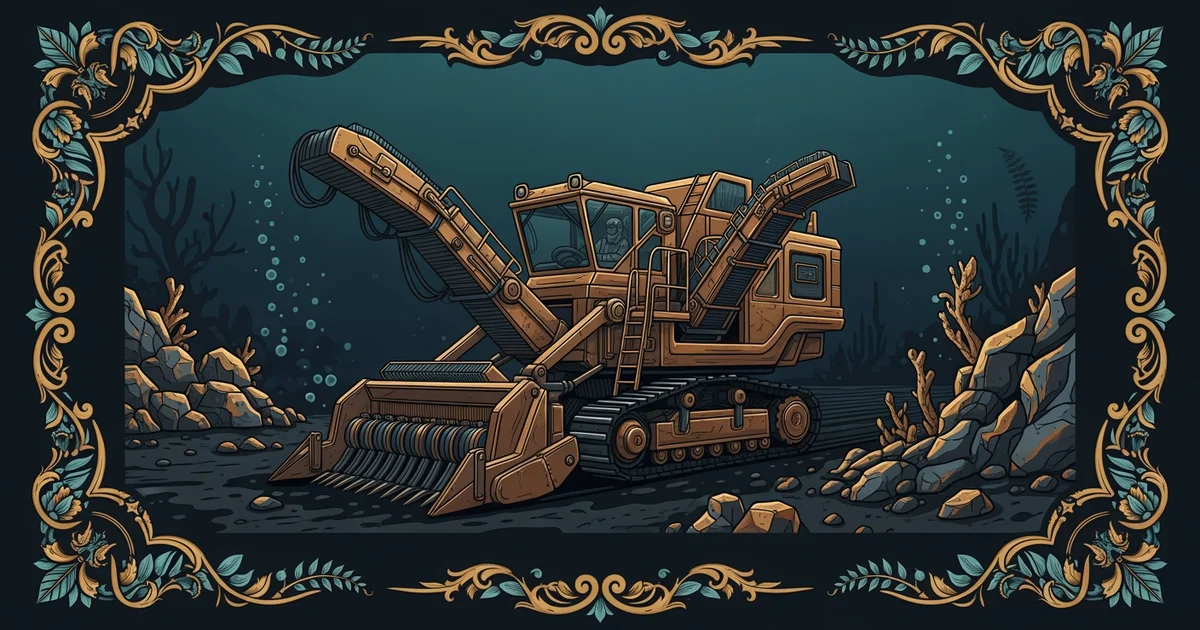
Imagine a massive bulldozer driving through a delicate, ancient library filled with rare books that have no copies. This is precisely what happens when industrial machines scrape the deep ocean floor to harvest valuable minerals. The seabed is not just a pile of rocks; it is a complex, living archive of life that has evolved slowly over millions of years. When we disturb this environment, we risk erasing species that we have not even discovered yet. These tiny organisms are the foundation of a global food chain that supports life far beyond the deep sea. We must weigh the drive for new technology against the permanent loss of these unique biological systems.
The Fragility of Deep Sea Ecosystems
Deep sea habitats are defined by extreme stability, which makes them incredibly vulnerable to sudden physical changes. Because these areas experience very little variation in temperature or light, the organisms living there have adapted to very specific conditions. These creatures grow slowly and reproduce at low rates to survive in a nutrient-poor environment. When mining equipment creates massive plumes of sediment, it smothers these delicate animals. Think of this like a dust storm that never settles, burying a city in thick, choking silt. The organisms cannot flee because they are not built for rapid movement or recovery from such large-scale environmental disruption.
Key term: Benthic ecosystems — the complex communities of living organisms that exist on the very bottom layer of the ocean floor.
Beyond the direct destruction of habitats, mining introduces significant chemical and noise pollution into the water column. The machinery used for extraction creates vibrations that travel for miles through the dense water. Many deep sea animals rely on sound or chemical signals to find mates or locate food sources. When the ocean becomes noisy and murky, these animals lose their ability to function. This disruption extends far beyond the immediate mining site, creating a wide circle of impact. We are essentially breaking the communication lines that keep these isolated populations alive and healthy.
Assessing the Risks to Biodiversity
Understanding the potential for biodiversity loss requires us to look at how these species interact within their environment. The deep sea is a mosaic of life, where each small patch of the ocean floor holds a distinct group of creatures. If we destroy one of these patches, that specific combination of life may disappear forever. The following table outlines how different mining activities impact the biological health of the seafloor:
| Activity | Primary Biological Impact | Long-term Consequence |
|---|---|---|
| Scraping | Direct removal of life | Habitat destruction |
| Plume creation | Suffocation of organisms | Food chain collapse |
| Noise output | Disruption of signaling | Breeding failure |
These impacts are not isolated events that simply fade away after the machines stop working. Because the deep sea recovers at a glacial pace, the scars from mining could remain for centuries. A single mistake in one area could lead to the extinction of species that provide essential services to the planet. We are not just removing minerals; we are stripping away the biological capital of the deep ocean. This risk is a central point of tension in the global debate over the future of our oceans.
When we consider the scale of potential damage, it becomes clear that we lack the data to predict the final outcome. We do not know enough about the deep sea to understand how these losses will ripple through the entire marine environment. This uncertainty makes the push for mining even more controversial for scientists and conservationists alike. Every action taken in the deep sea carries a heavy weight of responsibility for the future of our planet. We must decide if the resources we gain are worth the permanent loss of life that we cannot replicate or replace.
The deep ocean floor is a fragile, slow-growing biological system that suffers irreparable damage when industrial mining disrupts its unique and poorly understood living communities.
The next Station introduces technological requirements, which determines how deep sea mining equipment functions in such extreme and high-pressure environments.