
Sediment Plume Dynamics
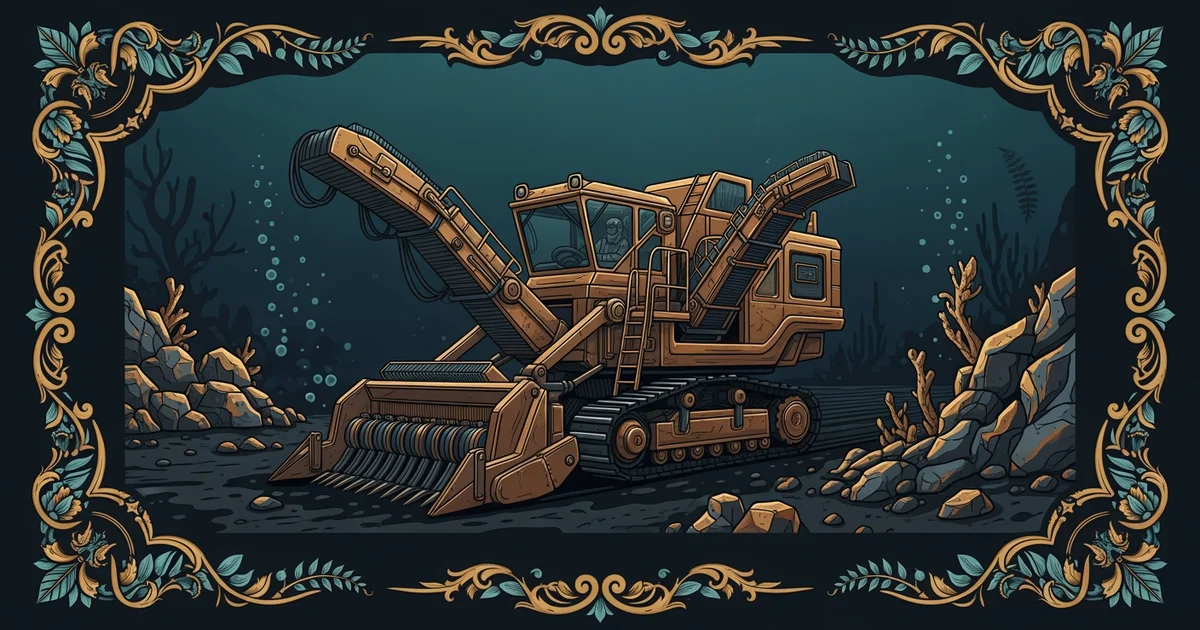
Imagine you are driving a dusty truck down a dry dirt road on a windy summer afternoon. As the tires spin, they kick up a massive cloud of dirt that hangs in the air for miles behind you. The deep sea mining process creates a similar situation when heavy machines scrape the ocean floor to harvest valuable minerals. This activity stirs up ancient layers of silt and mud that have remained undisturbed for millions of years. These clouds of suspended particles are known as sediment plumes, and they represent a major environmental concern for oceanographers today.
Understanding the Mechanics of Suspended Particles
When mining equipment disrupts the seafloor, it releases clouds of fine material into the surrounding water column. These particles do not simply vanish or fall straight back down to the bottom of the sea. Instead, they drift with the deep ocean currents and remain suspended for long periods because the water is incredibly dense. Think of this like stirring a spoonful of powdered drink mix into a glass of water, which creates a swirling cloud that takes time to settle. The mining process is far more intense, as it releases massive volumes of silt that can travel great distances across the vast, dark ocean floor.
Key term: Sediment plumes — dense clouds of suspended seafloor particles created by industrial activities that drift through the water column.
This movement of particles creates several complications for the delicate organisms living in the deep sea. Many creatures in these regions rely on filter-feeding to obtain their daily nutrients from the water. When the concentration of silt becomes too high, it clogs their delicate feeding structures and prevents them from getting enough food to survive. Furthermore, these clouds block the natural movement of water, which can change the chemical balance of the environment in ways we do not yet fully understand. The following list highlights the primary ways these plumes alter the local environment:
- Increased water turbidity reduces the visibility for predators and prey that rely on bioluminescence to hunt or communicate.
- Settling dust smothers bottom-dwelling organisms that cannot move away from the mining site quickly enough to find safety.
- Chemical changes occur as trapped minerals are released from the buried sediment into the surrounding water column.
Analyzing the Impact of Oceanic Dispersion
Because the deep ocean is a complex system, predicting exactly how far these plumes will travel remains a difficult task for researchers. The speed and direction of deep-sea currents are often unpredictable, meaning a plume could potentially affect areas far beyond the actual mining site. This uncertainty makes it hard to create safety zones or regulations that effectively protect marine life. Scientists must use advanced computer models to simulate how these particles interact with the water, but these models are only as good as the data we provide them.
| Feature | Effect on Environment | Duration of Impact |
|---|---|---|
| Silt Density | Clogs gills of fish | Short to Medium |
| Light Blockage | Stops bioluminescence | Medium to Long |
| Mineral Release | Alters water chemistry | Permanent/Long |
As the table above suggests, the consequences of these plumes vary depending on the specific properties of the sediment and the local water conditions. When we consider the scale of potential mining operations, even a small increase in turbidity could have a massive impact on the entire ecosystem. This is why many experts argue that we need much more research before allowing large-scale industrial activities on the seafloor. We are essentially operating in the dark, and the potential for long-term damage to these fragile habitats is significant.
Sediment plumes act as industrial dust storms that disrupt deep-sea life by clogging feeding mechanisms and altering the chemical clarity of the ocean water.
But what does it look like when we consider how this physical disruption interacts with the constant hum of industrial machinery?
Want this with sources you can check?
Premium Learning Paths for Earth Sciences & Geography are researched against open-access libraries — PubMed, arXiv, government databases, and more — with their distinctive claims cited to real sources and independently checked.
See what Premium includes