
Future Earth-Space Outlook
Solar storms and shifting magnetic fields act like invisible weather patterns that dictate the long-term survival of our planet. While we often focus on the daily impacts of space weather, the true story involves how these forces will change as our sun ages over millions of years. Scientists study these patterns to predict how Earth might remain habitable even when the sun begins its final transformation. Think of the sun as a fading battery that changes its power output in ways that directly affect the electrical grid of our entire planet. Understanding these shifts helps us prepare for a future where the connection between Earth and space becomes even more intense.
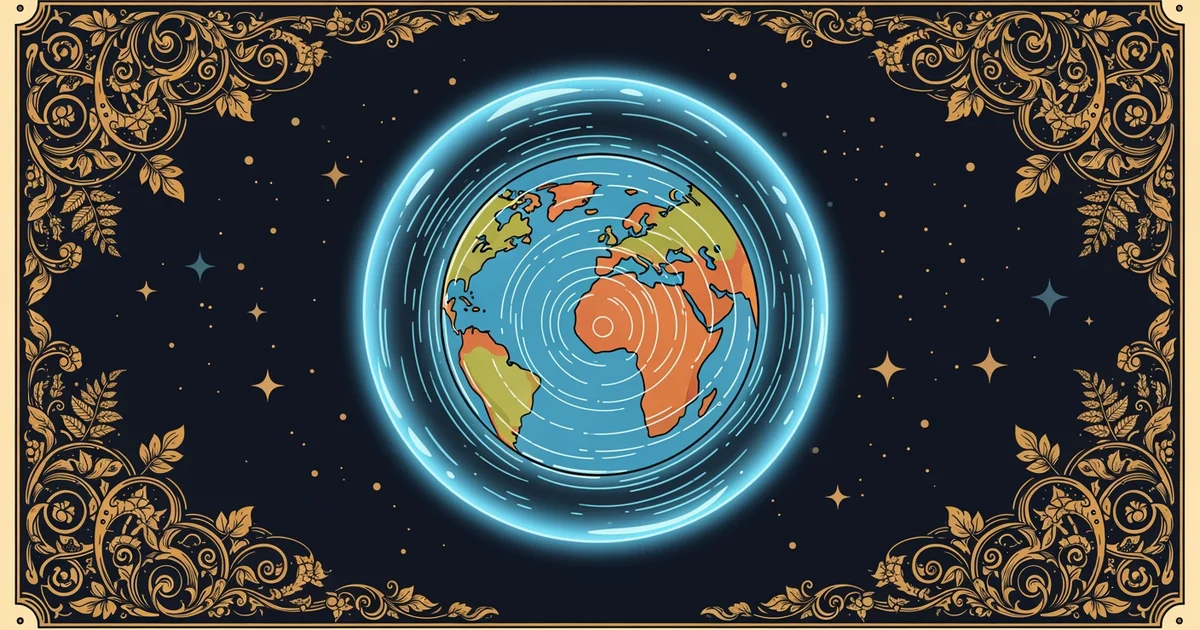
The Evolution of Solar Influence
The sun undergoes a constant cycle of change that alters the way it interacts with our atmosphere. As the sun burns through its fuel, its magnetic activity fluctuates, which creates complex challenges for our planet's protective shield. We previously learned about how solar flares disrupt satellites, but the long-term outlook involves much larger changes in solar radiation. If we compare this to a household budget, the sun is slowly increasing its energy output, which forces Earth to adapt its spending of heat and light. This gradual increase in solar brightness will eventually test the limits of our natural cooling systems and climate stability.
Key term: Heliopause — the outer boundary where the sun's solar wind stops pushing against the interstellar medium of space.
Over the next billion years, the solar wind will likely weaken while the core of the sun grows hotter. This shift creates a tension between the protective magnetic field of Earth and the increasing radiation from our star. We must consider how the magnetosphere will handle these stronger forces as the internal dynamo of our planet slowly cools down over geologic time. If the magnetic shield weakens, the atmosphere itself becomes vulnerable to being stripped away by high-energy particles from the sun. This process represents the primary threat to long-term habitability for any life forms relying on a stable surface environment.
Future Scenarios for Earth-Space Interactions
The way our planet interacts with space will shift as the sun enters its final stages of life. We can categorize these future environmental changes based on how they impact the physical structure of the Earth system:
- Atmospheric Erosion: High-energy radiation from the sun will break apart gas molecules, which reduces the density of our protective air layer over time.
- Magnetic Field Decay: The internal heat of the Earth drives our magnetic field, but this heat will eventually fade and leave the surface exposed.
- Solar Luminosity Increase: The sun will grow brighter and hotter as it ages, which forces the habitable zone of our solar system to move outward.
These factors combine to create a reality where Earth must balance its internal processes against the external pressure of a changing star. While human technology might help us mitigate short-term solar events, the long-term changes require a fundamental shift in how we view the planet as a closed system. The interaction between the solar wind and our magnetic field is not just a temporary weather event but a defining feature of our geological future. We are currently living in a unique window of time where the balance between the sun and Earth is perfectly suited for complex life.
| Factor | Current State | Future Projection | Impact on Earth |
|---|---|---|---|
| Solar Heat | Stable | Increasing | Surface warming |
| Magnetic Field | Strong | Weakening | Radiation exposure |
| Solar Wind | Moderate | Declining | Atmospheric loss |
Looking ahead, the research community remains divided on whether human intervention could ever stabilize these massive planetary shifts. Some experts suggest that we might eventually move our civilization to different orbits or find ways to artificially boost the magnetic shield of the planet. Others argue that the natural evolution of the sun makes such efforts impossible in the very long term. This debate highlights the uncertainty regarding our place in the cosmos as we move further into the future.
The long-term habitability of Earth depends on the delicate balance between the sun's changing energy output and the natural resilience of our planet's magnetic and atmospheric shields.
Studying these future space-earth interactions provides a clear understanding of why protecting our current environment remains the most important step for our species.