
The Cosmic Shield of Earth
Imagine a constant, invisible gale blowing from the sun that would strip away our atmosphere if we had no defense. This solar wind carries charged particles that would scorch the surface of our planet without a barrier to stop them. We live under the constant protection of a massive, invisible force field that keeps our world habitable. This shield is not a man-made invention, but rather a fundamental feature of our planet that works silently every single day.
The Invisible Barrier Around Our World
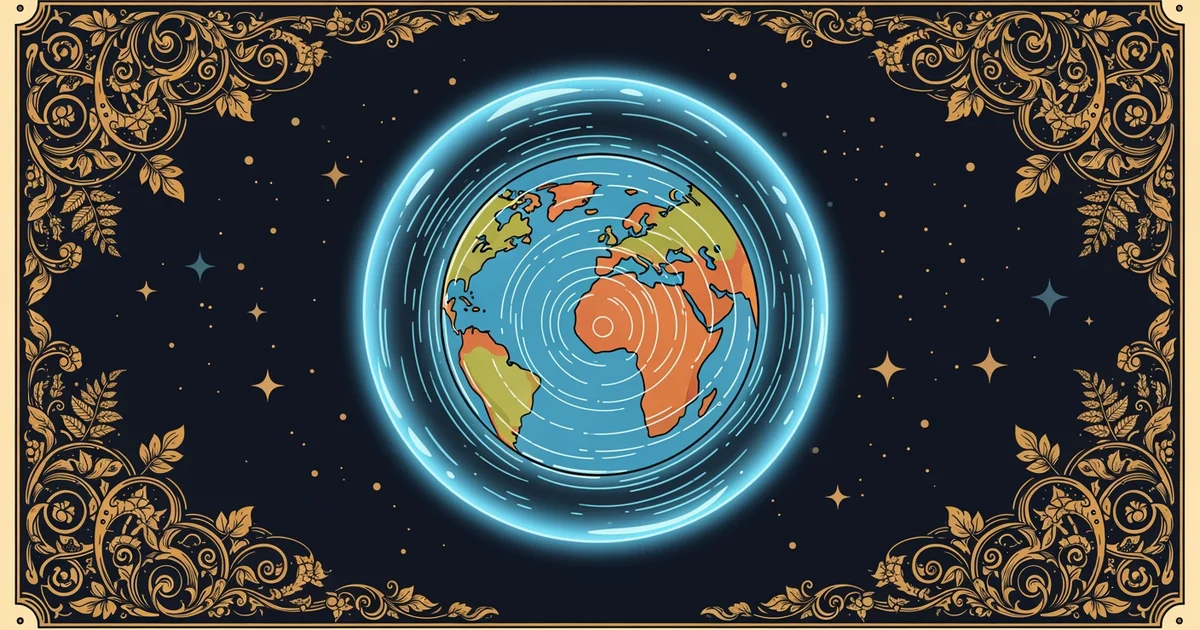
Our planet generates a powerful magnetosphere that acts like a giant magnetic bubble surrounding the globe. This shield originates deep within the core of the Earth, where molten iron flows in constant motion. As this liquid metal swirls, it creates electrical currents that generate a magnetic field extending far into space. You can think of this field like a sturdy umbrella on a rainy day. Just as the umbrella deflects raindrops away from your body, our magnetic shield deflects the dangerous particles coming from the sun. Without this bubble, the atmosphere would gradually vanish into the cold vacuum of space, leaving our world as barren as the moon.
Key term: Magnetosphere — the region of space around a planet that is dominated by the magnetic field of that planet.
This protective bubble is not a solid wall, but rather a dynamic region that changes shape based on solar activity. When the sun is quiet, the shield remains stable and covers the entire planet evenly. When the sun becomes active and releases intense bursts of energy, the shield stretches and compresses to absorb the impact. This interaction is essential for maintaining the delicate balance of gases in our atmosphere. The shield ensures that we keep the oxygen and nitrogen we need to survive while blocking out harmful radiation that could damage living cells.
How Our Shield Interacts with Solar Energy
Understanding how this shield functions requires looking at the constant flow of energy from the sun. The sun emits a steady stream of charged particles known as solar wind that travels across the solar system at incredible speeds. When these particles encounter our magnetic shield, they do not simply crash into the ground. Instead, the magnetic field lines guide these particles around the planet, forcing them to flow past us like water around a smooth stone in a river. This process prevents the particles from stripping away the ozone layer, which protects us from ultraviolet light.
| Feature | Function in Defense | Resulting Protection |
|---|---|---|
| Core Motion | Powers the field | Maintains atmosphere |
| Magnetic Lines | Redirects particles | Blocks space radiation |
| Polar Regions | Funnels excess energy | Creates light displays |
Sometimes, the pressure from the solar wind becomes too strong for the shield to deflect every single particle. In these instances, the magnetic field lines funnel the excess energy toward the north and south poles. These particles collide with gases in the upper atmosphere, creating the beautiful light shows we call auroras. This is a visual reminder that our planet is actively fighting to keep us safe from the harsh conditions of space. By converting this kinetic energy into harmless light, the Earth keeps the surface stable and protected from the full force of the sun.
This continuous interaction between the magnetic field and solar activity defines the environment we live in today. We are shielded from the worst effects of space weather, allowing life to thrive on the surface. This entire system is the first step in understanding how our planet interacts with the wider solar system. By learning how this shield functions, you gain a better understanding of the physical forces that keep our world stable and hospitable for all life forms.
The Earth acts as a giant magnet that redirects harmful solar energy to preserve our atmosphere and protect life on the surface.
By exploring how this magnetic shield functions, you will build the foundation needed to understand how solar energy drives our global climate and weather patterns.