
Gravity and Tidal Forces
Imagine standing on a beach and watching the ocean slowly creep toward your toes. You might wonder why the water moves in such a steady, rhythmic pattern every single day. This movement happens because the moon exerts a constant, invisible pull on our planet's vast oceans. While we often think of gravity as something that keeps our feet on the ground, it also shapes the entire surface of the Earth. By understanding this relationship, you can see how distant space objects dictate the daily cycles of our world.
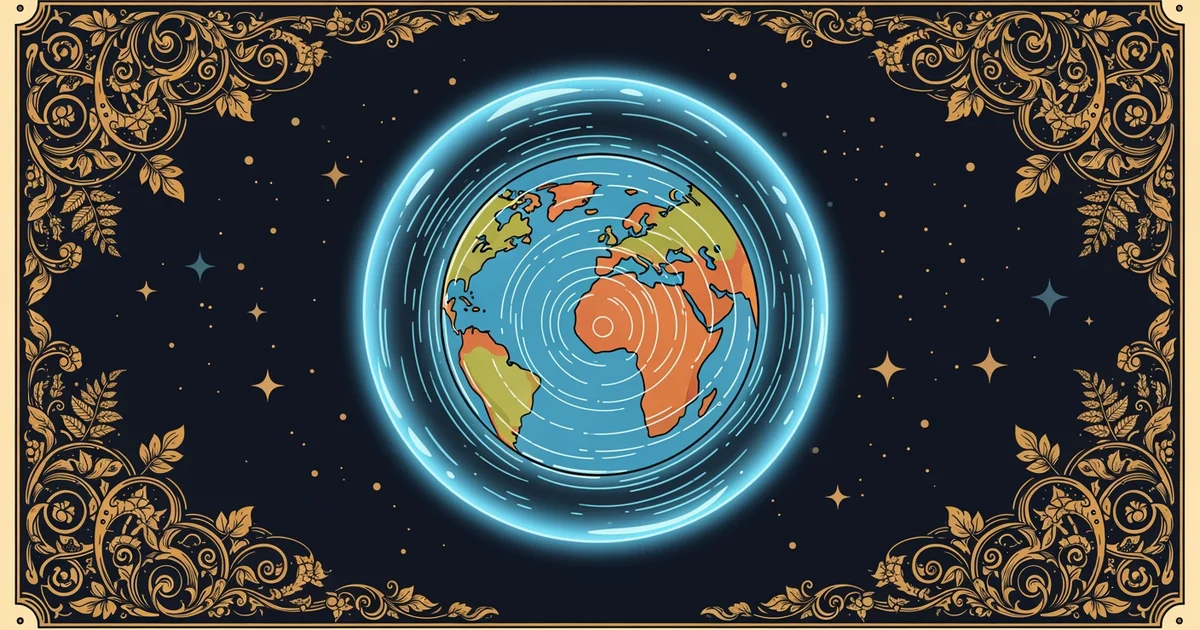
The Mechanics of Lunar Gravity
Although the moon is far away, its mass creates a gravitational field that reaches our planet. This force pulls on everything, but it has the most visible effect on our liquid oceans. Because water is fluid, it moves more easily than solid rock when pulled by external forces. Think of the ocean like a giant, flexible blanket draped over the Earth. When the moon pulls on one side, that blanket stretches outward toward the source of the gravity. This creates a bulge of water, which we experience as a high tide on the shore.
Key term: Tidal force — the specific gravitational effect that stretches a body toward the center of a larger, nearby mass.
Because the Earth rotates on its axis every day, different parts of our planet pass through these water bulges. As your location moves into the bulge, the tide rises. As your location moves away from the bulge, the tide falls back. This cycle repeats in a predictable rhythm because the moon orbits the Earth at a steady pace. If you track the position of the moon, you can predict the timing of the tides with high accuracy. This connection proves that our physical environment is deeply linked to the movements of bodies in space.
Patterns and Variations in Tides
While the moon is the primary driver of tides, the sun also plays a secondary role. Even though the sun is massive, its extreme distance makes its gravitational pull on our tides weaker than the moon's influence. When the sun and moon align during certain phases, their combined forces create higher tides than usual. We call these events spring tides, though they occur throughout the year, not just during the spring season. When the sun and moon sit at right angles, their forces partially cancel each other out, leading to smaller, lower tides.
To understand how these forces interact, consider the following tidal variations based on alignment:
- Spring Tides occur when the sun, moon, and Earth align in a straight line, which causes the gravitational forces to combine and produce higher high tides and lower low tides.
- Neap Tides happen when the sun and moon are at a ninety-degree angle relative to the Earth, which results in a smaller difference between high and low tide levels.
- Diurnal Tides represent a pattern where a specific coastline experiences only one high tide and one low tide during a single twenty-four hour period.
- Semi-diurnal Tides describe a common pattern where a coastline experiences two high tides and two low tides of roughly equal height within one full day.
These patterns show that the physical shape of our coastlines and the position of space objects work together. If you live near the coast, you are witnessing a daily tug-of-war between gravity and inertia. This process is not just about water levels, as it also influences how coastal ecosystems function and how marine life behaves. By tracking these shifts, scientists can better understand the delicate balance of our planet's hydrosphere. We see that invisible forces from space act as a pulse for our world, driving constant change in our physical environment.
Gravity acts as a physical bridge between the moon and our oceans, creating rhythmic shifts that define our daily coastal experience.
Next, we will explore how these gravitational interactions connect to the electrical charges found in our upper atmosphere.