
Cosmic Ray Interactions
Imagine standing under a vast shield that protects you from invisible bullets raining down from space. These high energy particles strike our planet constantly, yet we move through our daily lives without feeling a single impact.
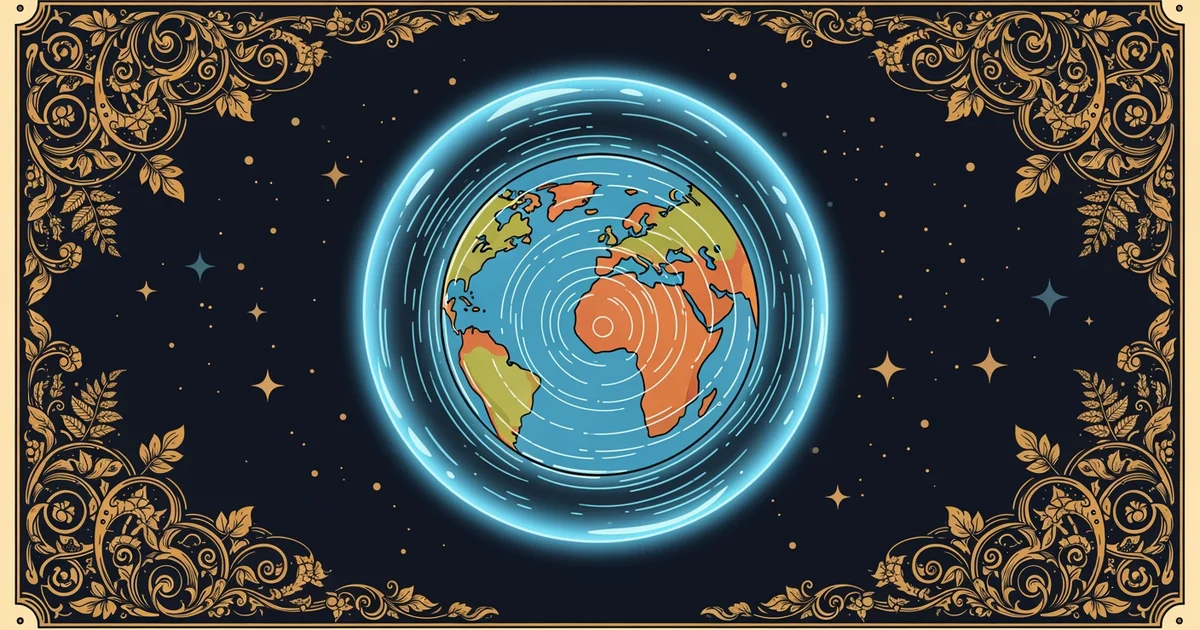
Understanding Cosmic Ray Penetration
These energetic particles are known as cosmic rays, which originate from distant explosions and powerful events deep within the galaxy. When these tiny bits of matter reach our planet, they collide with atoms in the upper air layers. This collision triggers a cascade of secondary particles that shower downward toward the surface of the Earth. Think of this process like a bowling ball hitting the first pin in a tight rack. The initial impact is strong, but the energy spreads out as the pins scatter across the wooden lane. Our atmosphere acts like the pins, absorbing the force and breaking the incoming energy into smaller, manageable pieces before they reach us. Without this protective gas blanket, the radiation would strike the surface with enough force to damage living cells. The atmosphere effectively filters the cosmic energy, turning a dangerous blast into a harmless sprinkle of particles that touch the ground.
Key term: Cosmic rays — high speed atomic nuclei or subatomic particles originating from space that penetrate the Earth's atmosphere.
While we cannot see these rays, their path through the air creates measurable changes that scientists track using sensitive equipment. The density of the air determines how far these particles travel before they lose their momentum entirely. Thicker air layers act as a stronger barrier, causing the rays to break down much faster than they would in thin air. This interaction is constant, meaning the sky above is always buzzing with invisible activity. We rely on this natural filtering process to maintain a safe environment for all living organisms on the planet.
Atmospheric Chemistry and Cloud Formation
Beyond just filtering radiation, these rays play a surprising role in the way our weather patterns function. As the particles travel through the air, they ionize gas molecules by stripping away their electrons. This ionization leaves behind charged particles that act as tiny magnets for water vapor in the atmosphere. These charged centers serve as the perfect starting point for cloud droplets to form and grow. Without this steady stream of particles from space, the process of cloud creation might look very different than it does today.
| Process Stage | Physical Action | Resulting Effect |
|---|---|---|
| Initial Entry | Particle collision | Secondary shower |
| Ionization | Electron removal | Charged molecules |
| Nucleation | Water gathering | Cloud formation |
This connection between space activity and weather shows how deeply connected we are to the wider universe. The following table summarizes how these invisible rays influence the air around us every single day:
- Ionization creates charged paths that help water molecules clump together more quickly.
- Cloud cover increases when cosmic ray activity is higher, which changes local temperature.
- Atmospheric chemistry shifts as these rays break apart stable molecules into new forms.
These tiny changes in the air have a massive impact on the global climate over long periods. By acting as seeds for clouds, cosmic rays help regulate how much sunlight reaches the surface of the Earth. If the number of rays hitting the atmosphere changes, the amount of cloud cover might also shift significantly. This relationship demonstrates that even the smallest particles from space can influence the physical environment of our home planet. We are part of a massive, interconnected system where space forces dictate the daily state of our skies.
High energy particles from space act as vital catalysts that shape our atmospheric chemistry and cloud formation patterns.
The next Station introduces geomagnetic storm dynamics, which determines how magnetic fields interact with these incoming solar particles.