
Humanity in Space Weather
Imagine you are sitting in a plane when suddenly the navigation systems start flickering and failing. This scenario happens because space weather acts like an invisible storm that disrupts our modern technology. While we live safely on the ground, our satellites orbiting high above Earth face constant threats from solar activity. These solar events release charged particles that can damage delicate hardware or scramble vital data signals. Understanding these risks is essential for protecting the infrastructure that keeps our global society connected today.
The Vulnerability of Orbital Infrastructure
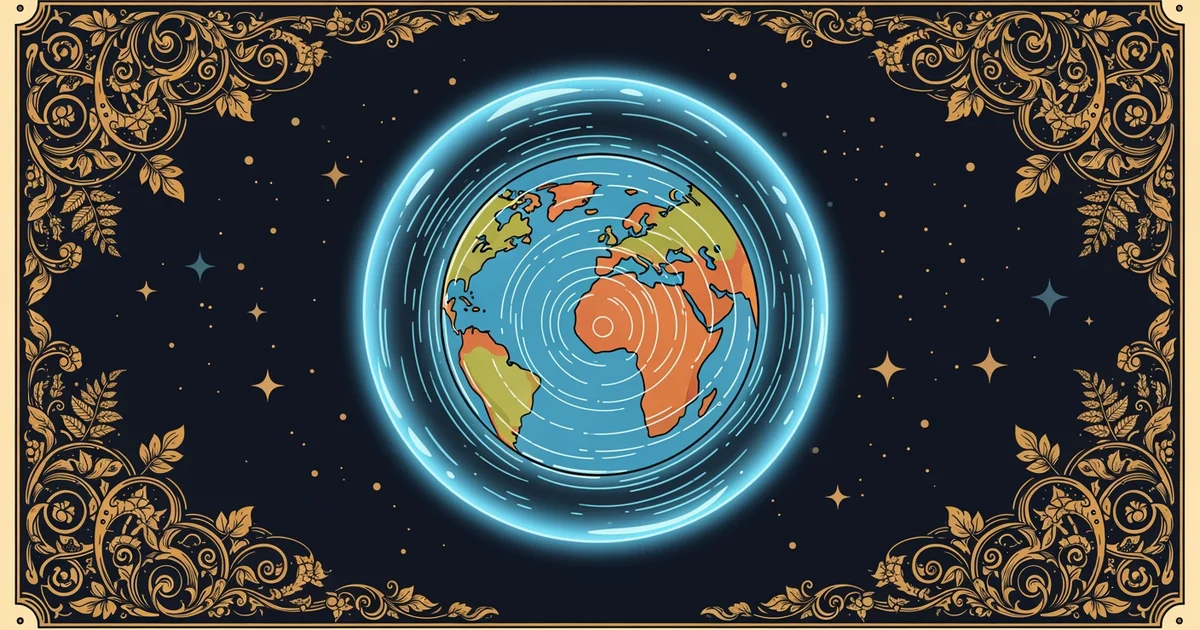
Space weather begins with the sun, which constantly emits a stream of charged particles known as the solar wind. When solar flares occur, they blast extra energy toward our planet and create intense geomagnetic storms. Satellites orbiting Earth act like fragile vessels sailing through a volatile ocean of high-energy radiation and electricity. If a storm hits, it can cause electrical surges that fry internal circuits or change the altitude of the satellite. Just as a heavy rainstorm makes driving difficult, high-density space weather makes satellite operation dangerous and unpredictable for ground teams.
Key term: Geomagnetic storm — a major disturbance of the magnetosphere caused by a solar wind shock wave or cloud of magnetic field interacting with Earth.
Engineers must design space hardware to survive these harsh environments by using specialized shielding and redundant systems. Without these protections, a single solar event could disable communication networks or stop global positioning services. We rely on these systems for everything from banking transactions to emergency weather tracking. The following table highlights how different orbital assets respond to various levels of solar activity and space weather intensity:
| Asset Type | Primary Risk | Mitigation Strategy | Impact Level |
|---|---|---|---|
| GPS Satellites | Signal delay | Signal correction | Moderate |
| Power Grids | Overload | Load shedding | Critical |
| Data Relays | Data corruption | Error checking | High |
Managing Risks for Future Human Missions
As we plan to send humans further into deep space, the challenges of space weather become even more complex. Astronauts outside the protective bubble of Earth's magnetic field have no shield against dangerous cosmic radiation. Solar energetic particles can penetrate spacecraft walls and cause severe health risks for the entire crew. We must develop better forecasting tools to predict these storms before they reach our explorers. By combining data from planetary defense strategies with new weather monitoring, we can create safer routes for travel.
- Monitoring sensors track solar activity in real-time to provide early warnings for mission control centers.
- Radiation shielding materials block harmful particles from entering the living quarters of the spacecraft cabins.
- Safe zones are designated areas inside the ship where crew members retreat during intense solar events.
These protocols ensure that human life remains the priority during long missions beyond our home planet. We must also consider how the magnetic field of Earth interacts with space weather to protect our grid. This interaction is the foundation of our path, showing that invisible forces shape our environment daily. By synthesizing what we learned about planetary defense and solar dynamics, we can build a resilient future for space travel. We must ask ourselves if our current technology is enough to handle a massive solar event that might occur in the future.
Protecting human infrastructure in space requires a combination of robust hardware shielding, advanced solar forecasting, and strategic mission planning to mitigate the unpredictable nature of solar radiation.
Next, we will explore the future outlook for our relationship with the space environment and how we can continue to thrive beyond Earth.