
The Blue Planet Foundations
Imagine you are standing on a vast, sandy beach while the tide slowly creeps toward your feet. This immense body of water covers most of our planet, yet we often ignore the hidden structures beneath the waves. The global ocean acts like a giant, interconnected engine that regulates the climate and supports all life forms on Earth. Understanding these foundational forces is essential because they dictate how energy, heat, and nutrients circulate across every continent on our globe.
The Physical Framework of the World Ocean
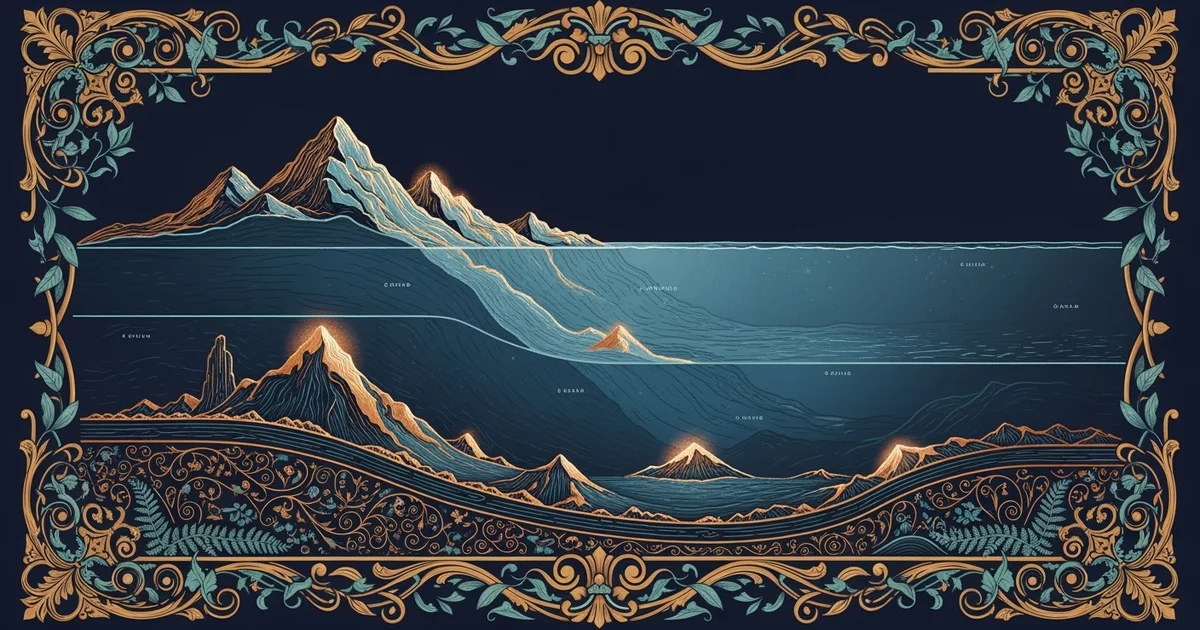
When we look at a map, we see distinct names like the Atlantic or the Pacific Ocean. In reality, these basins are just parts of one continuous, massive body of saltwater that wraps around the entire planet. This world ocean functions like a single, giant bathtub where the water constantly moves through deep channels and surface currents. The basin floors are not flat, as they contain massive mountain ranges and deep trenches that influence how water flows. Just as a riverbed shapes the path of a stream, the topography of the seafloor forces deep currents to change their speed and direction.
Key term: World ocean — the singular, interconnected body of salt water that covers over seventy percent of the Earth's surface.
Because the ocean is so deep, it creates different layers based on how much sunlight reaches the water. The top layer receives enough light for plants to grow, while the dark, cold depths remain hidden from our daily view. This vertical structure is like a multi-story building where each floor has its own unique environment and inhabitants. The physical boundaries between these layers are often defined by changes in temperature and salt levels. These shifts act as invisible walls that prevent water from mixing, which influences where marine life can survive.
Global Circulation and Marine Stability
To understand how the ocean supports life, we must look at the way heat moves through the water. The ocean acts like a massive conveyor belt that carries warm water from the equator toward the freezing poles. This process is crucial because it keeps the planet from becoming too hot or too cold for living creatures to survive. If the ocean stopped moving, the climate would shift rapidly, creating extreme conditions that most species could not handle. This movement is driven by differences in water density, which is determined by temperature and the amount of dissolved salt.
Below is a table showing how the three main factors affect water movement in the ocean:
| Factor | Influence on Water | Resulting Action |
|---|---|---|
| Temperature | Heat makes water rise | Warm currents flow north |
| Salt content | Salt makes water dense | Cold water sinks downward |
| Wind speed | Surface friction moves top | Waves and currents form |
These forces work together to maintain a balance that allows ecosystems to thrive across the globe. When cold, salty water sinks at the poles, it pulls warmer water from the surface to take its place. This cycle is similar to how a central heating system moves air through a large house to keep every room at a comfortable temperature. By distributing heat, the ocean ensures that life can exist in places that would otherwise be barren or frozen. This constant circulation is the heartbeat of our planet, providing the stability that all complex life needs to grow and evolve over time.
The world ocean functions as a single, complex system that regulates planetary temperatures and distributes vital nutrients through constant movement.
This foundation allows us to explore how specific marine life forms adapt to these changing conditions in the next section.