
Basal Sliding Mechanisms
Imagine sliding down a snowy hill on a plastic sled that suddenly hits a patch of ice. You notice an immediate shift in speed because the friction between your sled and the ground changes. Glaciers experience this same physical phenomenon as they move across the rocky landscape beneath them. While we often view glaciers as frozen blocks, they behave more like viscous fluids that flow under their own immense weight. The base of a glacier is a dynamic zone where ice meets rock. This interaction determines how quickly the entire ice mass travels toward the sea or lower valleys. Understanding these mechanics helps us predict how ice sheets react to warming temperatures on our planet.
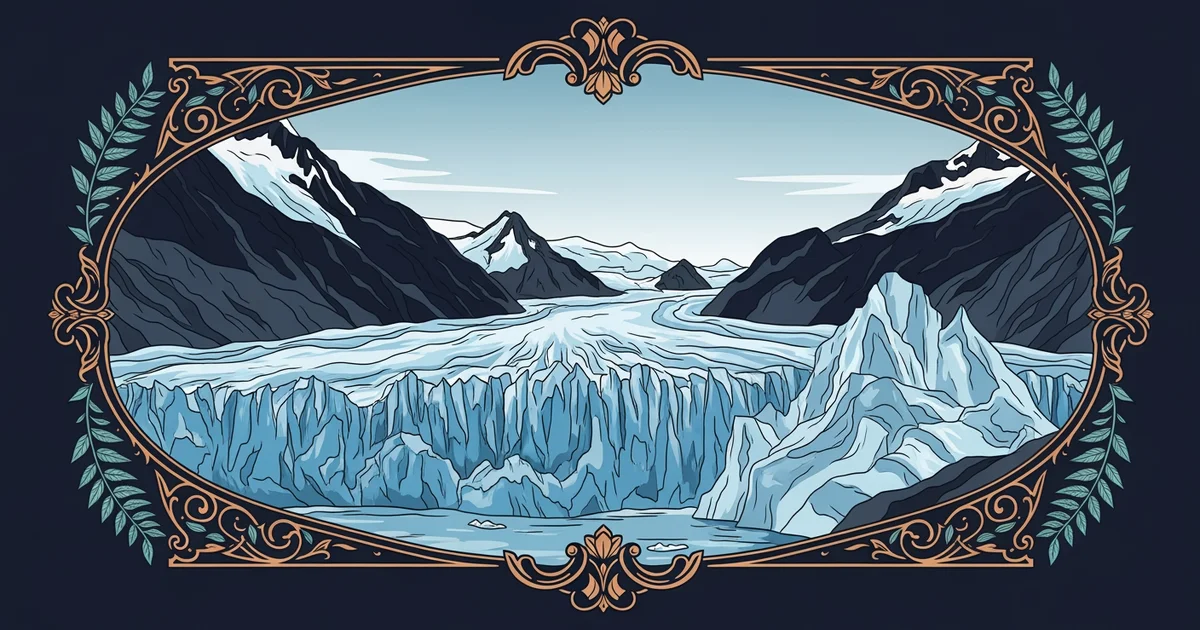
The Mechanics of Basal Motion
When ice moves over a rough surface, it must overcome significant resistance to maintain its forward momentum. The primary mechanism for this movement is known as basal sliding, which allows the glacier to slip over its bed. This process resembles a heavy furniture piece sliding across a smooth hardwood floor when you place small rollers underneath it. The ice does not simply push forward through sheer force alone. Instead, it relies on specific conditions at the interface to reduce friction. Without this reduction, the glacier would remain stuck in place regardless of its massive weight.
Key term: Basal sliding — the movement of a glacier over its bed caused by the presence of a thin layer of liquid water.
Water plays a critical role in this sliding process by acting as a natural lubricant between the ice and the bedrock. When pressure from the overlying ice increases, the melting point of the ice actually decreases slightly. This allows a small amount of liquid water to form even when temperatures remain well below freezing. This water fills the tiny gaps between the ice and the rock surface. It effectively lifts the glacier slightly off the ground, which drastically lowers the resistance to movement. The glacier essentially floats on a thin film of water, allowing it to slide forward with much less effort.
Factors Influencing Ice Flow
Several environmental factors dictate how effectively this sliding occurs beneath the massive ice sheets. We can categorize these influences based on how they affect the lubrication layer and the underlying terrain. These factors work together to create a complex system of movement that changes throughout the seasons.
- Hydraulic pressure develops when meltwater drains through deep cracks in the glacier to reach the base, which increases the water volume and accelerates the sliding speed significantly.
- Sediment deformation occurs when the glacier moves over soft materials like silt or clay, which act like ball bearings and allow the entire ice mass to shift more easily.
- Bed roughness dictates the level of friction, as smoother surfaces allow for faster sliding while jagged rocks create obstacles that slow the flow and increase internal stress.
These variables explain why some glaciers move rapidly while others remain nearly stagnant for decades. When the volume of meltwater increases during warmer summer months, the internal pressure at the base rises. This creates a surge in movement that can be measured by scientists tracking the glacier position. The relationship between water supply and ice velocity remains a central focus for researchers studying global sea level changes. By monitoring these shifts, we gain insight into how the cryosphere responds to shifting climate patterns. The interaction between ice and its bed is a delicate balance of physical forces that shapes our landscape.
Glacial movement relies on meltwater lubrication to overcome friction at the base, allowing ice to flow across terrain like a heavy object on a smooth surface.
But what does the physical formation of cracks look like when this movement encounters a sudden change in slope?
Want this with sources you can check?
Premium Learning Paths for Earth Sciences & Geography are researched against open-access libraries — PubMed, arXiv, government databases, and more — with their distinctive claims cited to real sources and independently checked.
See what Premium includes