
System Integration
Imagine a massive, complex machine where every single gear turns another gear in a perfect, endless chain. Our planet operates exactly like this giant machine, with forces deep underground pushing against the winds and waters that shape the surface above. When we look at the landscape, we often see only the final result of these overlapping actions. However, every mountain range or valley is a record of how different Earth systems have worked together over millions of years.
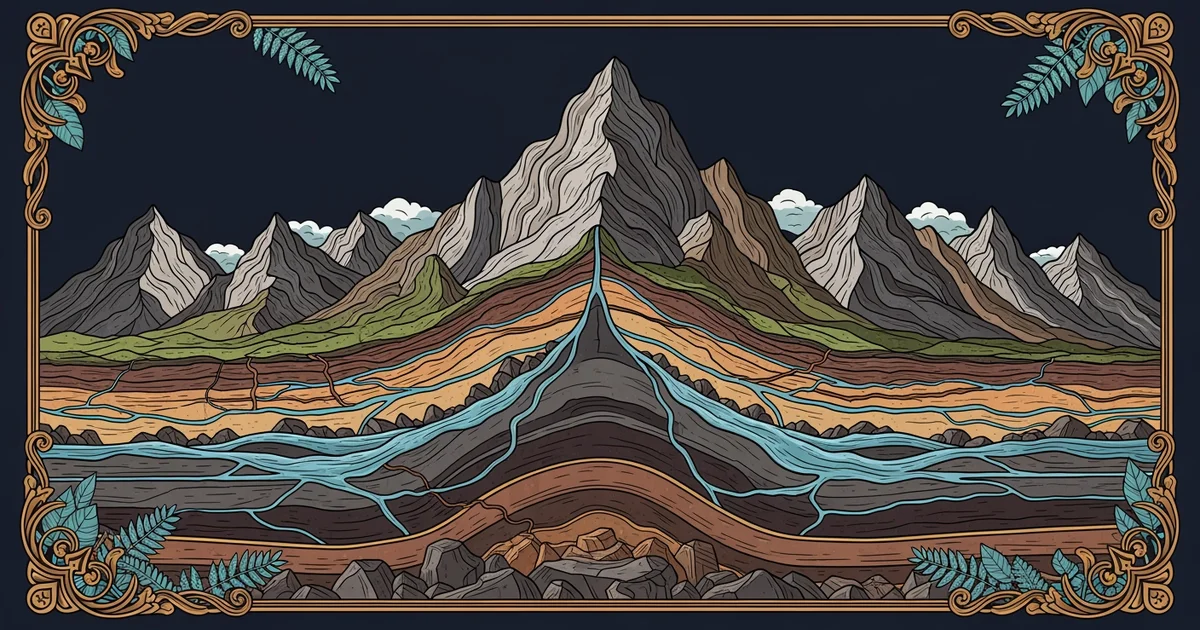
The Interconnected Nature of Earth Systems
To understand how the surface changes, we must view the planet as a single, unified system. The lithosphere acts as the rigid outer shell, providing the solid foundation for all other surface features to rest upon. Beneath this layer, internal heat drives tectonic movement, which constantly creates new landforms through volcanic activity or massive crustal shifts. These internal forces provide the raw material that the atmosphere and hydrosphere then begin to wear down. Think of the lithosphere as the base layer of a painting, while the other systems act as the brushes that shape the final image.
Key term: Lithosphere — the rigid, outermost shell of the planet that includes the crust and the uppermost mantle.
This interaction creates a constant struggle between the forces of construction and the forces of destruction. If the planet only had internal growth, the surface would be a jagged mess of sharp peaks and deep cracks. Instead, the climate forces we studied previously serve as the primary agents of erosion that smooth out these sharp edges. Wind, ice, and water act like a sculptor carving stone, slowly moving material from high points to low basins. This process ensures that the landscape is never static, but is always moving toward a new, temporary form of balance.
Synthesis of Geomorphological Processes
We can organize these complex interactions by looking at how different energy sources drive the evolution of our land. The energy from our core builds the land, while the energy from our sun drives the weather that breaks it down. This cycle of building and breaking is the core of how our world maintains its shape over deep time. The following table highlights how different systems contribute to the ongoing evolution of our physical environment.
| System | Primary Role | Effect on Landscape | Energy Source |
|---|---|---|---|
| Lithosphere | Structural base | Creates elevation | Earth internal heat |
| Hydrosphere | Erosional agent | Carries sediment | Solar radiation |
| Atmosphere | Weathering agent | Breaks down rock | Solar radiation |
These processes do not happen in isolation, as every small change in one area triggers a reaction elsewhere. For example, a mountain range rising high into the sky forces air to rise, which increases rainfall and accelerates the erosion of that very same mountain. This feedback loop is why we cannot study a single landform without considering the global systems that support it. The system is perfectly integrated, meaning that a shift in global temperature or tectonic speed eventually changes the shape of every river and hill on the planet.
When we integrate these ideas, we see that the landscape is a living archive of Earth history. Every valley floor holds sediment that tells a story about past climates and ancient tectonic events. By mapping these features, we gain a better understanding of how the planet manages its energy and material over vast scales. The forces of nature are not random, but follow strict physical laws that link the deep interior to the highest clouds. As we look forward, we must ask how human activity might be adding a new, rapid layer of influence to these ancient, slow-moving geological cycles.
The physical landscape emerges from the constant, balanced tension between internal heat that builds the crust and external weather that wears it down.
Next, we will examine how these integrated systems determine the future stability and appearance of our changing landscapes.