
The Dynamic Crust
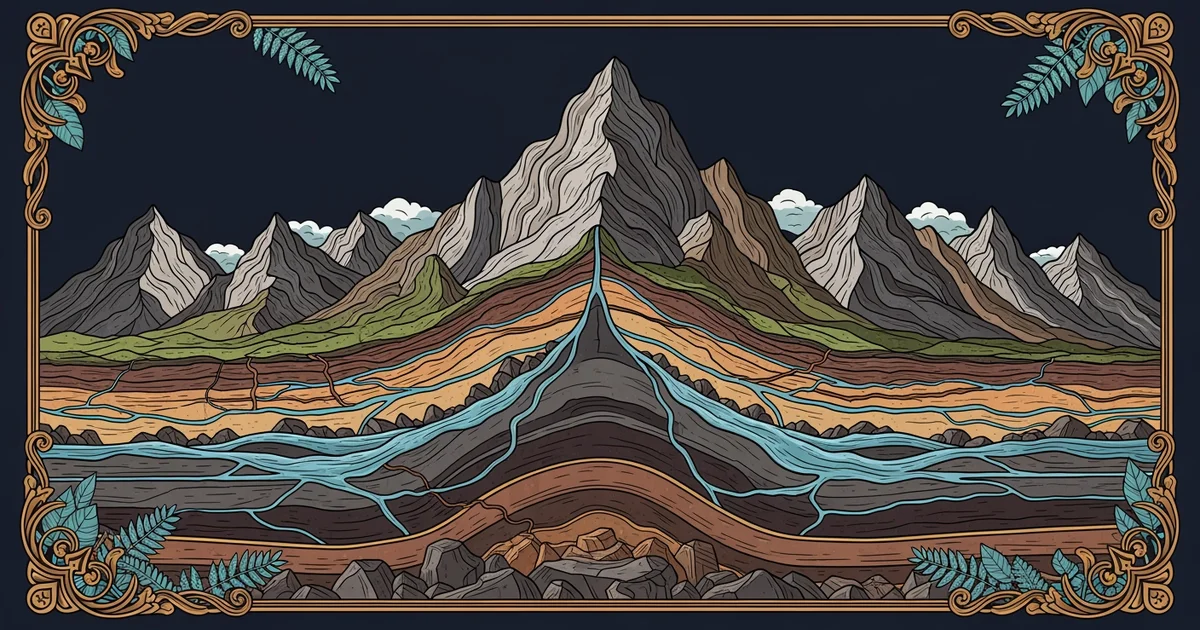
Imagine standing on a massive, slow-moving puzzle piece that drifts across a sea of hot liquid. You might feel steady, but the ground beneath your feet is constantly shifting in tiny, invisible increments. This slow dance of the Earth's outer shell defines the very geography of our home planet. The surface you walk upon is not a single, solid piece of rock. It is a collection of rigid slabs that float on a softer, warmer layer deep below. These massive sections are known as tectonic plates, and their movement creates the dramatic landscapes we see today. Without this constant motion, our world would look flat and lifeless.
The Engine of Earth
To understand how these plates move, think about a pot of thick soup heating on a stove. As the soup warms, the hot liquid rises to the top, cools down, and sinks back to the bottom. This cycle creates a current that moves the contents of the pot in a slow, circular motion. The Earth works in a similar way, with heat from the core driving currents in the mantle. These currents act like a giant conveyor belt, pushing the massive plates across the surface of the planet. When these plates collide or pull apart, they reshape the crust in ways that take millions of years to complete.
Key term: Lithosphere — the rigid outer layer of the Earth that includes the crust and the upper part of the mantle.
This movement is not just a theoretical concept, as it leaves clear physical evidence across the globe. When plates interact, they create distinct boundaries that determine the shape of the land. These interactions are responsible for the most intense geological events on our planet. You can categorize these movements into three main types based on how the plates interact with one another:
- Divergent boundaries occur when two plates pull away from each other, allowing molten rock to rise and create new crust.
- Convergent boundaries happen when two plates crash together, often forcing one plate to slide beneath the other in a process called subduction.
- Transform boundaries exist where two plates slide past one another horizontally, which causes a buildup of pressure that is released as sudden vibrations.
Shaping the Surface
These boundaries act as the primary construction sites for our planet's most iconic physical features. When plates move, they do not just shift the dirt; they build massive mountain ranges and carve deep ocean trenches. The energy released during these shifts is immense, and it acts as the primary force behind the evolution of our landscapes. By studying where these plates meet, scientists can predict where volcanoes might form or where the ground is likely to shake. The dynamic nature of the crust ensures that the face of the Earth is always changing, even if it happens too slowly for us to notice in our daily lives.
| Boundary Type | Plate Movement | Resulting Feature |
|---|---|---|
| Divergent | Moving apart | Mid-ocean ridges |
| Convergent | Crashing into | High mountains |
| Transform | Sliding past | Fault lines |
This table shows how the direction of plate movement dictates the type of landform created. Every mountain you see and every valley you explore is the result of these massive forces interacting over long periods. The crust is essentially a recycling system, where old rock is pushed down and melted while new rock rises to replace it. This cycle is vital for the health of the planet, as it distributes minerals and regulates the heat within the Earth. By observing these patterns, we gain a deeper appreciation for the complex machine that is our world. The ground beneath us is a living, breathing system that never truly rests.
The constant movement of tectonic plates acts as a global recycling system that builds and reshapes the Earth's surface over vast periods of time.
The next step in our journey will examine how the forces of wind and water break down these mountains through the process of weathering.