
Future Landscapes
Imagine the surface of the planet as a massive, slow-moving conveyor belt that never stops. Every mountain range you see today is just a temporary feature waiting for the next cycle of erosion. Forces like wind, water, and tectonic movement act as the architects of our world. They are constantly tearing down old landscapes while building new ones from the debris. Understanding how these forces interact provides a window into what the Earth might look like in the distant future.
The Engine of Surface Change
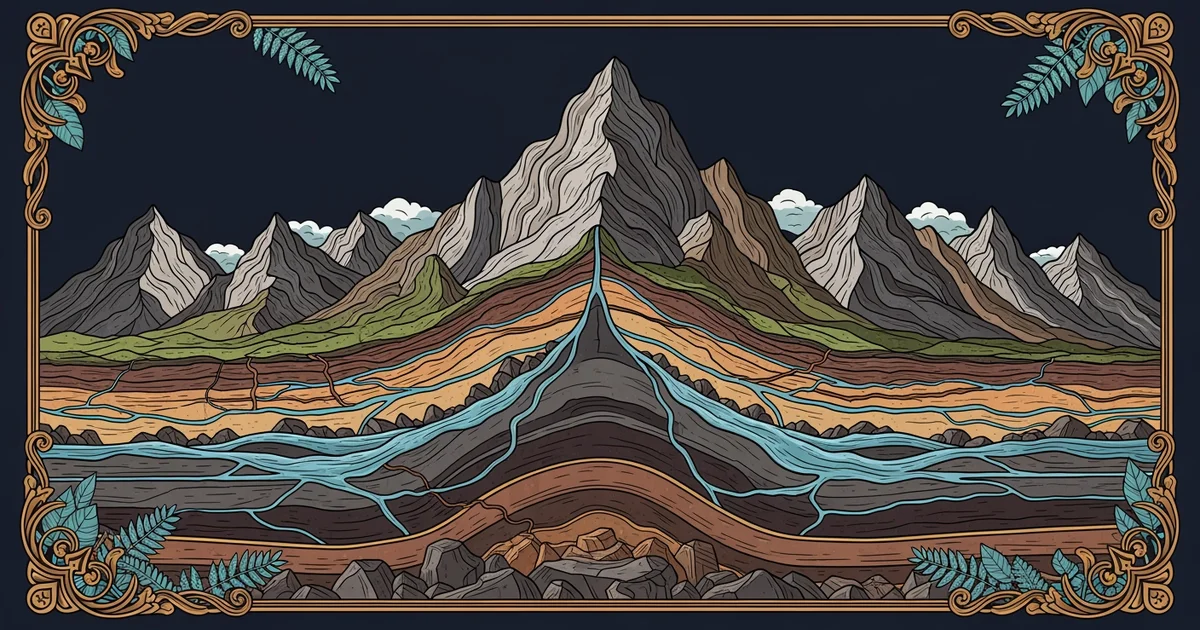
To predict future landscapes, we must look at how plate tectonics drive the constant recycling of Earth's crust. Think of these plates like massive puzzle pieces that float on a hot, semi-liquid layer of rock beneath them. When these pieces collide, they push the land upward to form mountains or create deep valleys through volcanic activity. This process is like a bank account where deposits and withdrawals happen at the same time. The energy from the Earth's interior deposits new land, while weathering and erosion act as withdrawals that slowly remove it.
Key term: Plate tectonics — the scientific theory describing the large-scale motion of the plates making up Earth’s outer shell.
Over millions of years, this balance determines the shape of every continent and ocean basin. If the internal heat of the planet stays strong, we can expect continued mountain building and volcanic growth. However, if the internal engine begins to cool, the rate of change will likely slow down. This shift would lead to flatter landscapes as erosion eventually wears down the existing peaks without new uplift to replace them. The future of our surface depends entirely on this tug-of-war between internal heat and external weather.
Predicting Long-Term Landscape Evolution
As we look further ahead, we must consider how climate patterns influence the pace of landscape evolution. Water is the most powerful tool for reshaping the surface, as it carries away sediment and carves deep river valleys. In a future with warmer temperatures, we might see faster rates of chemical weathering and more intense storm activity. These changes would accelerate the breakdown of rocks and alter the path of major rivers across the globe. We can categorize the primary drivers of this future landscape change by their specific impact on the terrain.
| Driver of Change | Primary Action | Resulting Landscape Feature |
|---|---|---|
| Tectonic Uplift | Pushing crust up | Jagged mountain ranges |
| Glacial Erosion | Grinding rock away | Deep U-shaped valleys |
| River Transport | Moving sediment | Wide alluvial plains |
This table shows how different forces shape the land in unique ways. By tracking these variables, scientists can forecast which areas will likely become flatter and which will rise. The interaction between geomorphology and climate creates a complex feedback loop that is difficult to predict with perfect accuracy. For instance, as mountains rise, they force air upward, which creates rain, which then speeds up the erosion of those very same mountains. This cycle ensures that the Earth remains in a state of perpetual change, never settling into one permanent form.
The Final Synthesis of Earth Processes
Looking back at our path, we see that system integration and geomorphology work together to define the world. The forces that reshape our planet are not random acts of nature but part of a predictable, long-term cycle. By studying how sediment moves and how plates shift, we gain a better understanding of the ground beneath our feet. The landscape of the future will be a product of these same fundamental laws of physics and chemistry. Even as the Earth changes, the underlying rules governing these transformations remain consistent throughout geological time.
The future landscape of our planet is an ongoing result of the balance between internal tectonic forces and external environmental weathering processes.
Understanding these natural cycles allows us to appreciate that the Earth is a dynamic system that will continue to evolve long after we are gone.