
Human Impact
When the Hoover Dam was finished in 1936, the Colorado River changed forever because the massive concrete wall stopped the natural flow of sediment. This event serves as a perfect example of anthropogenic change, where human actions alter the physical environment more quickly than natural processes ever could. By blocking the river, the dam prevented sand and silt from reaching the delta, causing the landscape downstream to shrink and erode rapidly. This is a direct application of the erosion principles discussed in Station 10, showing how human engineering choices dictate the shape of our planet.
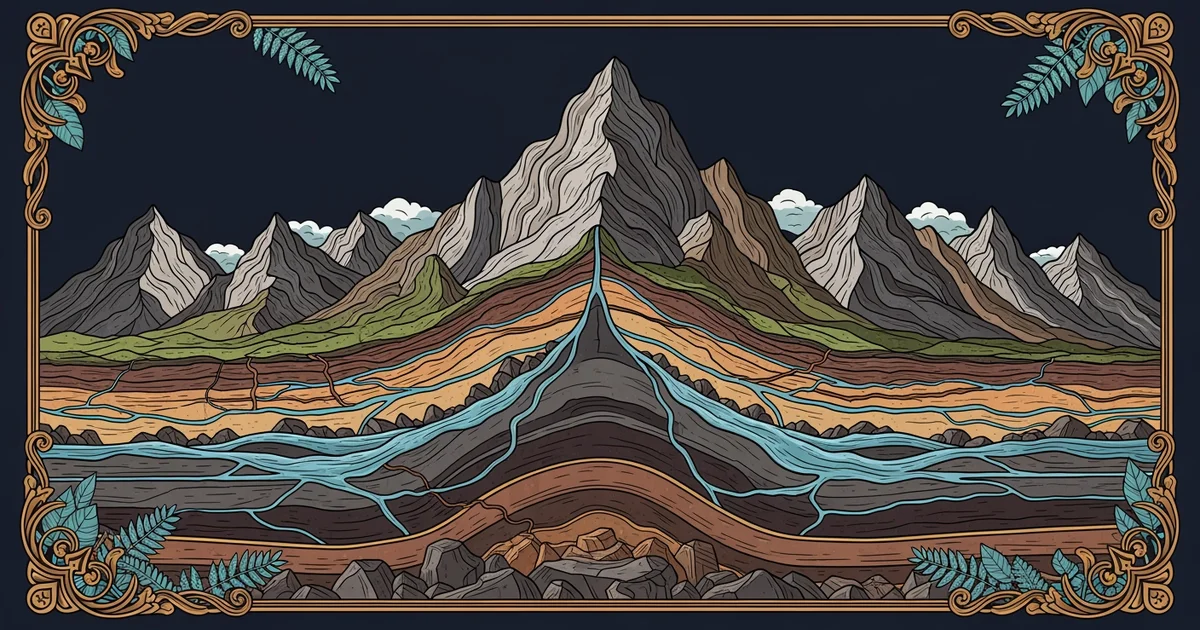
Understanding Human Influence on Landscapes
Humans act like a geological force because we move more earth, rock, and soil each year than all the world’s rivers combined. We build cities, dig mines, and clear forests, which changes how water moves across the surface of the land. When we replace natural ground cover with concrete or asphalt, we create surfaces that do not absorb rain, leading to faster runoff and increased flooding. This process mirrors the way a homeowner might pave a garden path, causing water to pool against the foundation of their house instead of soaking into the soil. Because our influence is so widespread, geologists now study these human-led shifts as a primary factor in modern landform evolution.
Key term: Anthropogenic change — the physical transformation of the Earth's surface caused by human activities like construction, agriculture, and urban development.
Our impact on the earth follows a pattern of rapid alteration rather than the slow, steady pace of natural weathering. We often see this in large-scale projects that reshape entire valleys or coastal regions within just a few years. While nature takes millennia to carve a canyon, humans can blast through a mountain in months to build a highway or a tunnel. This speed creates a unique challenge for the environment, as natural systems do not have enough time to adapt to the new physical conditions. When ecosystems cannot adjust to these sudden shifts, the resulting landforms often become unstable, leading to landslides or accelerated soil loss.
Comparing Natural and Human-Driven Modification
To understand how these forces differ, we can look at the specific ways they interact with the crust of the planet. Natural forces usually operate in cycles, such as the seasonal freezing and thawing that breaks down rocks over thousands of years. In contrast, human actions are often linear, focused on achieving a specific goal like housing or resource extraction. The following table highlights the differences between these two types of landscape modification.
| Feature | Natural Forcing | Human Forcing |
|---|---|---|
| Speed | Very slow and gradual | Extremely rapid and focused |
| Direction | Cyclical and repeating | Linear and goal-oriented |
| Scale | Global and widespread | Localized but very intense |
| Result | Balanced ecosystems | Often requires maintenance |
These differences show why human impact is so significant for the study of geomorphology today. Because our projects are so intense, they often require constant repair to keep the land from reverting to its natural state. A dam, for example, must be dredged regularly to remove the sediment that would naturally move downstream without our interference. This constant need for maintenance proves that human landforms are not passive additions to the earth, but active systems that require ongoing energy and human intervention to remain functional.
Finally, we must consider the long-term legacy of these modifications on the global landscape. Every time we alter a river path or flatten a hill, we change the way water and wind interact with the surface for centuries to come. Even if we stop building today, the scars we left on the earth will continue to influence how rain flows and how soil settles for many generations. This is the core challenge of modern geography, as we seek to balance our need for infrastructure with the natural stability of the planet. Understanding these impacts allows us to design better, more sustainable ways to live on the earth without destroying the very landscapes that support our survival.
Human activity functions as a high-speed geological agent that permanently shifts the equilibrium of natural landscapes through rapid, goal-oriented physical modification.
But this model of human control breaks down when we consider the unpredictable long-term effects of climate forcing on these engineered systems.