
Provisioning Services
Imagine walking through a local grocery store to gather ingredients for your dinner. Every single item in your cart originated from a complex natural system outside.
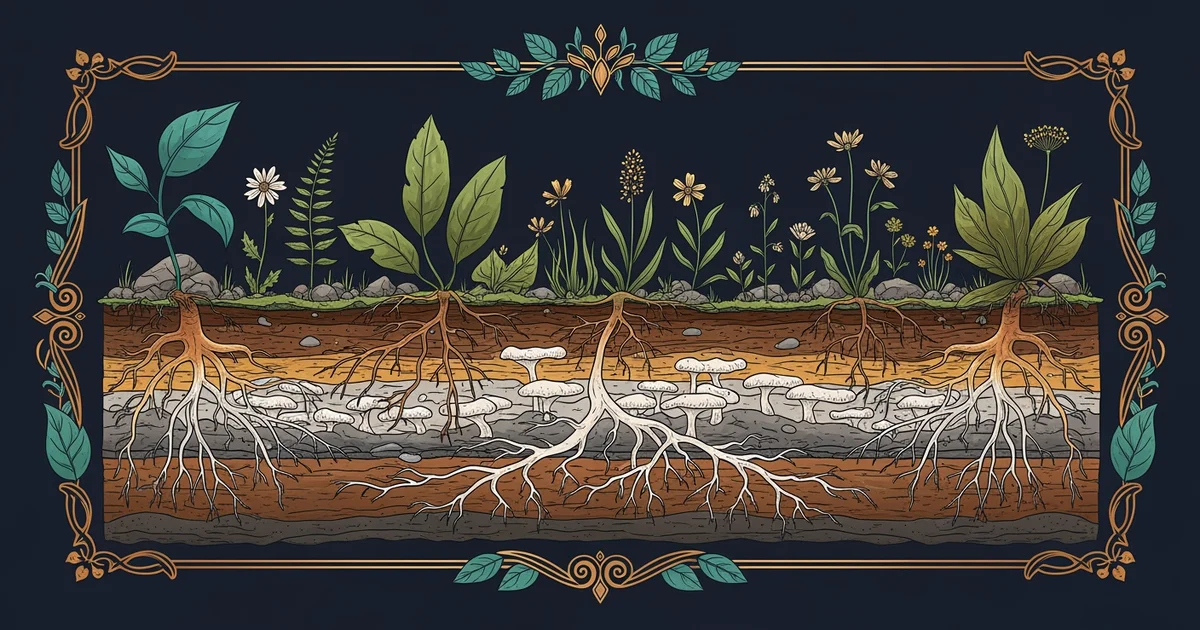
The Natural Supply Chain
When we think about nature, we often picture beautiful landscapes or wild animals. However, ecosystems function as highly productive factories that generate our essential daily resources. Scientists call these tangible products provisioning services, which represent direct material benefits. These services include everything from the timber in your walls to drinking water. We extract these materials directly from nature to support our basic human survival. Without these constant biological contributions, our modern economy would completely collapse overnight. Every manufacturing process ultimately begins with raw materials harvested from the natural world.
Consider a massive wholesale warehouse that constantly restocks its shelves without human intervention. The natural environment operates exactly like this self-replenishing global supply chain. When you harvest apples from an orchard, you are withdrawing from this warehouse. The soil, water, and pollinators worked together to manufacture that specific edible product. As long as we do not overharvest, the warehouse continues producing valuable goods. If we extract resources too quickly, the natural machinery breaks down and stops. This economic relationship forms the absolute foundation of all human agriculture and industry.
Categories of Harvested Resources
We can divide these provisioning services into several distinct categories based on human usage. The most obvious category involves the diverse nutritional sources we consume every day. Agricultural crops, wild fish populations, and foraging materials all fall under this umbrella. Nature also provides critical structural materials like lumber, bamboo, and natural plant fibers. We use this harvested biomass to construct homes and manufacture our daily clothing. Beyond food and shelter, ecosystems supply the fundamental biochemical compounds used in medicine. Many pharmaceutical drugs originate from unique chemical structures found only in wild plants.
To understand our deep dependence on these systems, we must examine specific resource categories. The natural environment reliably produces several primary types of essential provisioning materials. Food resources represent the largest and most visible category of ecosystem products. Raw materials constitute a second major group encompassing timber, rubber, and cotton. Finally, energy resources form a third crucial category that powers human development. These categories demonstrate how deeply intertwined our daily lives remain with natural production. We constantly consume these products without recognizing their complex ecological origins.
The Importance of Sustainable Extraction
While ecosystems generate massive quantities of resources, their production capacity has strict limits. The wholesale warehouse analogy reminds us that inventory cannot magically appear from nothing. If a logging company removes trees faster than seeds can sprout, timber vanishes. This dangerous scenario represents an unsustainable extraction rate that damages the underlying ecosystem. When we degrade the natural environment, we permanently destroy its ability to provide. Protecting biodiversity ensures that these biological factories remain operational for future human generations. We must carefully balance our immediate consumption needs with long-term ecological health.
Different environments specialize in producing completely different types of valuable provisioning services. A dense tropical rainforest generates entirely different materials than a coastal marine ecosystem. We can catalog these distinct regional contributions to understand our local resource dependencies. Mapping these resources helps communities protect their most valuable natural economic assets. Recognizing these specific environmental outputs prevents us from accidentally destroying vital supply chains. Local governments use this specific data to establish protected conservation zones and quotas. This careful management guarantees that essential materials remain available for future community needs.
| Ecosystem Type | Primary Resource | Human Application | Extraction Method |
|---|---|---|---|
| Marine Ocean | Wild fish stocks | Nutritional food | Commercial netting |
| Boreal Forest | Hardwood timber | Home construction | Selective logging |
| Freshwater Lake | Clean drinking water | Hydration supply | Municipal pumping |
The table above illustrates how specific environments cater to distinct human survival requirements. If a freshwater lake becomes polluted, the municipal pumping system loses its value. The technology used for extraction relies entirely on the health of the ecosystem. We cannot engineer our way out of a completely depleted natural resource base. Therefore, protecting the biological source remains just as important as improving extraction technology. Human innovation must focus on preserving these environments rather than just exploiting them. Every community must actively safeguard the natural systems that provide their daily provisions.
Provisioning services are the direct, tangible materials we extract from nature to survive.
Now that we understand what ecosystems provide, we must explore how they regulate themselves.