
The Web of Life
Imagine visiting a local grocery store that only sells three types of plain food. You would quickly realize that a healthy diet requires a much wider variety of ingredients.
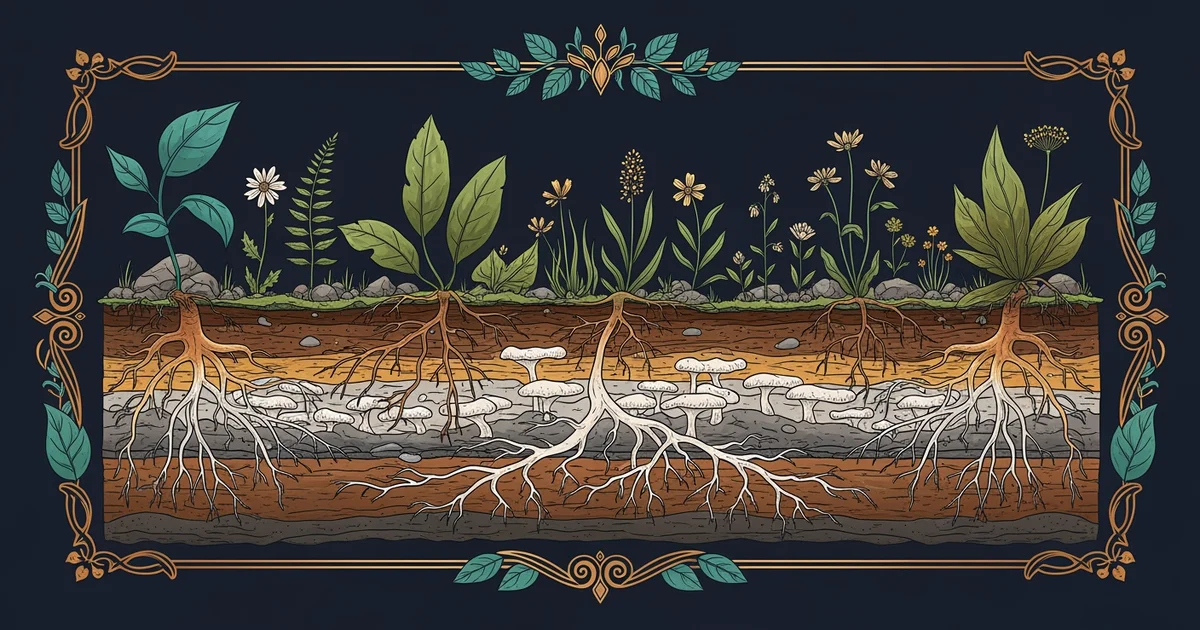
The Foundation of Biological Diversity
Just like that grocery store, our planet depends on a vast variety of living things. Scientists use the term biodiversity to describe this incredible richness of life on Earth. This concept includes every living organism, from microscopic bacteria to enormous blue whales swimming offshore. When a region has high biodiversity, it contains a complex mix of different biological species. Each unique organism plays a specific role in keeping the local environment stable and healthy. Without this natural variety, ecosystems become fragile and struggle to survive unexpected environmental changes.
We can understand these environmental connections by looking closely at how different species interact daily. Animals and plants do not exist in isolation; they constantly rely on one another. A food web maps out exactly how energy moves between these different living creatures. Instead of a straight line, this web looks like a massive, tangled biological fishing net. If you pull one string of the net, the entire structure shifts and changes shape. Every plant and animal acts as a vital knot holding this complex net together perfectly.
Mapping Species Interactions
To understand this tangled net, we must categorize the different roles that organisms play. Every thriving environment contains three primary groups that keep biological energy flowing smoothly continuously. These groups work together to ensure that no vital nutrients are ever completely wasted.
| Organism Role | Energy Source | Ecosystem Function | Example Species |
|---|---|---|---|
| Producers | Sunlight and soil | Create foundational energy | Oak trees |
| Consumers | Other living things | Regulate population sizes | Gray wolves |
| Decomposers | Dead organic matter | Recycle essential nutrients | Earthworms |
Producers capture energy from the sun and convert it into usable food for others. Consumers must eat those producers or other consumers to survive and maintain their energy. Finally, decomposers break down dead materials and return essential nutrients back into the soil. This continuous cycle guarantees that life can persist even in harsh or challenging environments. When these three groups remain balanced, the entire biological community thrives and grows stronger. If one group disappears entirely, the remaining organisms will quickly face severe starvation risks.
The Investment Portfolio Analogy
Think about managing your personal finances and building a secure retirement investment portfolio today. Financial advisors always recommend spreading your money across many different types of economic assets. If you invest everything in one company and it fails, you lose your savings. However, a diversified portfolio protects your wealth because different investments respond differently to markets. Nature uses this exact same economic strategy to protect the stability of our planet. A diverse ecosystem acts like a highly diversified biological investment portfolio during environmental crises.
When a disease attacks a specific tree species, a diverse forest will still survive. The other tree species will remain healthy and continue providing shelter for local animals. If the forest only contained that one vulnerable tree, the entire habitat would collapse. Biological variety acts as a crucial insurance policy against unpredictable disasters and climate shifts. More species mean more alternative pathways for energy to flow when disruptions inevitably occur. This natural resilience explains why protecting endangered species remains so critical for our future.
The Power of Critical Species
While every organism matters, some species carry a disproportionately heavy burden within their habitats. Removing these specific animals or plants causes catastrophic damage to the surrounding biological community.
Key term: Keystone species — an organism that holds an entire ecosystem together, preventing total environmental collapse.
Sea otters provide a perfect example of this critical biological concept in coastal waters. These furry marine mammals eat sea urchins, which aggressively consume underwater kelp forest habitats. Without otters hunting them, the urchin population explodes and completely destroys the kelp forests. When the kelp disappears, thousands of other marine animals lose their homes and food. Protecting these central players ensures that the broader web of life remains firmly intact. By maintaining strong biological networks, we secure the natural resources that sustain human populations.
Understanding these intricate connections helps us make better decisions about managing our natural resources. When developers plan new construction projects, they must consider how their actions disrupt habitats. Even small changes to a local environment can ripple outward and affect distant communities. Conservation efforts prioritize saving entire habitats rather than just focusing on single popular animals. This comprehensive approach guarantees that the biological safety net remains strong for future generations. Every single species, no matter how small, contributes to the overall stability of Earth.
Biological diversity provides a natural insurance policy that keeps ecosystems stable during unpredictable environmental disruptions.
Now that we understand these connections, we must examine how human activities threaten this balance.