
Human Reliance Patterns
Think about checking your bank balance before buying a brand new smartphone. For centuries, humans treated the natural world like an unlimited checking account.
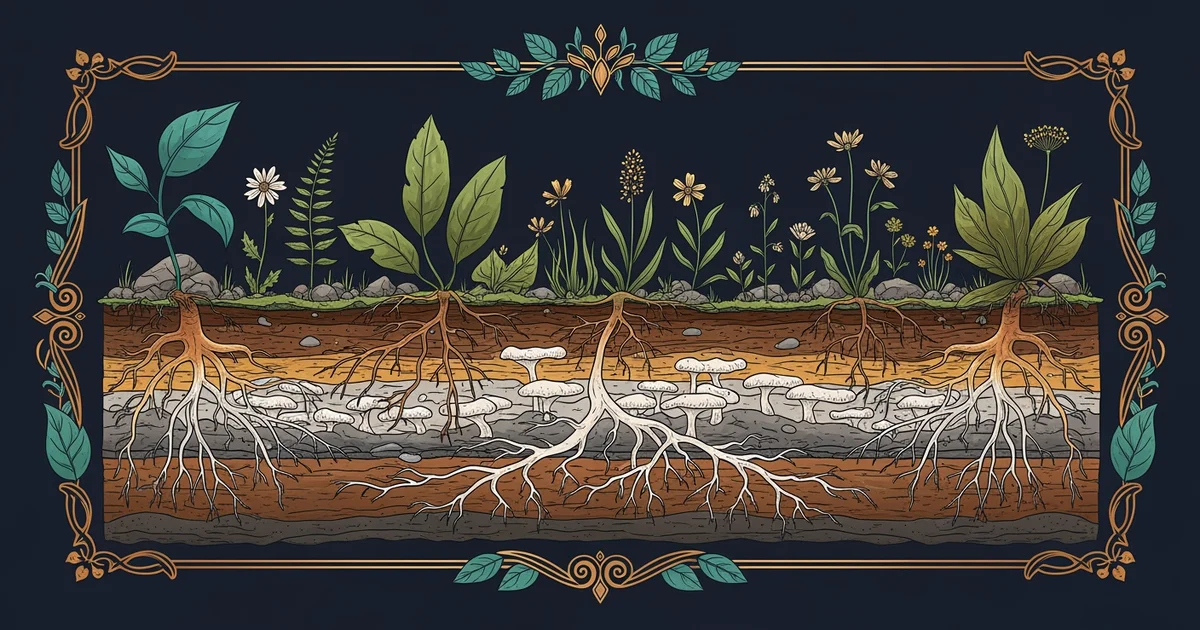
The Early Agricultural Shift
Our earliest ancestors lived strictly within the daily limits of their environment. Hunter-gatherer societies survived by consuming only what local ecosystems naturally replenished daily. This relationship shifted during the first major agricultural revolution centuries ago. People began modifying landscapes to maximize the production of specific valuable crops. Farming allowed human populations to establish permanent settlements and expand their territories. This transition initiated our first significant pattern of concentrated resource extraction. Communities cleared vast forests to create suitable land for their growing farms.
This agricultural expansion established a recurring cycle of environmental dependence and depletion. This created our first pattern of resource extraction, withdrawing natural materials for human use. Early civilizations routinely exhausted local soil nutrients through continuous aggressive farming. When the land failed, communities simply relocated to untouched fertile regions. This approach worked because human populations remained relatively small and widely scattered. The natural environment possessed enough time and space to recover from agricultural damage. Nature repaired the ecological deficit while humans exploited a completely different location.
The Industrial Acceleration
The relationship between humans and nature transformed entirely during the Industrial Revolution. Societies discovered how to harness massive energy amounts from fossil fuels. Coal and oil replaced human and animal power in manufacturing processes. This technological leap dramatically accelerated global natural resource consumption rates. Factories required unprecedented volumes of raw materials to maintain their profitable operations. We transitioned from simply harvesting surface resources to aggressively mining underground reserves. Industrialization permanently altered our historical reliance on slow natural biological regeneration cycles.
Consider how a retirement savings account generates interest over a long period. If you only spend the accumulated interest, your principal wealth remains secure. Early human societies generally operated by spending only this ecological interest. Industrial societies began rapidly withdrawing the principal ecological capital to fund immediate growth.
Key term: Ecological overshoot — the condition where human consumption exceeds the regenerative capacity of ecosystems.
Withdrawing principal wealth temporarily feels like prosperity until the account completely empties. Our modern global economy still operates on this unsustainable withdrawal method.
Our resource extraction methods evolved through three distinct phases of environmental intensity. Each successive phase increased our capacity to manipulate ecosystems for immediate economic benefit. During early historical periods, primitive technology severely limited how much humans could physically harvest. The invention of mechanized equipment completely removed these natural physical harvesting limitations. We can clearly observe how rapid technological advancement directly correlates with severe global ecosystem degradation. The following table illustrates how human extraction strategies intensified over long historical time periods.
| Era | Energy | Extraction Method | Environmental Impact |
|---|---|---|---|
| Foraging | Muscle | Surface gathering | Minimal impact |
| Agrarian | Animals | Soil cultivation | Moderate depletion |
| Industrial | Fossil fuels | Mechanized mining | Severe degradation |
Modern Extraction Consequences
The transition into the industrial age created complex new layers of environmental dependence. Modern civilizations rely heavily on synthetic fertilizers to maintain massive agricultural yields. These chemical fertilizers require tremendous natural gas volumes for their daily production. We essentially convert ancient fossilized sunlight into food for our growing populations. This process exemplifies how our survival depends on nonrenewable resource extraction. When these underground reserves deplete, our agricultural systems will face catastrophic shortages. Our historical assumption of infinite natural abundance cannot support future human generations.
This historical progression reveals several critical vulnerabilities in our current global economic structure. Our modern civilization relies entirely upon the dangerous assumption of endless natural resource availability. Our historical extraction cycles typically follow a predictable sequence of aggressive environmental exploitation. Societies discover valuable materials and immediately maximize their extraction for rapid economic gain. They rarely consider the severe long-term ecological consequences until the resource becomes noticeably scarce. This common resource extraction cycle involves three distinct and predictable historical developmental stages:
- Discovery: Societies identify a useful resource and rapidly develop efficient extraction technologies.
- Peak production: Extraction reaches maximum capacity while generating significant localized environmental damage.
- Depletion: The resource dwindles, forcing communities to seek alternative unexploited material sources.
Humanity shifted from living within daily ecological limits to continuously extracting irreplaceable resources.
Understanding this historical cycle prepares us to evaluate modern sustainable management strategies.