
Dispersal and Migration Paths
Imagine you are trying to reach a new city during a massive storm that floods every single road. You would need a dry path or a bridge to cross safely to the other side without getting stuck. Animals and plants face this exact challenge when they need to expand their range across vast oceans or impassable mountain ranges. They rely on specific geological features to move from one area to another over long periods of time. Understanding these historical pathways helps us explain why animals in distant regions share similar ancestors today.
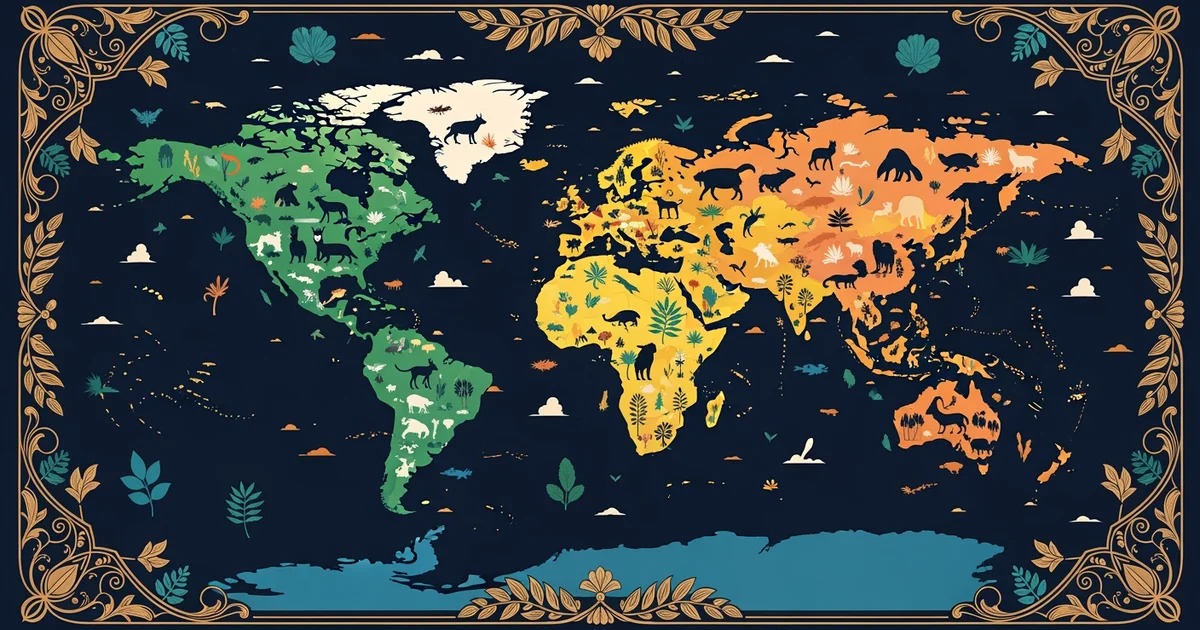
The Mechanism of Biological Expansion
When species move into new environments, they do not simply jump across continents in a single day. Instead, they follow slow, generational shifts that track available food and stable climate zones over many centuries. This process, known as dispersal, acts like a slow-motion migration where each generation moves slightly further than the one before it. Think of this like a long-distance relay race where the baton is passed along a winding track. If the track is blocked by a wall or a deep lake, the runners must stop and wait for a new path to open up. These paths are often dictated by the shifting shape of the earth’s crust and changing sea levels.
Key term: Dispersal — the movement of individuals or populations from their original home to a new geographic area.
Geologists have discovered that continental movements frequently create temporary connections between landmasses that were previously separated by deep water. These connections, often called land bridges, serve as vital highways for migrating species seeking better resources. When sea levels drop during colder climate cycles, these submerged shelves become exposed and form solid ground. Animals that were once trapped on an island suddenly find a way to walk to a larger continent. This allows for a massive exchange of wildlife that permanently changes the ecosystem of both regions involved.
Historical Pathways and Global Patterns
We can track these historical movements by comparing the fossil records found on different sides of these ancient bridges. The following table highlights how different types of geographic connections influence the speed and success of species migration across the planet:
| Connection Type | Duration | Migration Ease | Primary Species Affected |
|---|---|---|---|
| Continental Shelf | Long-term | High | Large mammals and plants |
| Island Chains | Short-term | Moderate | Birds and small reptiles |
| Narrow Isthmus | Permanent | Low | Specialized forest dwellers |
These patterns explain why we see specific animals in places that seem geographically impossible today. For instance, large land mammals once traveled across vast regions that are now covered by deep ocean water. When the sea level rises again, these bridges disappear, effectively locking the species into their new homes. This isolation leads to unique evolutionary paths where the animals adapt to their specific corner of the world. The history of our planet is essentially a map of these open and closed doors.
- First, the climate cools and captures water in massive ice sheets across the globe.
- Second, global sea levels drop significantly, revealing land that was hidden under the ocean.
- Third, animals begin to cross these new corridors to find more food or better shelter.
- Finally, the ice melts, the sea rises, and the bridge vanishes, leaving the new populations behind.
This cycle of opening and closing paths ensures that life is constantly shuffling around the globe. It prevents any single species from staying in one place forever while also creating the diversity we see in different biomes. By studying these ancient routes, we gain a clear picture of how the modern distribution of life was shaped by the physical history of the earth itself. The movement of life is not random but follows the strict rules of geography and time.
Historical land bridges function as temporary biological highways that allow species to cross major geographic barriers and colonize new environments before being isolated by rising seas.
The next Station introduces physical barriers to species movement, which determines how migration paths are eventually cut off.