
Climate Drivers of Life
Imagine you are planning a garden in a place with very cold winters and extremely hot summers. You would likely choose plants that can survive these harsh extremes while still finding enough water to grow during the spring. This simple choice reflects how plants and animals must adapt to their surroundings to survive and thrive. Nature acts much like a strict landlord who only allows tenants to stay if they can pay the rent. In this case, the rent is paid through biological traits that handle specific weather conditions. If a species cannot pay this environmental rent, it must move or face local extinction.
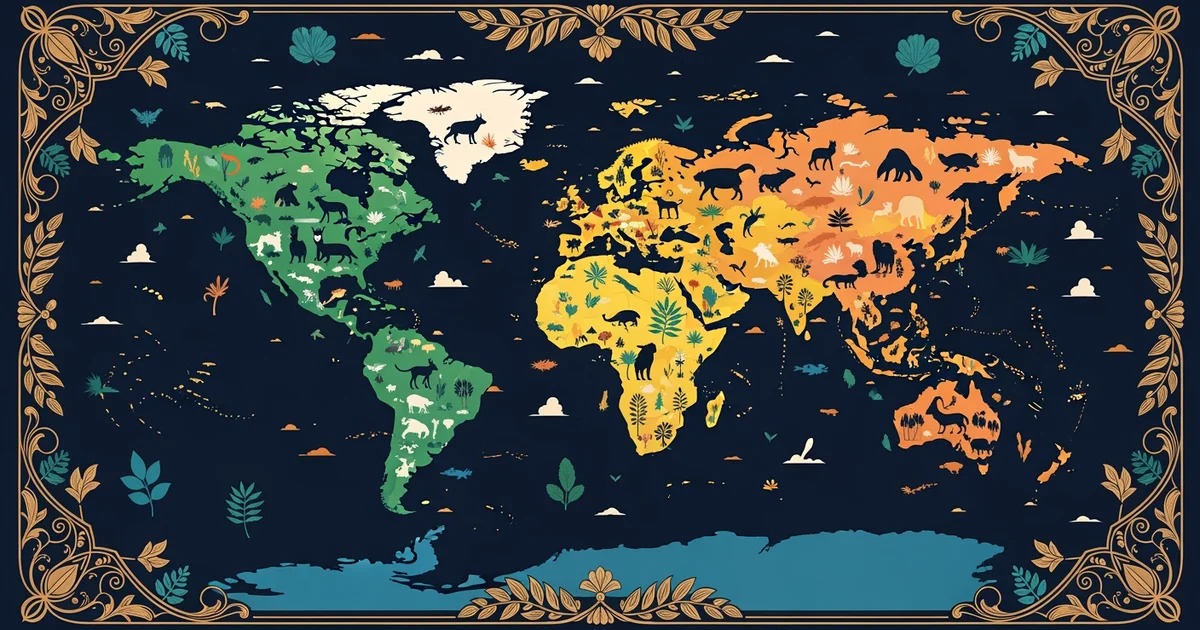
The Influence of Temperature on Species
Temperature acts as the primary filter for life across every continent on our planet. Every living thing has a range of heat it can tolerate before its internal systems begin to fail. This range is called its thermal niche, and it determines where a species can successfully live. Think of this like a thermostat setting in your own home during the winter months. If you set the temperature too low, your pipes might freeze and cause major damage to the house. Similarly, if a plant experiences freezing temperatures, its cells might burst and kill the entire organism. This is why you rarely see tropical palm trees growing in the snowy mountains of northern regions.
Key term: Thermal niche — the specific range of temperature and climate conditions where a species can survive and reproduce.
Beyond basic survival, temperature dictates the speed of life for many different types of organisms. In warmer regions, chemical reactions within plants and animals often happen at a much faster pace. This allows for more rapid growth and faster life cycles compared to colder environments. However, this speed comes with a high cost because organisms must find more food to power their fast metabolisms. In colder areas, life often moves at a slower pace to conserve precious energy during long winters. These two strategies show how temperature shapes the daily habits and survival goals of every living creature.
Global Patterns and Climate Constraints
Geographic location plays a huge role in how these temperature rules apply to different groups. We can see clear patterns in how nature organizes life based on these climate data points.
- Equatorial zones support high diversity because the temperature remains stable and warm throughout the year.
- Polar regions feature fewer species because only specialized organisms can handle the extreme and constant cold.
- Temperate zones experience seasonal shifts that force species to adapt to both heat and cold cycles.
These patterns are not random but follow strict rules based on how sunlight hits the earth. Near the equator, the sun provides consistent energy that keeps the environment predictable for most species. As you move toward the poles, the energy from the sun becomes spread out and less intense. This leads to longer periods where the environment is too cold for many plants to grow. Consequently, animals that rely on those plants must also move or adapt to survive the scarcity.
| Region | Temperature Trend | Typical Life Strategy |
|---|---|---|
| Tropical | Constant Warmth | Fast growth and high competition |
| Temperate | Seasonal Change | Migration or dormancy in winter |
| Polar | Extreme Cold | Specialized insulation and slow metabolism |
This table illustrates how the environment forces life into specific survival modes. When we look at these trends, we can predict which areas might hold the most diverse groups of animals. Areas with stable climates act like a crowded city where everyone wants to live. In contrast, extreme climates are like remote outposts where only the toughest residents can stay. Understanding these drivers helps us see why some regions are teeming with life while others remain quiet and empty.
Temperature acts as a fundamental boundary that dictates where species can exist by setting strict limits on their survival and energy needs.
Next, we will explore how islands serve as unique laboratories for studying these complex patterns of life.