
Latitudinal Diversity Gradients
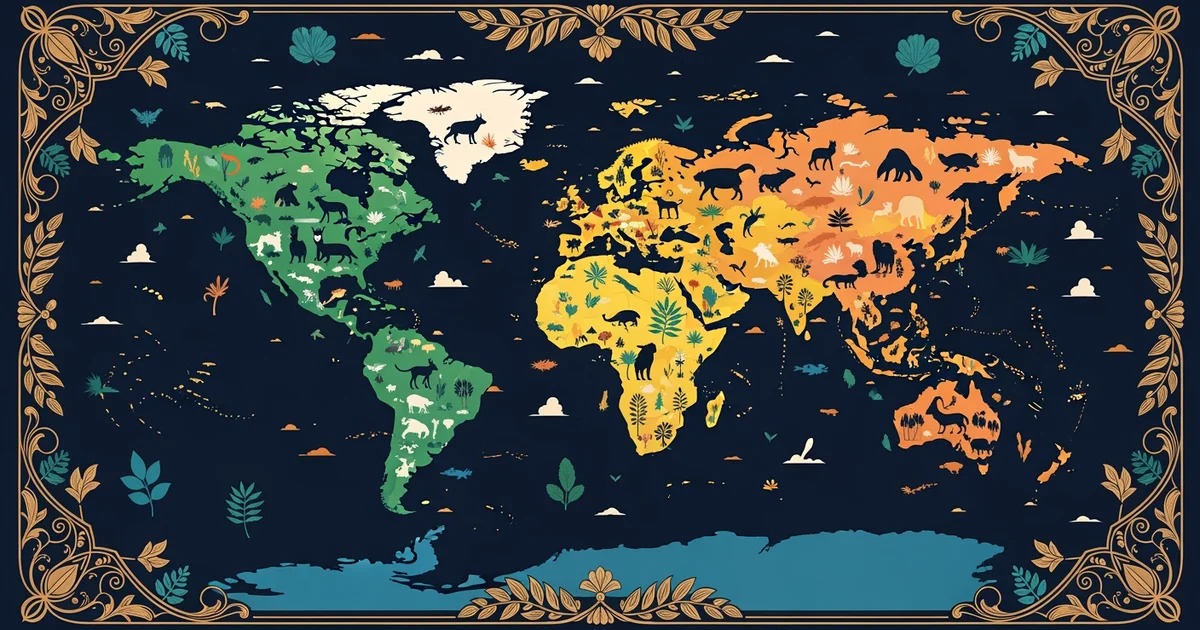
Imagine a vibrant tropical forest teeming with life compared to the quiet, frozen expanse of a polar tundra. Why does the number of species drop so sharply as you travel from the warm equator toward the chilly poles? This phenomenon is known as the latitudinal diversity gradient, a consistent pattern where biological richness increases significantly near the center of our planet. Scientists observe this trend across nearly every group of plants and animals, from tiny insects to large mammals. Understanding this distribution helps us grasp how environmental energy shapes the variety of life on Earth.
The Energy Engine of Biodiversity
When we analyze why the tropics hold more species, we must look at the total solar energy available. The equator receives direct, intense sunlight throughout the entire year, which creates a stable and productive environment for living things. Think of this like a high-budget film production with unlimited resources for sets, costumes, and staff. Because the tropics have a massive budget of solar energy, they can support a larger cast of diverse species. In contrast, polar regions act like a low-budget production with very few resources, forcing organisms to specialize or migrate just to survive the harsh conditions.
This energy surplus leads to higher rates of primary production, where plants convert sunlight into food. When plants grow rapidly and consistently, they provide a reliable food base for herbivores and predators. This abundance allows for complex food webs to develop without the interruption of long, freezing winters. Stability is a key factor here, as the tropical climate changes very little between seasons. Many species can thrive year-round without needing to evolve complex strategies for surviving deep freezes or seasonal food shortages. This reliability allows for the evolution of highly specialized roles within the ecosystem.
Comparing Species Density Across Latitudes
We can see how different regions compare by looking at the density of life found in specific areas. The following table highlights how climate stability influences the number of species found in various ecosystems:
| Region | Climate Stability | Primary Energy | Species Richness |
|---|---|---|---|
| Tropical | Very High | High Solar Input | Extremely High |
| Temperate | Moderate | Seasonal Change | Moderate |
| Polar | Very Low | Minimal Light | Low |
Key term: Species richness — the total count of different types of living organisms present within a specific geographic area or habitat.
This data shows that as we move away from the equator, the number of species decreases due to lower energy availability. While tropical forests cover only a small portion of the Earth's surface, they house more than half of all known species. This concentration of life is not a coincidence, but rather a direct result of consistent environmental conditions. When an environment remains stable for millions of years, it allows species to evolve and adapt to very specific niches. These niches are like specialized jobs in a city, where everyone has a specific role that keeps the economy running smoothly.
In polar regions, the extreme environment acts as a filter that only allows certain organisms to exist. These species must be hardy and capable of enduring long periods of darkness and extreme cold. Because the energy supply is limited and interrupted, the environment cannot support the same level of variety seen near the equator. The resulting pattern is a clear gradient, with diversity peaking at the middle of the globe and tapering off toward the frozen extremes. By studying this, we learn that the history of a location and its current climate are the primary architects of global biodiversity patterns.
The latitudinal diversity gradient demonstrates that consistent solar energy and stable climates are the fundamental requirements for supporting high levels of biological variety on Earth.
The next Station introduces dispersal and migration paths, which determines how species move across these different climate zones.