
Visual Cues in Gastronomy
Imagine eating a bright red strawberry that tastes exactly like a salty, sour lemon slice. Your brain would likely struggle to process this clash between your eyes and your tongue. This happens because our vision often predicts the flavor experience before the food touches our lips. We rely on color as a primary indicator of what to expect from our meals. This mental shortcut helps us identify food quality while we decide whether to take a bite. When the visual signal does not match the actual taste, our brain experiences a moment of confusion. This process shows that our eyes are just as important as our taste buds for flavor perception.
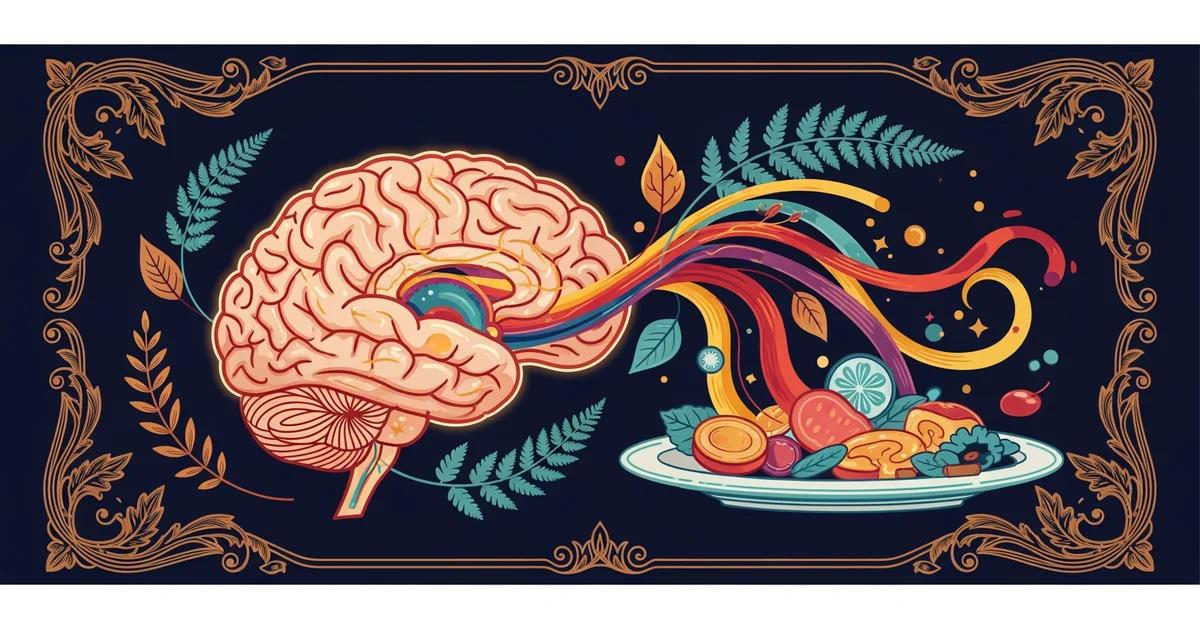
The Role of Color in Flavor Expectation
Visual cues act like a silent guide for your brain during the process of eating. When you see a vibrant food item, your brain quickly accesses stored memories about similar colors. If you see a deep purple drink, your brain immediately prepares for a sweet or grape-like flavor profile. This anticipation happens in milliseconds and changes how your tongue perceives the chemical signals once you start chewing. It is similar to how a movie trailer sets your expectations for the film you are about to watch. If the trailer promises a comedy but the movie is a thriller, you feel disappointed. Food works the same way because your brain builds a flavor map based on sight.
Key term: Visual Cues — the sensory signals from our eyes that inform the brain about the properties of food before consumption.
This predictive power means that color can actually enhance or dull our sense of taste. Research studies show that people often rate bright red drinks as sweeter than lighter colored ones. Even if the sugar content is identical, the deeper color tricks the brain into expecting a more intense sweetness. This effect is very strong because our ancestors relied on color to find ripe and nutritious fruits. A bright color usually signaled high sugar or energy levels, while dull colors suggested spoilage. We still carry these ancient instincts today, which makes us judge food quality by its appearance before we even taste it.
Plating and Perceived Taste Intensity
Beyond just color, the way food is arranged on a plate changes how we experience flavor. A well-plated dish creates a sense of order that the brain interprets as higher quality. When food is neatly arranged, people often report that the dish tastes better than the same food served in a messy heap. The presentation acts as a frame for the experience, much like a expensive picture frame makes a simple photo look more valuable. This effect is not just about aesthetics, but about the brain processing the effort put into the meal. A professional look signals to your brain that the ingredients are fresh and carefully chosen.
| Plating Style | Brain Interpretation | Perceived Quality |
|---|---|---|
| Minimalist | Clean and precise | High |
| Chaotic | Unsure and messy | Low |
| Balanced | Harmonious and safe | High |
We can see how plating influences our perception through several key factors that affect our overall enjoyment of food:
- Color Contrast helps the brain separate different components on the plate, which makes the individual flavors seem more distinct and easier to identify.
- Portion Symmetry provides a sense of balance that makes the meal feel more satisfying, which can actually change how full we feel after eating.
- Negative Space around the food creates focus, which allows the brain to pay closer attention to the specific textures and flavors of the main dish.
These elements work together to create a mental state that is ready to enjoy the meal. If the plate looks professional, your brain is more likely to give the food a positive rating. This is the main reason why chefs spend so much time on the visual details of every single dish. They know that your eyes are the first gatekeeper for your palate and that they must win you over before your tongue even gets a chance to participate in the process.
Visual cues act as a powerful filter that shapes our expectations and determines how we interpret the actual flavors of our food.
The next Station introduces memory and food, which determines how past experiences shape our current taste preferences.