
Defining Culinary Neurogastronomy
You take a bite of a warm, fresh cookie and your brain instantly signals pure delight. This simple act of eating hides a complex dance between your senses and your mind.
The Brain as the Ultimate Chef
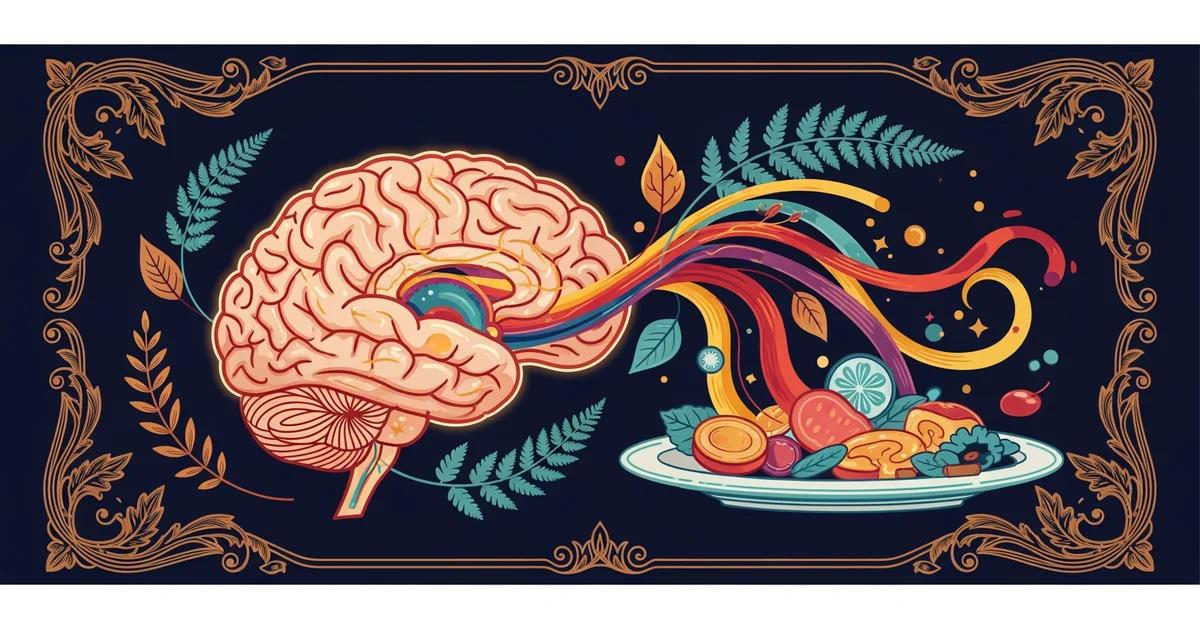
Most people think that flavor happens entirely on the tongue during the chewing process. In reality, your tongue only detects basic chemical signals like sweet, salty, sour, bitter, and savory. These signals travel through nerves to the brain, which acts like a high-speed computer processing data. The brain combines these signals with smells, textures, and even your past memories to create flavor. Think of your brain as a master chef who takes raw ingredients from your tongue to build a masterpiece. Without this mental processing, you would only perceive basic sensations rather than the rich experience of a meal. This connection between the mind and the act of eating is known as neurogastronomy. It explains why food can trigger strong emotions or bring back vivid memories from your childhood.
Key term: Neurogastronomy — the study of how the brain creates the experience of flavor by combining sensory inputs with memory and emotion.
Understanding Sensory Integration
When you eat, your brain performs a task called sensory integration to make sense of the world. This process takes place across several different regions of the brain that talk to each other constantly. The brain must reconcile conflicting data, such as the smell of a hot pie versus the cold temperature of the crust.
Consider how the brain manages different sensory inputs during a typical meal:
- Olfactory processing happens when scent molecules reach the nose, adding depth and nuance to what the tongue tastes alone.
- Somatosensory perception involves the texture and temperature of food, which tells the brain if the food is crispy or mushy.
- Cognitive mapping links the current taste to previous experiences, helping the brain decide if the food is safe or pleasant.
By layering these inputs, the brain constructs a unique flavor profile that exists only inside your head. This process is much like an artist mixing primary colors to create a complex new shade on a canvas. If one input is missing, the brain struggles to paint the full picture of the flavor you expect. For example, when you have a cold, your sense of smell drops, making your favorite foods taste bland or boring. This shows that your brain is the true source of your enjoyment, not just your taste buds.
The Science of Flavor Perception
Scientists study this field to understand how we can improve our relationship with the food we eat. By looking at how the brain responds to different food stimuli, we can learn to appreciate complex flavors more deeply. This path will guide you through the anatomy of taste, the role of smell, and the influence of your environment. You will explore how expectations shape your appetite and how the brain prioritizes specific sensory data over others. Learning these concepts allows you to see your meals as a science experiment occurring in real time. By the end of this path, you will understand the intricate biological systems that transform simple nutrients into a complex, multisensory experience that defines your daily life.
Flavor is not a property of food itself, but a complex mental construction built by the brain using sensory data and memory.
In the next station, we will explore the anatomy of taste to see how the tongue initiates this process.