
Modeling Fundamentals
Imagine you are trying to navigate a ship through a thick, heavy fog without any map. You might guess the correct direction, but you will likely hit a hidden rock or drift far off your course. Supply chain modeling acts as your digital map, allowing you to simulate different paths before you actually commit your resources to a specific strategy. By creating a virtual representation of your network, you can identify potential bottlenecks or failures before they manifest in the physical world. This process helps you test how your business responds to sudden shocks like factory closures or shipping delays. Modeling provides a safe environment to experiment with complex variables without risking your actual inventory or capital.
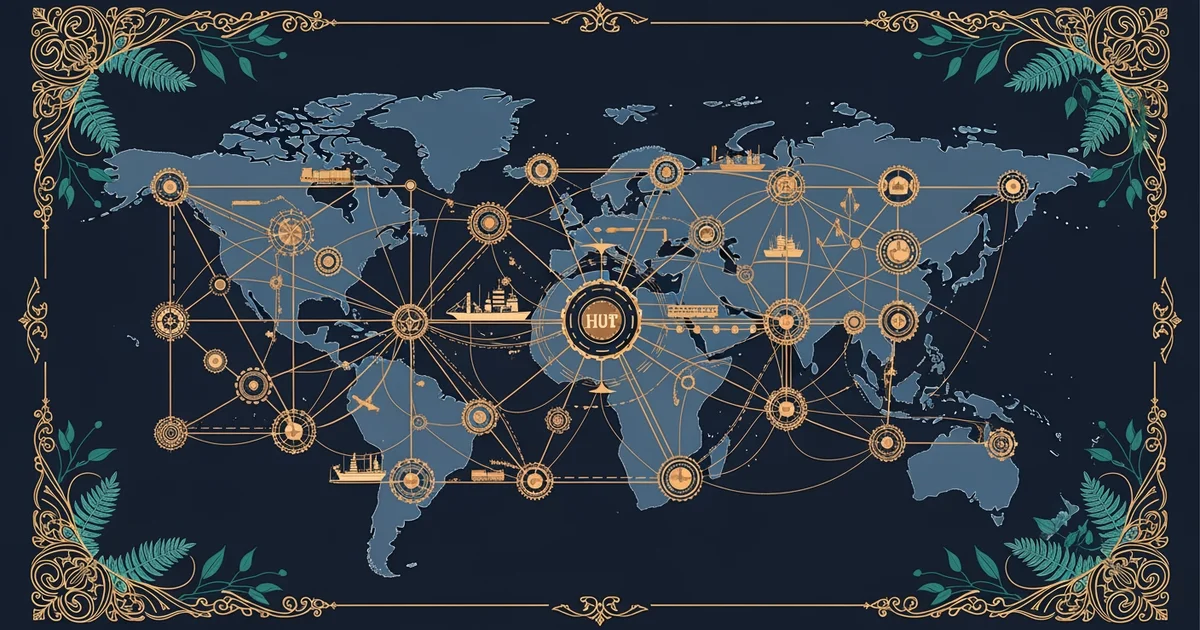
The Logic of Network Representation
To build a useful model, you must first define the core components of your supply chain network. You start by mapping every node, which represents a physical location like a warehouse, a supplier, or a retail outlet. You then draw the links between these nodes, representing the flow of goods or information across your infrastructure. This digital twin serves as a mirror for your real-world operations, capturing the essential relationships that define your business performance. Just as a pilot uses a flight simulator to practice landing in a storm, you use this model to practice managing disruptions. You can adjust the variables within this virtual space to see how a minor change in one location impacts the entire system.
Key term: Digital twin — a dynamic virtual model that accurately reflects the current state and behavior of a physical supply chain system.
When you build this model, you focus on the flow of data rather than just the movement of physical items. You must account for lead times, inventory levels, and capacity constraints that govern how fast your products move. If you ignore these constraints, your model will provide inaccurate predictions that fail to reflect reality. By feeding historical data into your simulation, you can ensure that your virtual model mimics the patterns of your actual operations. This creates a reliable foundation for testing new strategies or predicting how external events will disrupt your flow.
Choosing the Right Modeling Approach
Selecting the best method depends on the specific goals of your analysis and the depth of data available. You might choose between different techniques based on whether you need a quick estimate or a highly detailed simulation of system behavior. The following table outlines how different modeling methods serve various business needs during the planning phase:
| Method Type | Primary Goal | Best Used For |
|---|---|---|
| Static Modeling | Snapshot analysis | Simple cost or capacity planning |
| Dynamic Modeling | Time-based trends | Evaluating seasonal demand shifts |
| Stochastic Modeling | Risk assessment | Testing unpredictable disruption scenarios |
Each approach offers unique insights into the resiliency of your network. Static models are useful for basic budgeting, while dynamic models capture how your system evolves over time. Stochastic models introduce random variables to help you prepare for the unknown, which is vital for building a truly resilient supply chain. You should evaluate your current data quality before selecting a method to ensure your results remain actionable and relevant.
By carefully choosing your modeling method, you transform raw data into a powerful tool for strategic decision-making. You no longer have to rely on intuition alone when you face a potential crisis or a new market opportunity. The model reveals the hidden dependencies within your system, showing you exactly where you need to add buffers or diversify your suppliers. This level of clarity gives you a massive advantage over competitors who continue to operate in the dark. Your ability to visualize the impact of a crisis is the first step toward building a system that can survive any challenge.
Supply chain modeling provides a virtual sandbox where businesses can test complex scenarios and optimize their responses to potential disruptions before they occur.
The next Station introduces Data Gathering, which determines how you populate your model with the accurate information needed for successful analysis.