
Supply Chain Basics
Imagine your favorite local grocery store suddenly runs out of bread, milk, and eggs for an entire week. This sudden lack of daily essentials happens because the complex web of moving parts behind the scenes has stalled.
The Anatomy of a Supply Network
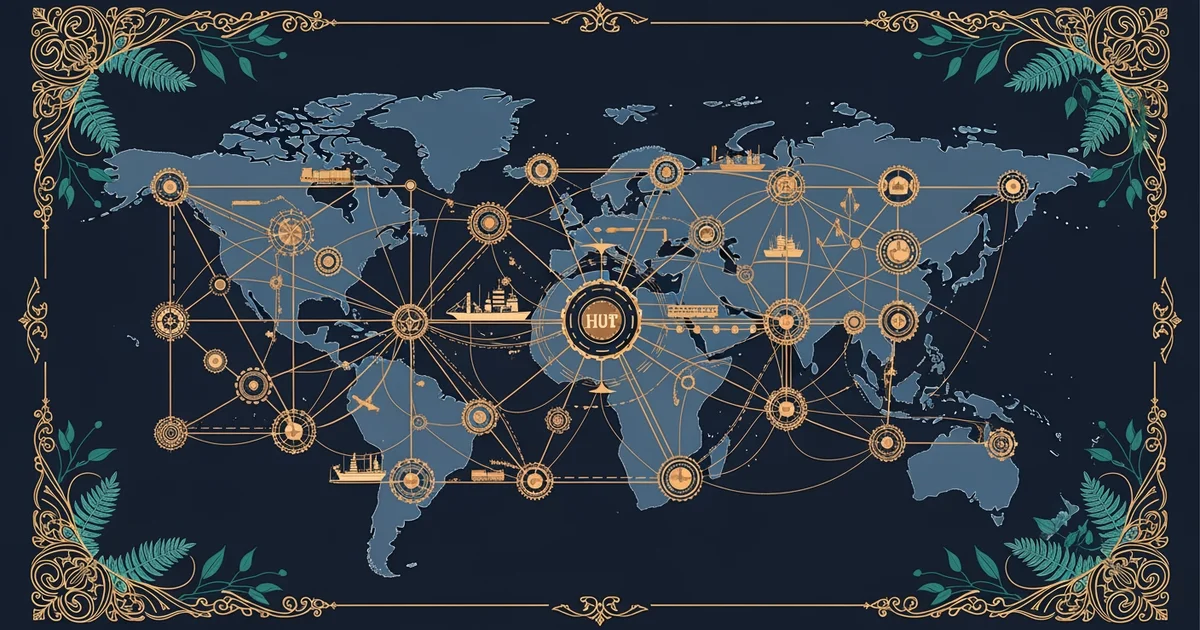
A supply chain acts like the circulatory system of a modern business, moving goods from raw materials to the customer. Every product you touch started as a raw resource, such as wood, metal, or grain, waiting for a process to transform it. Once gathered, these resources travel to factories where they become finished goods ready for the market. Without this constant flow, stores would remain empty and businesses would fail to meet basic consumer needs. Think of the process like a relay race where every runner must pass the baton perfectly to keep the team moving forward. If one runner drops the baton or slows down, the entire race suffers a delay that impacts the final result for everyone involved.
Key term: Supply chain — the interconnected network of businesses, people, and technology that moves a product from origin to the final consumer.
Mapping the Core Business Nodes
To understand how products reach your hands, you must identify the primary stops along the journey of any item. These locations serve as critical points where goods are handled, stored, or transformed into something more valuable for the end user. Each node performs a specific function that adds value to the product while moving it closer to its final destination. Businesses rely on these nodes to maintain a steady rhythm of production and distribution throughout the year. When you look at a typical product journey, you can see how each stage depends on the success of the previous step in the sequence.
| Node Type | Primary Function | Value Added |
|---|---|---|
| Supplier | Provides raw inputs | Basic materials |
| Factory | Builds final goods | Finished product |
| Warehouse | Stores extra stock | Ready availability |
These nodes function together to ensure that the right amount of product arrives at the right time for the buyer.
- Suppliers gather the basic materials needed to start the manufacturing process for a wide range of goods.
- Manufacturers use these raw materials to create finished items that are ready for sale and daily use.
- Distributors manage the storage and transport of these finished items to ensure they reach the retail shelves.
- Retailers finally place these goods in front of customers who purchase them for their own personal consumption needs.
Each step in this chain requires careful planning to prevent bottlenecks that could stop the entire flow of commerce. If a supplier fails to deliver, the factory cannot build, and the store remains empty for the shopper.
Understanding these connections helps you see why small delays often grow into massive problems for major global companies. By tracking how materials move through these nodes, businesses gain the insight needed to keep shelves full and customers happy. This foundational knowledge allows companies to build stronger networks that survive unexpected shifts in demand or sudden logistical hurdles. You are now prepared to explore the risks that threaten these systems and learn how to protect them from failure. This path provides you with the essential tools to predict disruptions and build a more resilient business network by the end of the course.
A successful business relies on the smooth flow of goods through a connected network of suppliers, manufacturers, and distributors to meet consumer demand.
You will now explore how businesses identify and prepare for major supply chain disruptions before they happen.