
Environmental Survival Tactics
Imagine a tiny traveler waiting inside a frozen puddle for a host to arrive. This organism remains perfectly still while waiting for the perfect moment to strike again. It ignores the harsh cold because it possesses a hidden strategy for surviving long periods. Most living creatures require a steady supply of food and warmth to stay active. Parasites often face the opposite reality because they must survive long gaps between hosts. They cannot always rely on finding a new home immediately after leaving the old one. Their survival depends on shifting into a state that resists the dangers of the outside world. This transition allows them to endure extreme heat or freezing temperatures without dying from stress.
The Logic of Dormant Survival
When a parasite leaves a host, it encounters a world filled with unpredictable threats. It must protect its vital inner parts from drying out or freezing during these times. Many species solve this problem by entering a state called dormancy. This state acts like a biological pause button for the entire organism. It slows down internal processes to save energy for when conditions improve later. Think of this process like an investor putting money into a secure vault during a market crash. The money stays safe until the economy stabilizes and allows for new growth again. By locking away its energy, the parasite prevents itself from wasting resources on activity that yields no profit. This clever strategy ensures that the organism remains viable even when the environment offers zero support for life.
Protective Structures for Harsh Environments
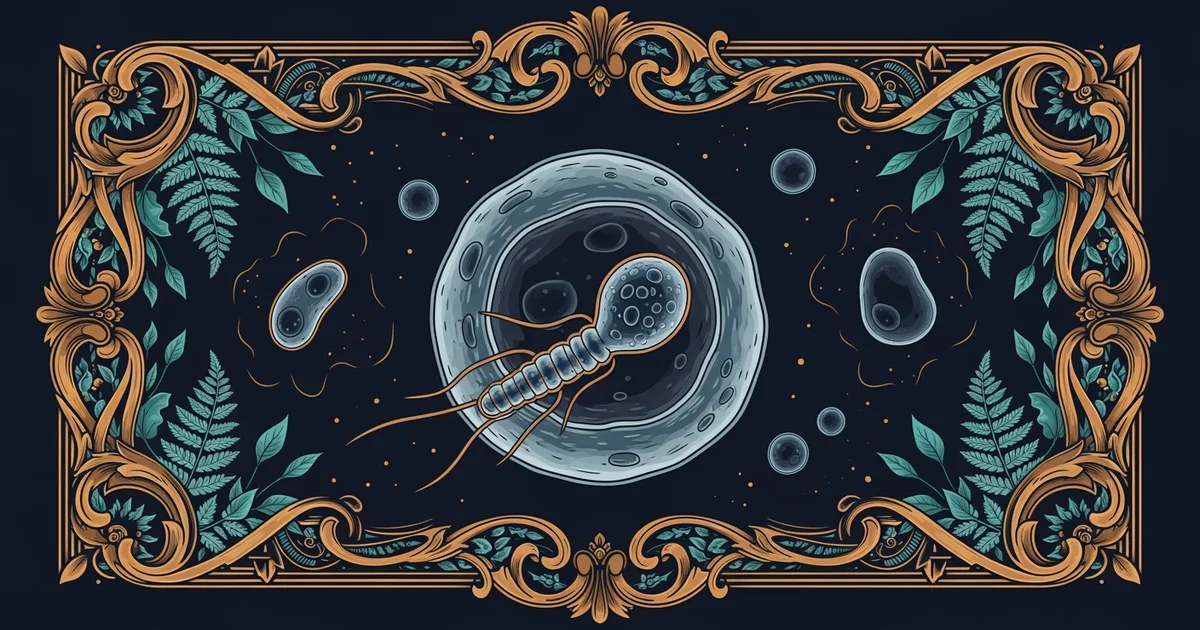
To ensure this dormant state lasts, many parasites create a specialized shell known as a cyst. This structure acts as a thick, protective armor that shields the organism from external damage. It prevents water loss and stops harmful chemicals from entering the delicate interior of the cell. The formation of this shell requires significant energy, but it pays off by extending the lifespan of the parasite. Once the shell is fully formed, the organism can survive for months or even years in dirt or water. We can classify these survival strategies by how they react to the environment around them:
- Encystment involves building a rigid wall to block out toxins and maintain internal moisture levels.
- Metabolic suppression reduces the rate of chemical reactions to prevent the depletion of stored energy reserves.
- Environmental sensing allows the organism to detect chemical cues that signal the presence of a new host.
These tactics ensure the parasite stays ready to react the moment a new host appears nearby.
Comparing Survival Strategies
Different parasites choose different paths to endure the challenges of life outside a host body. Some rely on thick walls, while others prefer to hide within dormant spores that drift through the air. Understanding these differences helps scientists predict how diseases spread across various landscapes and climates. The following table compares how these methods protect the organism from different types of environmental stress.
| Strategy | Primary Protection | Main Benefit | Duration |
|---|---|---|---|
| Cysting | Thick outer wall | Stops drying out | Very long |
| Spore form | Internal shielding | Resists high heat | Indefinite |
| Quiescence | Energy reduction | Conserves fuel | Medium |
Key term: Cyst — a protective, dormant stage of a parasite that allows it to survive harsh conditions outside a host.
By using these methods, parasites remain a constant threat despite their small size. They do not need to be active to be dangerous to the creatures they infect. Their ability to wait patiently for a new host defines their success in nature. This patience turns a simple environment into a waiting room for the next infection.
The survival of parasites outside a host depends on their ability to enter a protected, low-energy state that resists environmental decay.
But what does it look like when these dormant organisms finally encounter the internal chemistry of a new host?