
Historical Parasitology Origins
Imagine finding a tiny, uninvited guest living inside your favorite snack without you ever knowing it was there. This hidden presence mirrors how ancient humans lived alongside invisible organisms that shaped their health long before science had a name for them. Early civilizations often viewed these mysterious ailments as spiritual curses or bad luck rather than biological realities. They lacked the tools to see the microscopic world, so they relied on observation to survive these unseen threats. Understanding these early struggles helps us appreciate how modern medicine finally peeled back the curtain on these silent passengers.
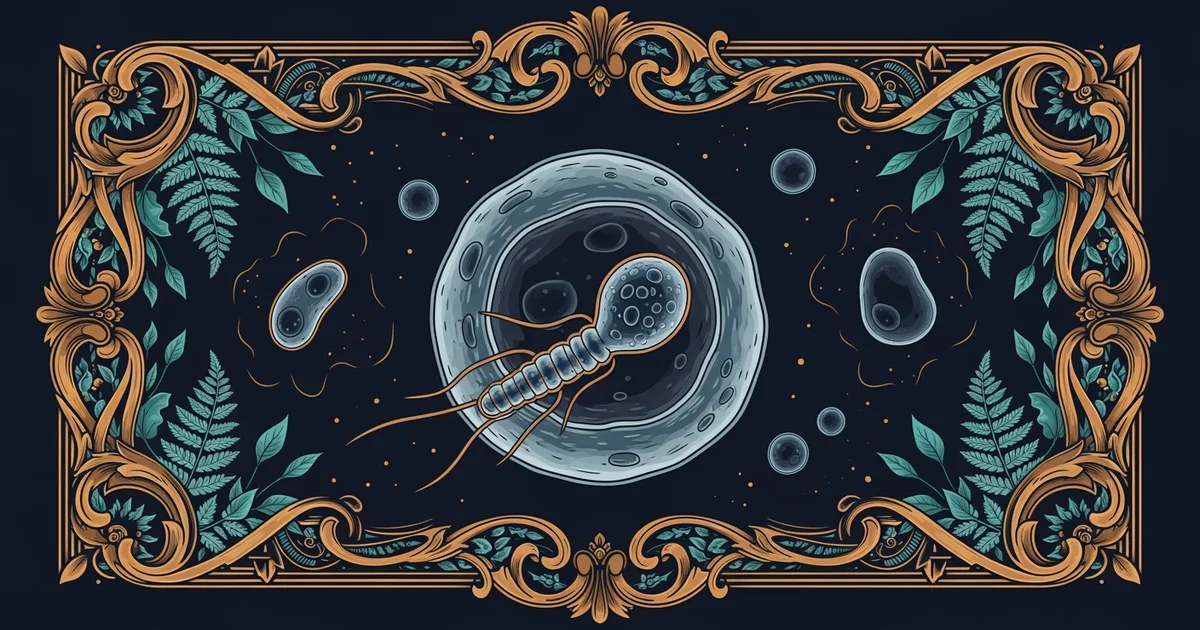
The Dawn of Parasitic Awareness
Ancient societies noticed that certain illnesses seemed to spread through water or contact with raw meat. They observed that people who avoided specific food sources often stayed healthier than those who did not. This early wisdom functioned like a budget plan for a household, where you must learn which expenses drain your resources before you can stop them. By tracking patterns in sickness, healers began to realize that some invisible factors were responsible for human decline. These early observations formed the first foundation for what would eventually become the formal study of these organisms.
Key term: Parasitology — the branch of biological science that examines organisms living on or inside other creatures to gain nutrients.
Early scholars often struggled to distinguish between different types of invisible threats in their environment. They lacked lenses powerful enough to identify the specific agents causing diarrhea or skin lesions. Instead, they grouped all internal invaders under broad categories based on how they affected the body. This approach was like sorting mail into piles without opening the envelopes to see what was inside. While they could not see the actual invaders, they successfully identified the environments where these creatures thrived.
Scientific Milestones in Early Discovery
As time progressed, the development of early magnifying tools changed how humans perceived their own biological reality. People began to see that the world was filled with tiny life forms that were previously invisible to the naked eye. This shift in perspective allowed researchers to categorize these invaders based on their physical traits rather than just their symptoms. Scientists started to document how these creatures moved, fed, and reproduced within a host. This systematic approach transformed guesswork into a structured field of study that focused on clear evidence.
There are three main ways that early scientists categorized these discoveries to better understand their impact on human health:
- Morphological Classification involves grouping organisms by their visible body shapes, which helps researchers identify specific species that cause unique health problems.
- Host Interaction Mapping tracks how an organism moves through a human body, allowing scientists to predict where the invader might settle.
- Transmission Pathway Analysis identifies the specific routes, such as contaminated water or soil, that allow these creatures to enter a new host.
These methods provided a roadmap for future generations to follow as they continued to explore the microscopic world. By mapping out these interactions, researchers could finally develop strategies to limit the spread of these organisms. This transition from superstition to observation represents the most significant leap in the history of this scientific field. Every discovery added a piece to the puzzle, eventually revealing the complex web of life that connects parasites to their hosts.
The history of parasitology reveals how human understanding evolved from fearing invisible curses to identifying the biological mechanisms of survival.
Now that we understand the early roots of this field, we must examine the diverse environments that support these complex life cycles.