
Defining the Parasitic Lifestyle
Imagine a tiny passenger that hitches a ride on your body to steal your lunch while you walk down the street. This invisible thief survives entirely by taking resources from you, leaving you weaker while it grows stronger in the process.
The Mechanics of Biological Exploitation
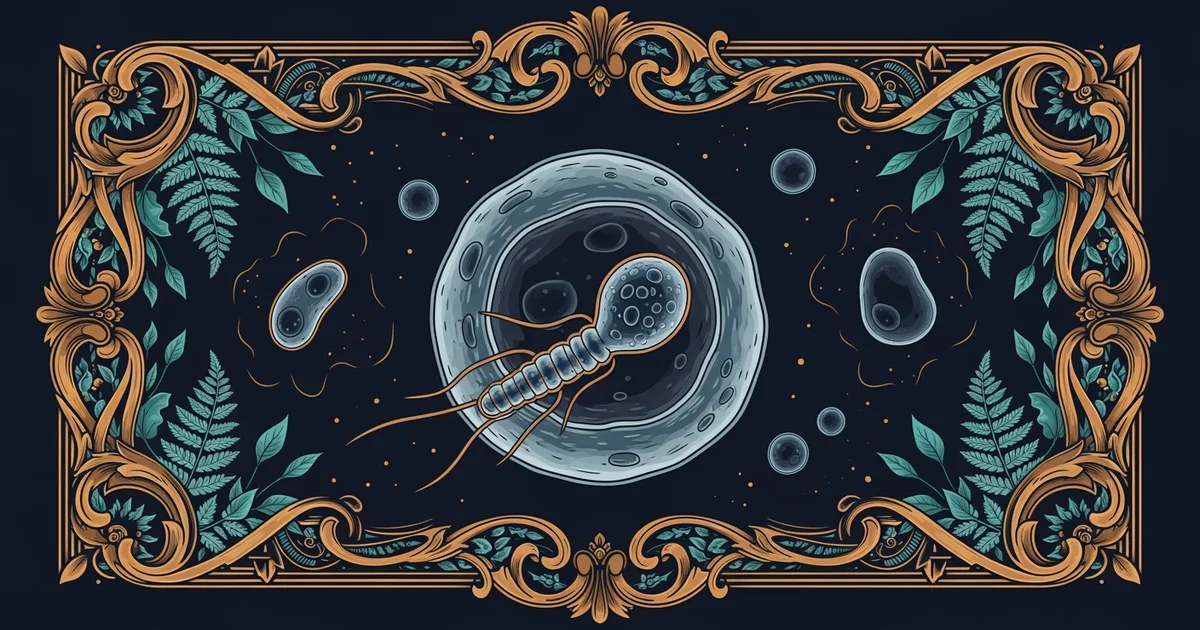
Biological life often relies on complex interactions where one organism gains an advantage at the direct expense of another. This specific interaction is known as parasitism, a survival strategy where one entity lives on or inside a host. The parasite secures its own nutrients and shelter from the host organism without providing any benefit in return. Think of this relationship like a tenant who refuses to pay rent while simultaneously raiding the landlord's pantry every single day. The landlord eventually suffers from a lack of food and resources, while the tenant thrives in a comfortable home. This dynamic allows the parasite to dedicate its own energy to reproduction rather than gathering food or building its own protective shelter. Most parasites have evolved to be so efficient that they often remain undetected by the host for long periods of time. By staying small and subtle, they ensure that the host continues to provide the necessary conditions for their survival and growth.
Key term: Parasitism — a biological relationship where one organism benefits by living on or inside a host organism, which is harmed by the interaction.
Defining the Traits of a Parasite
To identify if an organism acts as a parasite, scientists look for specific traits that define this lifestyle compared to other natural relationships. These creatures do not usually kill their hosts immediately, as doing so would destroy their only source of food and protection. Instead, they maintain a delicate balance that keeps the host alive just long enough to complete their own life cycles. The following characteristics are essential for classifying a creature as a parasite in the natural world:
- The organism depends on the host for metabolic resources like sugars or blood, which provides the energy needed for its daily survival and growth.
- The parasite lives in close physical contact with the host, either attached to the outer skin or buried deep within the internal body tissues.
- The relationship is inherently one-sided because the host receives no positive value or assistance, often suffering from nutrient loss or tissue damage.
These traits demonstrate how specialized these organisms have become over millions of years of evolution. They have lost many independent survival skills because they rely so heavily on the biological systems of the host. This dependency makes them experts at navigating the internal environments of larger animals or plants. They often have unique structures like hooks or suckers that help them anchor themselves firmly to the host's body. These adaptations ensure that they are not easily dislodged while the host moves through its natural habitat. The success of a parasite depends on its ability to exploit the host without causing enough damage to trigger a fatal response.
Comparing Biological Interactions
Nature contains many ways for organisms to interact, and distinguishing between them helps us understand how ecosystems function. While parasitism involves harm, other relationships like mutualism provide benefits to both parties involved in the exchange. The table below highlights how these different connections compare across several key biological attributes that define their daily survival strategies.
| Interaction Type | Benefit to Organism A | Benefit to Organism B | Impact on Host |
|---|---|---|---|
| Parasitism | High | None | Harmful |
| Mutualism | High | High | Beneficial |
| Commensalism | High | Neutral | None |
Understanding these categories shows that parasitism is just one of many ways life forms connect to survive in the wild. By studying these patterns, we learn how invisible organisms shape the survival of every living creature on our planet. This path will provide you with a complete framework for understanding how these tiny actors influence global health and biological diversity.
Parasitism represents a specialized survival strategy where one organism thrives by extracting essential resources from a host that suffers harm during the process.
You will now explore how these relationships have evolved through history to shape the survival of every living creature on our planet.