
Language and Cognition
When a stroke survivor attempts to speak but finds their words trapped behind a silent barrier, the brain reveals its fragile architecture for language. This specific struggle highlights the critical nature of distinct brain zones that manage our ability to communicate and understand others. We see this in the case of a patient who can comprehend complex instructions perfectly but lacks the physical ability to produce coherent sentences in response. This is a clear demonstration of localized brain function where physical matter dictates the reach of our conscious expression. Language is not a single process but a collection of specialized tasks distributed across the cerebral cortex.
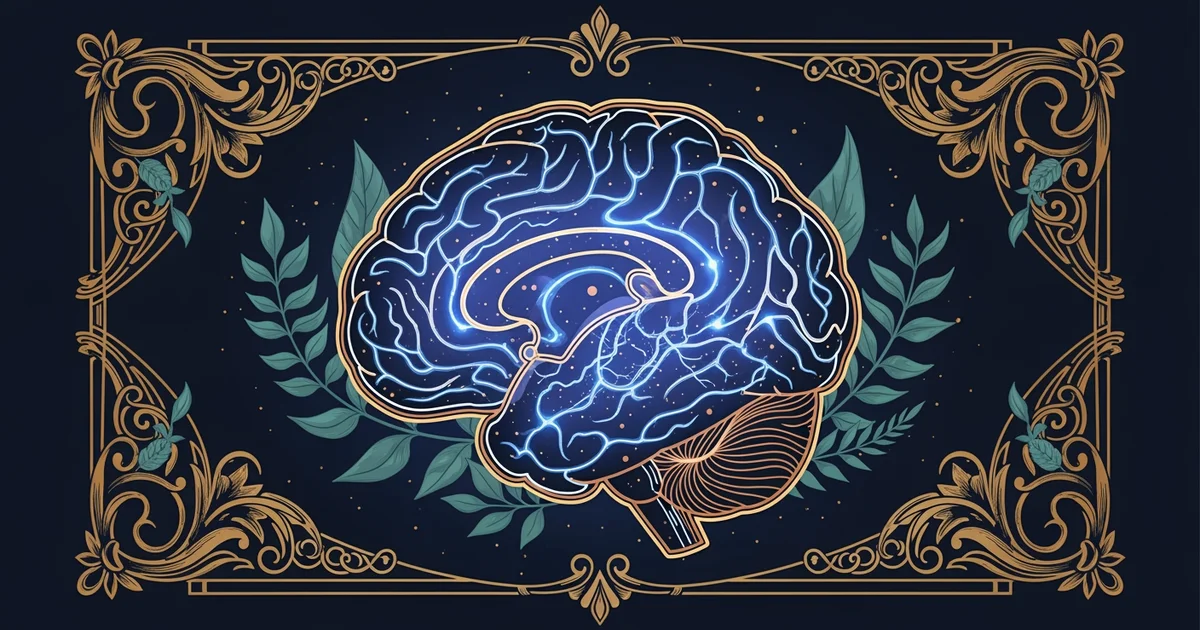
The Anatomy of Speech Production
The brain organizes language through specialized regions that handle different aspects of communication, such as grammar, syntax, and meaning. One primary region, known as Broca's area, sits within the frontal lobe and acts as the master conductor for speech production. Without this region, the brain struggles to organize the muscle movements required for talking, even when the person knows exactly what they want to say. Think of this process like an assembly line in a factory where the blueprints for a product exist, but the machines responsible for welding the parts together remain broken. The blueprints represent your inner thoughts, while the broken machines represent the damaged neural circuits in the frontal lobe that fail to execute the motor commands for speech.
Key term: Broca's area — the region in the left frontal lobe responsible for the complex motor planning required to produce fluent speech.
Beyond simple motor planning, the brain must also integrate grammatical rules to ensure that words appear in the correct order. This involves a rapid exchange of information between regions that hold vocabulary and regions that manage the structure of sentences. The brain treats language like a high-speed economic transaction where data packets move between vaults of meaning to form a coherent trade. If the connection between these vaults experiences interference, the resulting output becomes fragmented and difficult for listeners to interpret. This system relies on dense white matter tracts that act as highways for neural signals to travel between distant cortical zones.
Mapping Meaning and Comprehension
While production focuses on the frontal lobe, understanding language requires a separate region known as Wernicke's area, located in the temporal lobe. This region acts as a decoding center that translates incoming sound waves into meaningful concepts that the mind can process and store. When someone speaks to you, this area identifies the patterns of sound and links them to the internal dictionary your brain has built over time. If this area fails, a person might speak with perfect fluidity, but their words will lack any logical connection or meaning. This shows that language requires a constant loop of feedback between the centers for production and the centers for comprehension.
| Region | Primary Function | Typical Location | Impact of Damage |
|---|---|---|---|
| Broca's | Speech production | Frontal Lobe | Broken, halting speech |
| Wernicke's | Language meaning | Temporal Lobe | Incoherent word salad |
| Arcuate Fasciculus | Signal transfer | White matter | Repetition difficulty |
These regions work in a synchronized dance to ensure that our thoughts translate into symbols that others can understand and react to during daily life. By mapping these zones, neuroscientists have discovered that the left hemisphere dominates language in most humans, though the right hemisphere contributes to the emotional tone of our words. This division of labor allows the brain to process complex syntax while simultaneously detecting sarcasm or joy in a conversation. Every sentence you utter is the result of millions of neurons firing across these precise physical locations to turn abstract ideas into reality.
Language emerges from the coordinated activity of specialized cortical regions that transform abstract thoughts into physical motor commands and sensory interpretations.
But this model of localized brain function becomes much more complicated when we consider how the brain recovers from injury through neuroplasticity.