
Neural Network Dynamics
Imagine a busy city where traffic lights, public transit, and emergency services must coordinate perfectly to keep the streets moving safely. Your brain functions in a similar way, relying on complex systems that talk to each other across vast distances to manage every thought and movement. When you decide to reach for a glass of water, your brain does not just activate one single spot to make that happen. Instead, it engages a massive, interconnected web of regions that share information in a split second to ensure your hand reaches the right target. This process represents the heart of how your physical brain creates the reality of your conscious experience.
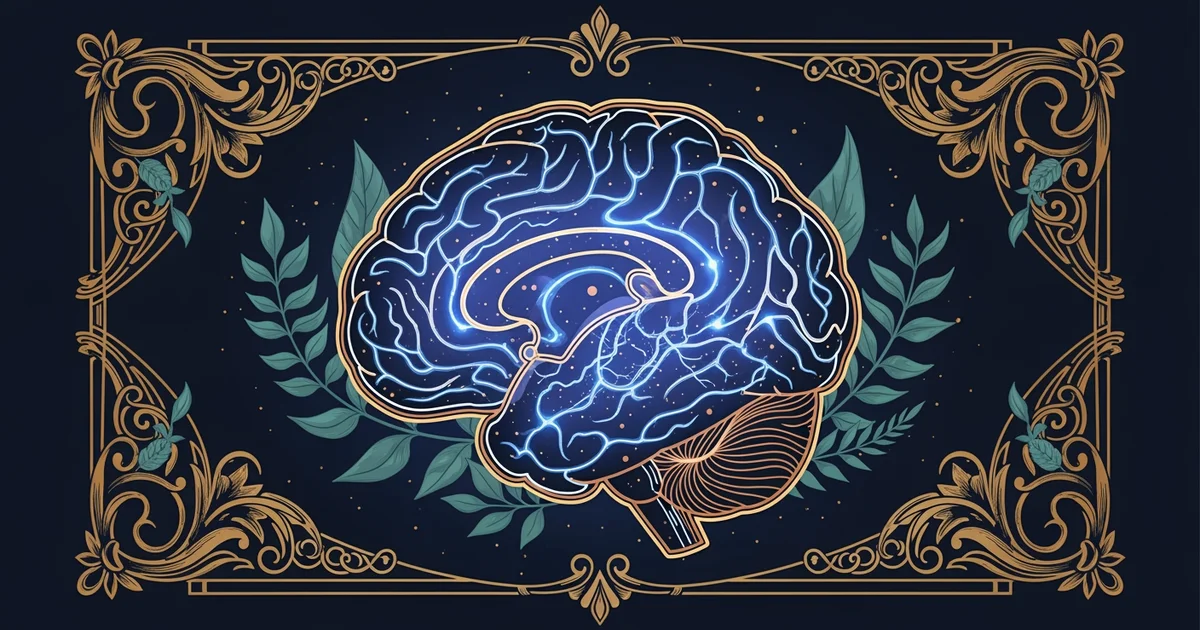
The Concept of Distributed Neural Processing
Because no single part of the brain operates in total isolation, the nervous system relies on distributed neural processing to handle complex tasks. Think of this like a large corporation where different departments must share data to finish a big project on time. If the marketing team ignores the sales team, the company fails to reach its goals. Similarly, your brain regions must synchronize their activity to turn raw sensory data into a coherent picture of the world around you. When you see a moving object, your visual cortex identifies the shape, while other areas calculate speed and distance simultaneously. This division of labor allows your brain to process huge amounts of information without getting overwhelmed by the sheer volume of incoming data.
Key term: Distributed neural processing — the method by which different brain regions coordinate activity simultaneously to manage complex cognitive tasks and physical movements.
When these regions communicate, they use electrical impulses that travel along intricate pathways known as neural networks. These networks are not static roads but dynamic systems that change their strength based on how often they are used. Just as a popular hiking trail becomes wider and easier to walk after many people use it, the pathways in your brain become more efficient with repeated activation. This efficiency is critical because it allows your brain to react to your environment with incredible speed. Without these established connections, you would have to relearn how to perform simple actions like walking or talking every single time you attempted them.
Coordination Across Functional Networks
To understand how these networks interact, we can look at the way different functional systems share information to produce a single behavior. The following table highlights three major networks that work together to manage your daily life:
| Network Name | Primary Function | Interaction Type |
|---|---|---|
| Sensory Network | Processing inputs | Data collection |
| Motor Network | Executing movement | Action output |
| Executive Network | Decision making | Goal management |
Each of these networks must exchange signals constantly to ensure that your actions match your current goals. For example, your executive network might decide that you are thirsty, which then triggers the motor network to initiate the movement of your arm. At the same time, the sensory network monitors the position of your hand to ensure you do not miss the glass. This constant feedback loop is why you can navigate a crowded room without bumping into people or objects. If one of these systems fails to transmit its data, the entire chain of events breaks down, leading to errors in coordination or judgment.
Because the brain is so interconnected, it must also manage its energy resources by prioritizing the most important signals at any given time. This process is similar to a power grid that shifts electricity to high-demand areas during a heatwave to prevent a total blackout. Your brain uses inhibitory signals to quiet down irrelevant activity, ensuring that the most vital information gets the most attention. This balancing act between excitation and inhibition is what allows you to focus on a difficult task while ignoring background noise. As you learn new skills, your neural networks refine these connections, making your brain more adept at handling complex demands with less effort over time.
Coordinated neural activity across multiple brain regions allows the physical structure of the brain to generate seamless and complex conscious behavior.
But what does it look like in practice when these networks physically change their shape to adapt to new learning?
Want this with sources you can check?
Premium Learning Paths for Biological Sciences are researched against open-access libraries — PubMed, arXiv, government databases, and more — with their distinctive claims cited to real sources and independently checked.
See what Premium includes