
Integrated Evolutionary Models
Imagine you are trying to assemble a massive puzzle without seeing the original box image. You have pieces from different corners of the table, and you must decide which ones fit together to form a clear picture of life. This is the exact challenge scientists face when they try to build a complete map of how all living species evolved over time. By looking at shared body parts, we can trace the hidden history of life on our planet with surprising accuracy.
Unifying Anatomical Evidence
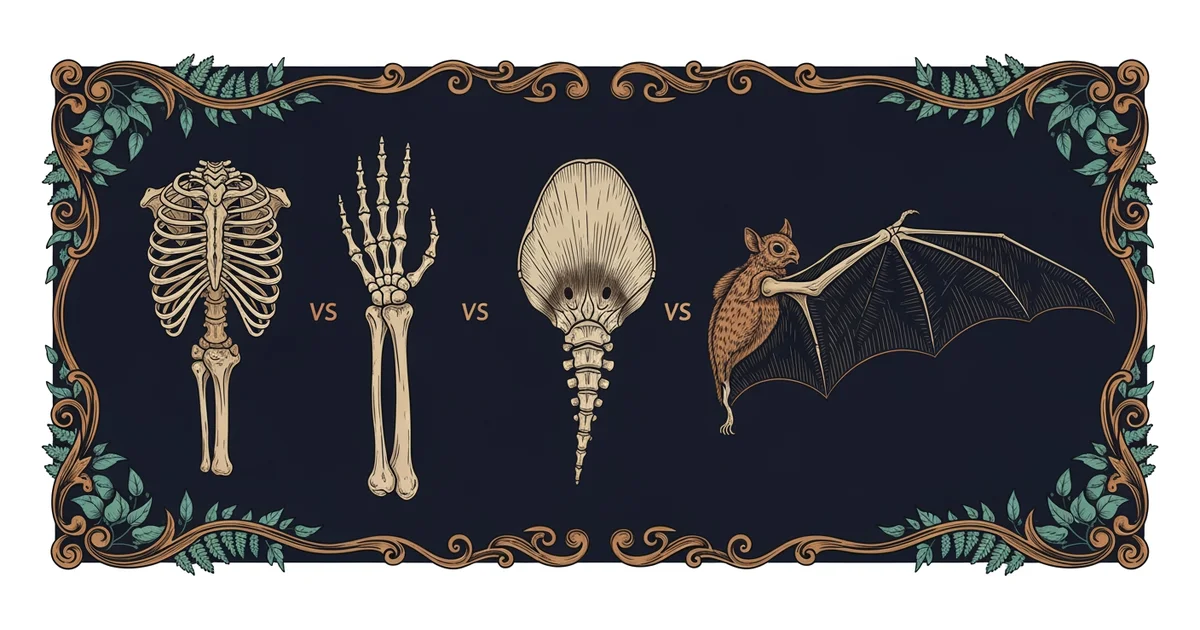
To build a reliable map of evolution, researchers must combine data from many different biological disciplines. We start by looking at homologous structures, which are body parts that share a similar layout because they come from a common ancestor. For example, the bones in a human arm, a bat wing, and a whale flipper all follow the same basic plan. Even though these limbs serve different purposes, their underlying shape reveals a shared history. When we compare these shapes across many species, we begin to see patterns that suggest a branching tree of life. This process is like comparing the architectural blueprints of various homes to see which ones were built by the same original construction company. Each small detail in the bone structure acts as a clue that links different species to a specific point in the past. By gathering enough of these clues, we can create a model that shows how one ancestor eventually split into many different forms.
Constructing the Tree of Life
Once we identify these structural links, we organize them into a phylogenetic tree, which is a visual diagram showing the evolutionary connections between different organisms. Creating this tree requires us to weigh physical evidence against other data points like genetic markers or fossil records. If two animals have very similar bone structures but very different genetic codes, we must decide which piece of evidence is more reliable for that specific branch. This creates a tension in our models that forces us to be more precise in our analysis. We often use a scoring system to determine the most likely path of evolution based on the total amount of shared traits. This ensures that our final model is not just a guess but a logical conclusion drawn from the physical evidence we have collected. The goal is to build a tree that reflects the most likely path of change over millions of years.
Key term: Phylogenetic tree — a branching diagram that represents the evolutionary relationships among various biological species based on shared characteristics.
To understand how different species relate, we can look at the following traits across three major groups:
- Mammals share a specific set of inner ear bones that distinguish them from ancient reptiles.
- Birds possess a lightweight skeletal structure that evolved from specific dinosaur ancestors over time.
- Fish utilize a gill arch system that serves as the foundation for jaws in many land animals.
These traits show that evolution often repurposes existing structures to solve new problems in different environments. By mapping these changes, we can see how complex systems emerge from simpler, older designs.
Integrating Diverse Data Sets
Building a robust model requires us to integrate these anatomical findings with the biomimetic designs we discussed previously. We must look at how an animal is built and how that design functions in its specific environment. When we combine the study of body parts with the study of how those parts function, we gain a deeper insight into survival. For instance, the way a bird wing is shaped tells us about its history, but the way it moves through the air tells us about its current success. This synthesis allows us to move beyond simple comparison and toward a functional understanding of evolutionary change. We are no longer just naming parts; we are explaining why those parts exist in their current form. This integrated approach is the key to solving the mystery of life’s progression on Earth. By connecting the physical shape to the biological function, we create a model that is both accurate and useful for predicting future changes in the natural world.
Comparing body parts allows us to synthesize diverse evidence into a single, logical map that reveals the ancestral connections of all living things.
Future research will now focus on how advanced computer modeling can refine these evolutionary trees by processing vast amounts of anatomical data more quickly.