
Soil Composition Basics
Imagine you are holding a handful of garden soil and wondering why some plants thrive while others wither away. This simple texture you feel between your fingers is actually a complex mix of minerals, organic matter, and living organisms. Understanding this foundation is essential for anyone who wants to grow healthy food in their own backyard. Without the right balance of these tiny particles, plants cannot access the water or nutrients they need to survive. The secret to a bountiful harvest begins deep beneath the surface where these elements interact every single day.
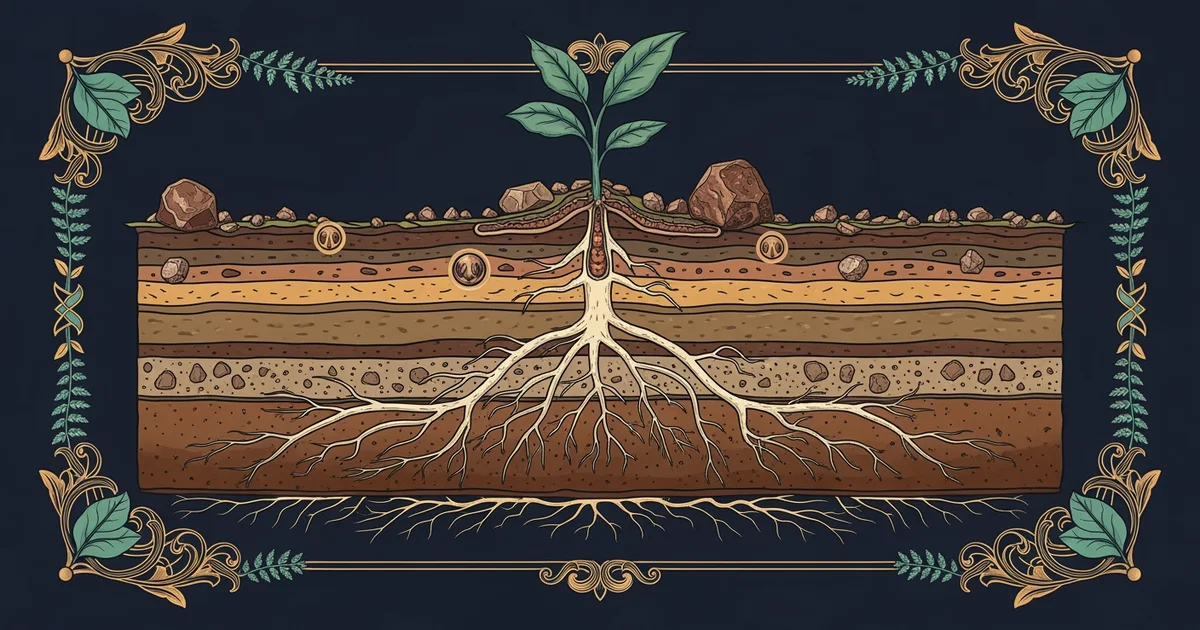
The Three Pillars of Soil Texture
Soil is primarily defined by the size of its particles, which act like a bank account for plant health. Just as you manage your money to ensure long-term stability, soil particles manage the resources available to roots. These three main particle types determine how well your garden holds onto water and air. Sand particles are the largest and feel gritty, while silt particles are medium-sized and feel smooth like flour. Finally, clay particles are the smallest and feel sticky when wet, creating a dense structure that holds moisture tightly.
Key term: Soil texture — the physical classification of soil based on the relative proportions of sand, silt, and clay particles.
Think of these particles like different sizes of storage containers in your kitchen. Sand is like a large bin that lets water drain away very quickly, which means nutrients might wash out too. Clay acts like a tiny, airtight jar that traps every drop of water but makes it hard for roots to push through. Silt is the perfect middle ground, acting like a standard pantry shelf that holds enough moisture without becoming too cramped or too loose. Most fertile garden soil is a balanced mixture called loam, which combines the best traits of all three types.
Balancing Nutrients and Aeration
Beyond the physical size of the particles, the way they fit together defines the health of the entire ecosystem. If particles pack too tightly, they leave no room for oxygen, which is vital for the roots to breathe. Plants need this air to convert energy, just as humans need oxygen to perform daily tasks. When you add organic matter like compost, you create spaces between the particles that allow air and water to move freely. This process ensures that the minerals are not just present but are actually available for the plant to absorb.
| Particle Type | Water Retention | Nutrient Holding | Drainage Speed |
|---|---|---|---|
| Sand | Very Low | Poor | Very Fast |
| Silt | Moderate | Moderate | Moderate |
| Clay | Very High | Excellent | Very Slow |
This table shows how each particle type influences the environment for your crops. Sand drains quickly but loses nutrients, while clay traps everything but limits movement. By mixing these components, you create a stable home for roots that balances these competing needs. Farmers often test their soil to see which particle dominates their land. If the soil is too sandy, they add organic material to help it hold water. If the soil is too heavy with clay, they add amendments to loosen the structure and improve drainage for the roots.
Understanding how these particles interact allows you to modify your garden to suit specific plant needs. Some plants prefer the quick drainage of sandy soil, while others thrive in the nutrient-rich environment of clay. By observing the soil texture, you gain the power to adjust your growing strategy for better results. This knowledge is the first step toward managing a sustainable food system that can feed a growing population. You are essentially acting as a manager for the tiny, hidden world that sustains all life on land.
Healthy soil relies on the perfect physical balance of sand, silt, and clay to store water and nutrients for plant growth.
Now that we understand the physical makeup of the ground, we can explore the fascinating life cycles of the plants that grow within it.