
Future Habitat Evolution
Imagine building a massive sandcastle on a beach that never stops changing its shape. You must design walls that resist the crashing waves while keeping the interior dry and safe for everyone inside. Space habitats require this same level of careful planning because the environment outside is hostile and constantly shifting. We must move beyond simple metal boxes to create living systems that grow and adapt like actual organisms.
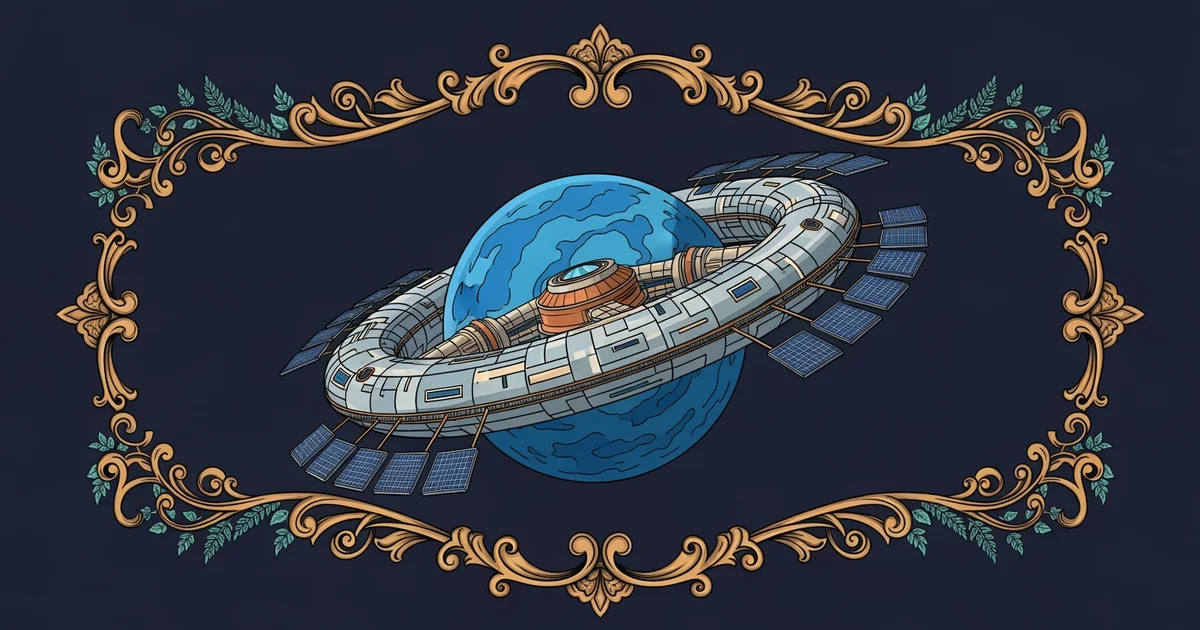
Advancing Structural Integrity
Future habitats will rely on biomimicry to solve complex engineering problems that static structures cannot handle alone. Engineers now look at how bones distribute weight or how spider silk maintains strength under extreme tension. By integrating these natural designs into space architecture, we can build larger structures with less raw material than traditional methods allow. This evolution is like upgrading from a rigid wooden hut to a flexible tent that bends during a storm instead of breaking. We must also consider how these materials hold up over decades of radiation exposure and thermal cycling in deep space. These habitats will function as living shields that protect human biology from the harsh realities of the vacuum.
Systems Integration and Sustainability
Building a permanent home involves more than just walls because humans need a complex cycle of air, water, and food. We previously explored integrated modeling to ensure these systems work together without failing during critical moments of operation. A true habitat acts like a closed loop where waste products become resources for the next cycle of production. If we fail to recycle oxygen or water effectively, the entire mission risks ending prematurely due to resource depletion. Think of this as managing a household budget where every single cent must be tracked and reinvested to keep the family running smoothly. Achieving this balance requires advanced sensors that monitor every cubic meter of the living space for potential leaks or chemical imbalances.
Key term: Closed-loop system — a self-sustaining environment that recycles all waste materials into usable resources to support life without external inputs.
We can compare the efficiency of different habitat designs by looking at their resource recovery rates during long missions:
| Habitat Type | Material Efficiency | Life Support Reliability | Primary Goal |
|---|---|---|---|
| Rigid Shell | High structural load | Moderate maintenance | Safety |
| Inflatable | Low weight volume | High energy cost | Portability |
| Modular | Flexible growth | Complex integration | Expansion |
Future Technological Hurdles
Predicting the next steps for space colonization requires us to address several major technological barriers that currently block our progress. We need to solve these problems before we can establish large-scale populations on distant moons or orbiting stations:
- Radiation shielding must improve because current metal hulls provide insufficient protection against high-energy cosmic rays that damage human DNA over long durations of time.
- Artificial gravity generation remains a challenge since long-term exposure to microgravity leads to muscle atrophy and bone density loss that compromises physical health for all crew members.
- Autonomous maintenance robots are necessary because human crews cannot repair every exterior component while managing the internal demands of a growing, complex habitat structure.
These hurdles represent the final frontier of our design process as we transition from exploration to permanent settlement. We must solve the tension between creating a lightweight structure that is easy to launch and a heavy, thick structure that keeps us safe. The goal is to build environments that sustain humanity by mimicking the resilience of life itself. We are moving toward a future where space is not just a place we visit but a place where we live and thrive permanently. Permanent space settlement is the logical conclusion of our desire to expand human influence into the solar system.