
Artificial Gravity Physics
Imagine you are spinning in a fast playground merry-go-round while holding onto the cold metal bars. You feel a heavy force pushing your body outward toward the edge of the spinning platform. This sensation of being pushed against the frame is exactly how engineers plan to simulate gravity for humans in deep space. By rotating a large habitat, we can create a reliable environment that mimics the familiar pull of Earth. This approach offers a way to keep our bodies healthy during long missions far from our home planet.
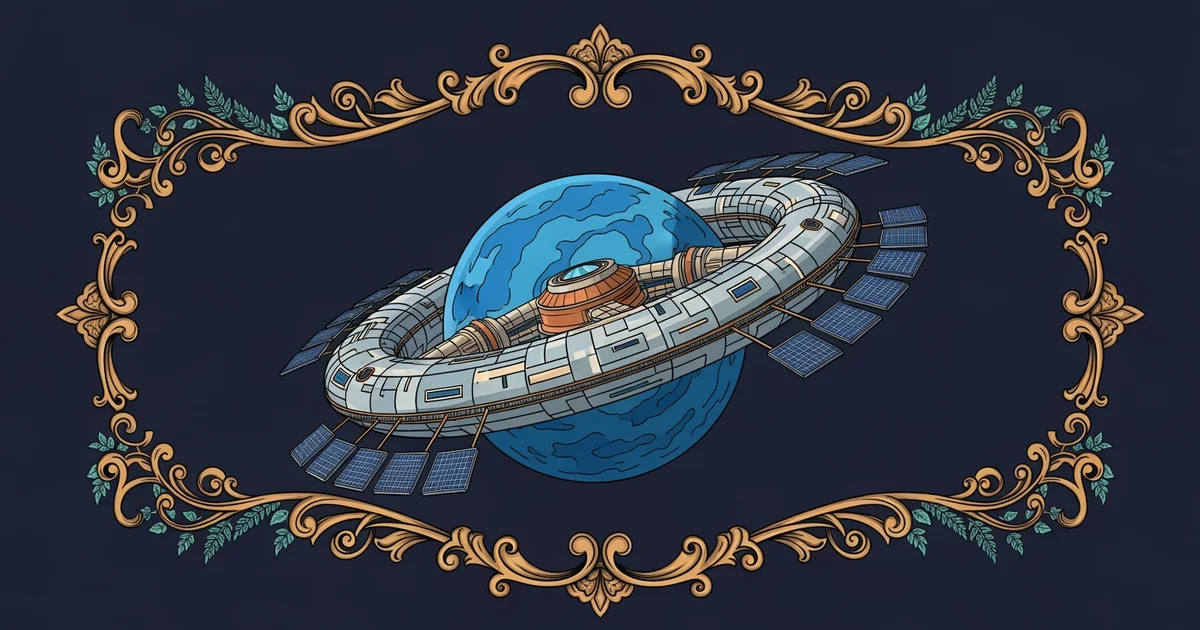
The Physics of Circular Motion
When a structure rotates, it creates a phenomenon known as centrifugal force which acts like a substitute for gravity. This force occurs because your body wants to travel in a straight line while the floor constantly curves beneath you. Think of this like driving a car quickly around a sharp corner while you slide toward the passenger door. The door acts as the floor of the habitat, pushing back against you to keep you moving in a circle. In space, this constant push against the hull provides the weight that our bones and muscles need to stay strong over time.
Key term: Centrifugal force — the outward force that appears to act on objects moving in a circular path when viewed from the frame of the rotating object.
To achieve a comfortable experience, the habitat must rotate at a speed that humans can tolerate without feeling dizzy. If the rotation is too fast, the difference in force between your head and your feet might cause severe motion sickness. We must balance the size of the station with the speed of its spin to ensure safety. Engineers often use the following variables to calculate the necessary rotation rate for a comfortable living environment:
- Radius represents the distance from the center of the station to the outer floor where crew members walk.
- Angular velocity measures how quickly the station completes a full rotation around its central axis over time.
- Centripetal acceleration determines the amount of force felt by the occupants based on the radius and speed of rotation.
Designing for Human Comfort
Creating a large enough radius is the most important factor for reducing the side effects of artificial gravity. If the radius is too small, the human inner ear detects the rotation, which leads to confusion and nausea. A larger habitat allows for a slower rotation speed while still producing the same amount of force as Earth. The relationship between these factors follows a precise mathematical model where acceleration is proportional to the square of the speed divided by the radius. We can summarize the design constraints for these rotating habitats in the table below.
| Design Feature | Impact on Gravity | Effect on Human Comfort |
|---|---|---|
| Small Radius | High spin required | Causes severe dizziness |
| Large Radius | Low spin required | Improves comfort levels |
| High Velocity | High force levels | Increases motion sickness |
By building larger structures, we move closer to a design that feels natural for daily life. A massive wheel or cylinder provides the stable floor that astronauts require to work effectively. We must also consider the structural materials needed to withstand the constant stress of this rotation. These materials must be strong enough to hold the habitat together while it spins at high speeds for many years. As we refine these designs, we ensure that the crew remains productive and physically fit throughout their long journey. Future missions depend on our ability to master these forces in a way that protects the human body from the harsh conditions of space.
Artificial gravity relies on the outward force generated by rotation to simulate the weight that our bodies need for long-term health.
The next Station introduces life support systems, which determine how air and water are recycled within these rotating habitats.