
Space Environment Hazards
Imagine you are standing on a beach when a sudden, invisible storm begins to pelt you with tiny, high-speed sand grains. This is exactly what happens to a spacecraft when it enters the harsh environment of deep space, where invisible threats constantly bombard the hull.
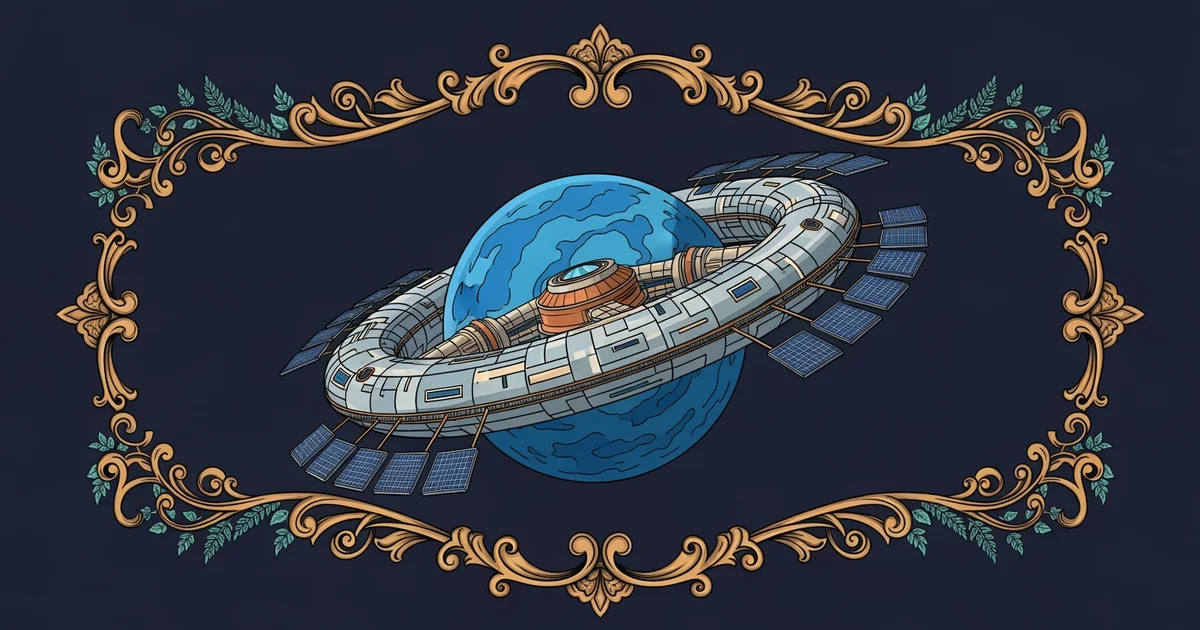
The Reality of Deep Space Hazards
Space is not a void, but a dynamic region filled with invisible dangers that can damage any habitat. The most persistent threat comes from micro-meteoroids, which are tiny bits of rock or metal traveling at incredible speeds. These particles behave like bullets, striking the outer layer of a station with enough kinetic energy to puncture metal shells. A habitat must use shielding to stop these impacts, much like a thick coat protects you from freezing wind during a winter storm. Without this protection, the structural integrity of the living space would fail within a short period. Engineers must account for these constant strikes when calculating the long-term safety of any orbital structure.
Key term: Micro-meteoroids — minuscule fragments of space debris that travel at extreme velocities and pose a constant threat to external station surfaces.
Beyond physical debris, the environment contains invisible energy that poses a severe risk to biological life. Ionizing radiation consists of high-energy particles that stream through the vacuum from distant stars and our own sun. These particles can strip electrons from atoms, which damages human DNA and weakens the structural materials of the habitat itself. Unlike the sandstorm analogy where you can see the debris, radiation is entirely invisible and penetrates deep into solid matter. Scientists design habitats with thick walls or water-filled barriers to absorb these particles before they reach the living quarters. Managing this invisible energy is perhaps the most difficult challenge for long-term space exploration.
Evaluating Environmental Risks
To build a safe home, designers must categorize the specific threats that exist outside the protective bubble of Earth. The following table highlights the primary hazards that engineers must address when constructing a permanent space habitat:
| Hazard Type | Source | Primary Impact | Mitigation Method |
|---|---|---|---|
| Physical Debris | Asteroids/Comets | Structural puncture | Multi-layer shielding |
| High Radiation | Solar/Cosmic rays | Biological damage | Thick shielding mass |
| Thermal Shifts | Sun/Shadow cycles | Material expansion | Reflective insulation |
Each of these hazards requires a different engineering approach to ensure the safety of the crew inside. Physical debris requires tough outer shells, while radiation needs dense material to block harmful waves. Thermal shifts, caused by moving between direct sunlight and deep shadow, require advanced insulation to keep the habitat at a stable temperature. If the temperature fluctuates too wildly, the metal walls could crack or warp over time.
Engineers must also consider the vacuum itself, which exerts immense pressure on the habitat from the inside. Because the interior is pressurized for human breathability, the structure is constantly pushing against the crushing force of the vacuum. This is like blowing up a balloon inside a heavy metal box; the balloon wants to expand while the box must hold it steady. If the seal fails, the air escapes, and the habitat becomes uninhabitable immediately. Scientists test every seal and joint to ensure that the interior pressure remains constant for years at a time. Designing for these hazards is not just about building a strong shell, but about creating a resilient system that can withstand constant, invisible pressure from all sides.
Permanent space habitats must actively shield humans from high-speed debris, invisible radiation, and extreme temperature shifts to maintain a safe living environment.
Next, we will examine how early space station designs attempted to overcome these environmental challenges.