
Structural Dynamics Convergence
Imagine you are spinning a heavy bucket of water in a wide circle above your head. The water stays inside the bucket because the outward force pushes it against the bottom surface constantly. Space habitats rely on this same physical principle to create artificial gravity for crews living far from Earth. When engineers design these massive structures, they must balance the internal air pressure against the mechanical stress caused by high-speed rotation. Achieving this balance is the primary challenge for building long-term homes in the harsh vacuum of space.
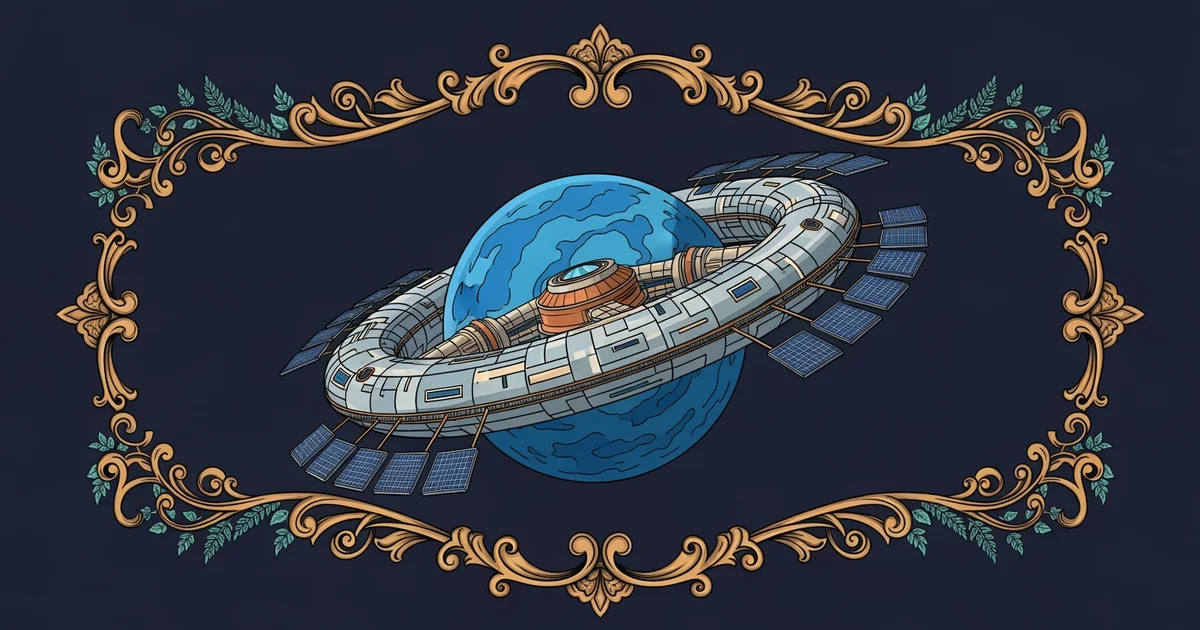
Balancing Forces in Rotating Habitats
Structural engineers must treat the habitat like a giant pressure vessel that is also spinning at high speeds. The internal atmosphere exerts a constant outward force on the hull walls, which tries to expand the structure. Simultaneously, the rotation required to simulate gravity adds a secondary stress load known as centripetal tension. If the rotation speed is too high, the hull might experience structural fatigue and eventually crack under the combined stress. Designers use specialized materials to ensure the hull can withstand these two forces without warping or failing over long periods.
Key term: Centripetal tension — the mechanical force exerted on the outer walls of a rotating habitat due to the circular motion required to simulate gravity.
Think of this balance like managing a household budget where you must pay for rent and food simultaneously. If you spend too much on rent, you will not have enough money left to buy groceries for the month. Similarly, if the hull material is too thick to handle the air pressure, the habitat becomes too heavy to rotate efficiently. Engineers must find the perfect middle ground where the structure remains light enough to spin but strong enough to keep the air inside.
Integrating Pressure and Velocity
When we look at the requirements for a stable habitat, we see that pressure and rotation are linked through complex math. The total stress on the hull is the sum of the hoop stress from internal gas pressure and the centrifugal stress from the rotation. To keep the structure safe, engineers calculate the maximum allowable stress using the formula
ho v^2. In this equation, represents the internal air pressure while accounts for the density and velocity of the rotating mass. By adjusting these variables, designers create a habitat that supports human life while maintaining structural integrity.
| Variable | Physical Meaning | Impact on Design |
|---|---|---|
| Internal Gas Pressure | Pushes outward on the hull walls | |
| Material Density | Determines the mass of the structure | |
| Rotational Velocity | Creates the artificial gravity effect |
Maintaining this balance requires precise control over the structural dynamics of the entire station. If the internal pressure drops, the rotation might need to increase to keep the hull stable. Conversely, if the station slows down, the pressure must be managed to prevent the hull from collapsing inward. This constant adjustment ensures that the environment remains safe for the crew despite the extreme conditions of outer space.
Designing these systems involves several critical steps to ensure long-term survival for the inhabitants:
- Stress distribution analysis allows engineers to identify the weakest points in the hull where cracks might start during rotation.
- Active pressure regulation systems monitor the atmosphere to ensure that the outward force remains within the design limits of the material.
- Dynamic balancing procedures ensure that the mass of the station is distributed evenly to prevent dangerous wobbling during high-speed operation.
By following these steps, engineers create a stable environment that mimics the familiar pull of Earth. This synthesis of pressure and rotation is the foundation of all future space habitat designs. Without this careful planning, humanity could never hope to thrive in the vacuum beyond our home planet.
Successful habitat design requires a precise synthesis of internal atmospheric pressure and rotational velocity to ensure long-term structural stability.
Now that we understand the structural forces involved, how can we select the best materials to handle these extreme demands?
Want this with sources you can check?
Premium Learning Paths for Astronomy & Space Exploration are researched against open-access libraries — PubMed, arXiv, government databases, and more — with their distinctive claims cited to real sources and independently checked.
See what Premium includes