
Historical Station Precedents
Imagine trying to build a house in the middle of a raging ocean storm. You must keep the water out while providing air and warmth for everyone inside. Space stations face similar challenges because they exist in a vacuum that constantly tries to destroy them. Engineers look at early designs to learn how we can survive in such harsh, empty places for years. By studying these first attempts, we can improve the safety of future homes among the stars.
Learning from Early Structural Designs
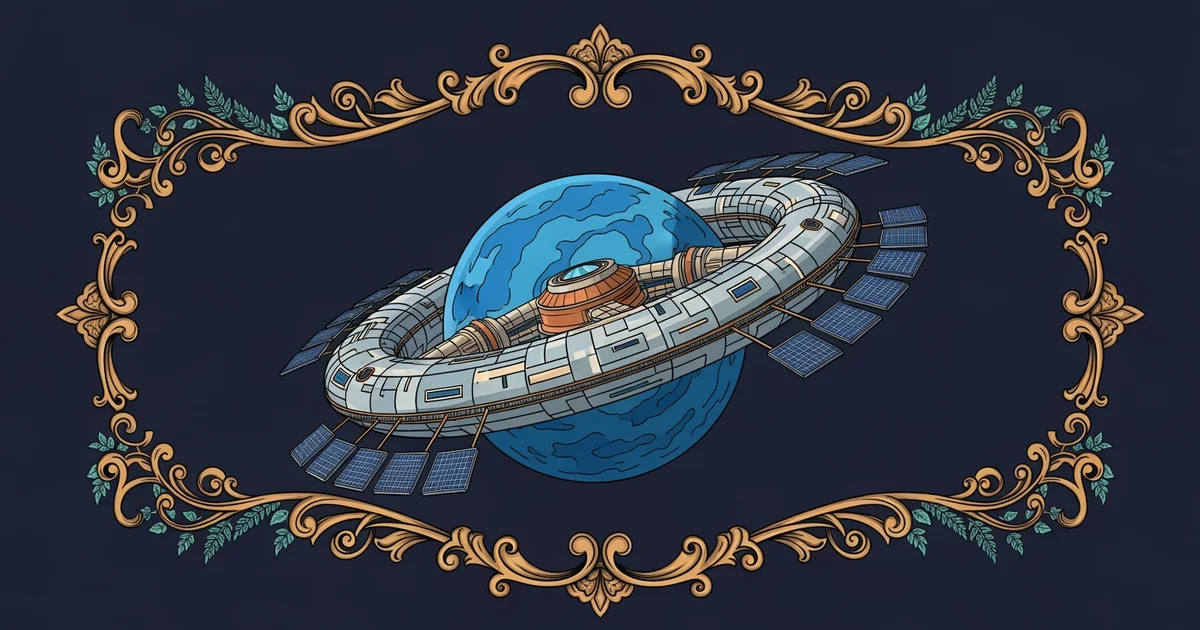
Early space stations functioned like test beds for human survival in extreme conditions. Designers had to figure out how to keep air pressure inside while keeping dangerous radiation outside. These initial models were often small, cramped, and relied on constant supply missions from the Earth. They acted like a camping tent placed in the middle of a desert, providing basic shelter but requiring constant upkeep. Engineers learned that modular parts were the only way to expand these living areas over time. This modular approach allows us to replace broken sections without needing to build an entirely new station from scratch.
Key term: Modular construction — a building method where independent, pre-made sections are joined together to form a complex, functional space.
Building these stations requires balancing weight, cost, and safety for the people living inside. If a station is too heavy, the cost to launch it into space becomes way too high. If it is too light, it might not protect the crew from tiny space debris hitting the hull. Designers currently use a balance of thick shielding and lightweight materials to manage these risks. This process is like building a custom house where every single brick must be light enough to carry. We must ensure every room stays pressurized so the crew can breathe safely during their long missions.
Comparing Station Evolution and Requirements
Modern space habitats must do more than just provide air and shelter for the crew. They need to recycle water, produce oxygen, and maintain a temperature that supports human life. Early stations lacked these complex systems, which meant they could only support crews for a few weeks. Today, our stations are designed to sustain life for years by turning waste products into useful resources. The following table shows how these design needs have changed as our goals for space exploration have grown.
| Feature | Early Station Design | Modern Habitat Requirement |
|---|---|---|
| Lifespan | Weeks to months | Many years of operation |
| Air Supply | Stored tanks only | Regenerative oxygen systems |
| Water | Carried from Earth | Closed-loop recycling systems |
| Power | Simple solar panels | Large-scale solar arrays |
These design shifts reflect our need for independence from constant supply chains back on Earth. Developing these systems ensures that future explorers can survive even if a delivery ship is delayed. We must view these early stations as the foundation for everything we build in the future. By analyzing what failed in the past, we create safer environments for the next generation of space travelers. Every bolt and seal on a station serves a purpose in keeping the vacuum of space at bay.
- Early designs focused on short-term survival using basic life support equipment and limited resources.
- Modular designs allowed for the gradual addition of new labs or sleeping quarters over many years.
- Modern systems prioritize closed-loop recycling to turn human waste into breathable air and clean water.
These three stages show how we moved from visiting space to actually living in it. We now understand that a station is a living machine that requires constant, careful maintenance to function. Every design choice made today affects the safety of the people living in orbit tomorrow. We continue to refine these habitats to make them feel more like a home than a machine.
Historical space station designs provide the essential blueprint for creating self-sustaining habitats that protect human life in the vacuum of space.
Understanding these structural precedents prepares us to analyze the complex systems required for maintaining pressurized vessel integrity.