
The Necessity of Orbital Living
Imagine trying to survive in a desert where you must carry every drop of water and every breath of air inside your own backpack. Space acts as that vast, unforgiving desert, yet humanity aims to build permanent homes within this harsh, airless void. We must move beyond short trips to create stable environments because our long-term survival depends on expanding our reach across the solar system. This necessity drives the development of technology that transforms empty space into a place where life can thrive.
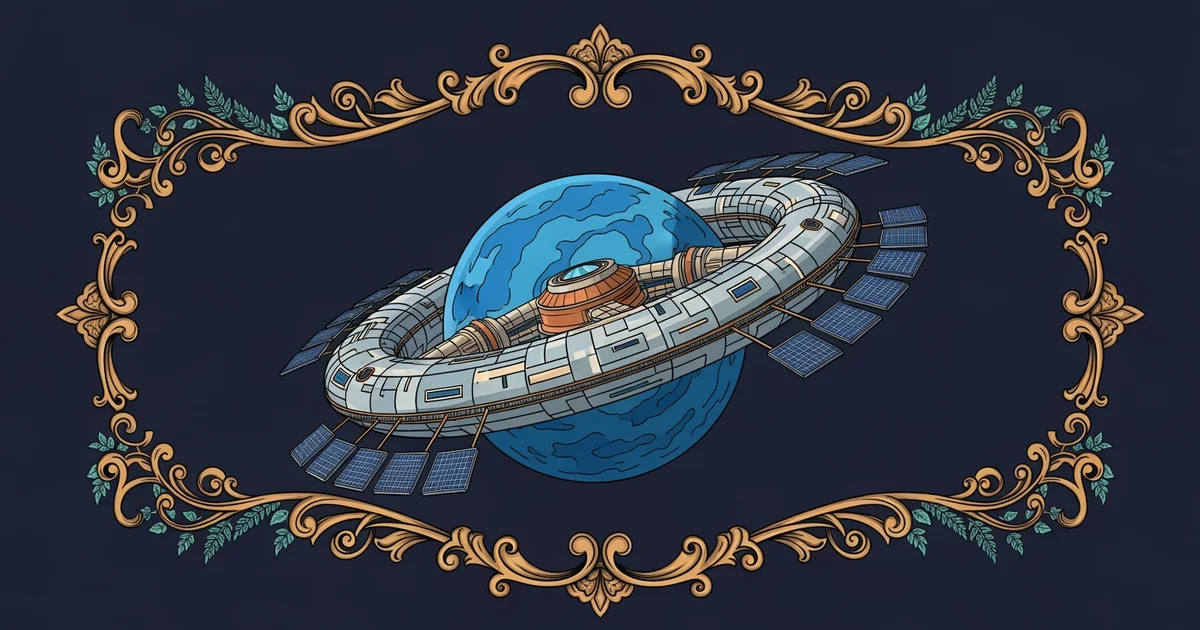
The Architecture of Survival in Orbit
Building a home in space requires us to rethink how we sustain life away from the abundant resources of Earth. On our planet, nature provides air, water, and protection from radiation without us needing to build complex machines for these tasks. In orbit, we must construct a closed-loop system that recycles every resource to ensure we never run out of vital supplies. Think of this like a small, self-contained household budget where every penny earned must cover every single expense for the entire year. If you spend your savings too quickly, you face immediate ruin, so efficiency becomes the most important rule for survival in these orbital structures.
Key term: Closed-loop system — a life support network that recycles waste products like water and carbon dioxide back into usable resources for the crew.
These habitats must also protect inhabitants from the extreme physical dangers found outside the thin walls of a spacecraft. Without the thick atmosphere of Earth to block harmful solar rays, orbital stations require heavy shielding to prevent radiation damage to human cells. We design these shells to act as a barrier between the fragile human body and the vacuum of space. Engineers prioritize structural integrity to ensure that even a tiny meteor strike cannot compromise the safety of the interior environment.
Sustaining Human Life Through Technology
Beyond basic protection, these habitats must replicate the comfortable conditions that our bodies need to function correctly over long durations. Our internal biological clocks rely on the cycle of light and dark, which does not exist in the same way while orbiting a planet. We must use artificial lighting to maintain a healthy rhythm for the crew, preventing the exhaustion that comes from constant darkness or unending light. This level of control allows us to study how humans adapt to living away from the gravity and cycles of our home world.
| System Requirement | Purpose | Implementation Method |
|---|---|---|
| Air Quality | Breathable gas | Chemical scrubbers |
| Water Supply | Hydration | Recycling moisture |
| Thermal Control | Stability | Radiator panels |
Maintaining these systems requires constant monitoring and maintenance, as there is no local hardware store to visit when a part fails. We rely on modular designs that allow astronauts to swap out broken components without needing to replace the entire habitat structure. This approach mirrors how a professional mechanic keeps a fleet of vehicles running for years by using standardized parts that fit multiple machines. By mastering these maintenance routines in orbit, we prove that we can sustain human life in even more remote locations like the surface of the Moon or Mars.
Permanent orbital habitats allow humanity to transcend the physical limitations of Earth by creating self-sustaining environments that recycle essential resources for long-term survival.
This path will provide you with a comprehensive understanding of the engineering, physical, and biological challenges required to build and maintain successful living spaces in the harsh environment of outer space.