
Safety and Regulatory Standards
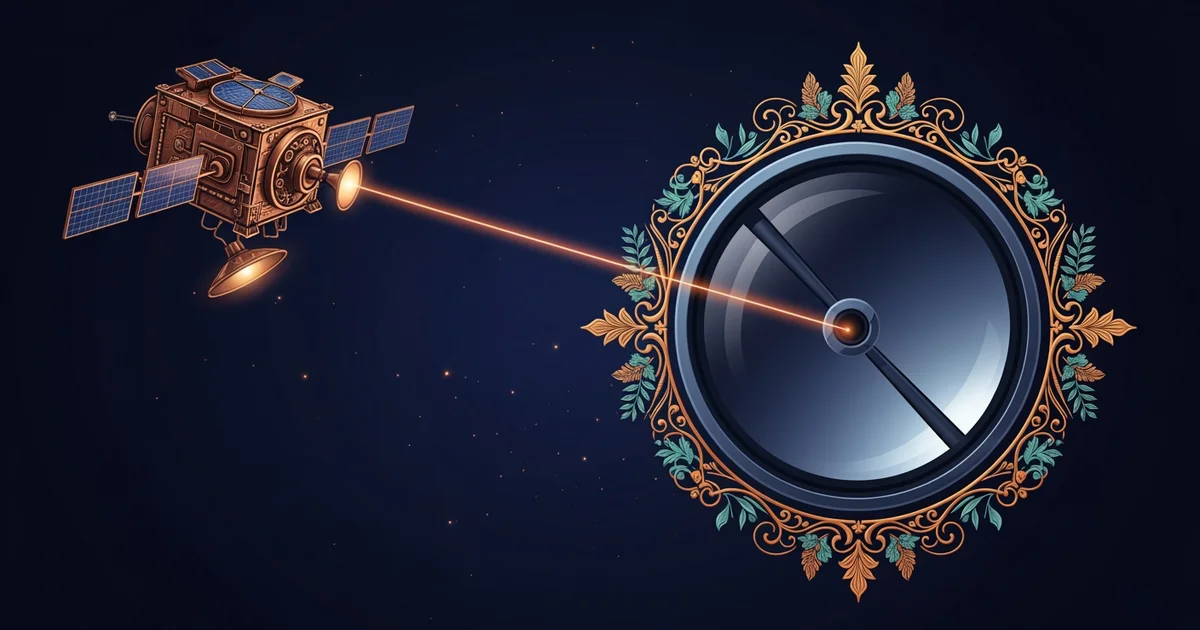
When a high-power laser beam strikes a satellite, the intense energy can blind sensitive sensors and destroy delicate internal hardware. This scenario mirrors the risks faced by airport ground crews when pilots encounter unauthorized laser pointers during landing sequences. Engineers must manage these intense beams carefully to ensure that space missions do not accidentally disable other valuable orbital assets. This safety requirement is the primary application of the Laser Safety Protocols established in Station 12 to maintain operational integrity in orbit.
Managing High Power Transmission Risks
Space agencies utilize strict guidelines to prevent accidental damage during deep space communication attempts. Operators must track every satellite in the transmission path to avoid hitting them with high-energy light. If a beam crosses a path occupied by a third-party craft, the signal intensity could overwhelm the receivers of that craft. This is like a driver shining high-beam headlights into the eyes of oncoming traffic on a dark country road. The blinding effect forces the other driver to lose focus and potentially drift off the road. Regulators require precise beam steering to ensure that energy stays focused only on the intended target.
Key term: Irradiance — the measure of power per unit area that a laser beam delivers to a specific target surface.
Managing energy levels remains a top priority for teams operating deep space laser arrays. Engineers use specialized software to calculate the exact irradiance at various distances from the source. They must ensure the intensity stays below the damage threshold of known hardware components. If the energy exceeds these safe limits, the system automatically shuts down to protect nearby satellites. This automated safety gate functions like a circuit breaker in a home that cuts power to prevent electrical fires. By maintaining these strict limits, agencies can share the orbital environment without causing catastrophic equipment failures for other missions.
Establishing International Regulatory Standards
International space law requires all nations to coordinate their high-power laser activities through global monitoring bodies. These groups track the beam paths and power levels to prevent interference with international scientific research satellites. Each mission must submit a detailed plan before they initiate any high-power transmission. This process ensures that every operator understands the potential risks and takes necessary precautions for their specific hardware. Standardized practices help reduce the chance of human error during complex deep space data transfers.
| Regulatory Measure | Purpose of the Rule | Impact on Mission Safety |
|---|---|---|
| Beam Divergence | Control spread of light | Protects unintended targets |
| Power Thresholds | Limit energy density | Prevents hardware burnout |
| Timing Windows | Schedule transmissions | Avoids satellite collisions |
The table above highlights the three main regulatory pillars for safe space laser operation. Each measure serves a distinct role in keeping the space environment secure for all users. By limiting beam divergence, operators keep the energy concentrated on the target rather than spilling into sensitive zones. Setting clear power thresholds prevents thermal damage to electronics that might drift near the beam path. Finally, timing windows ensure that transmissions only occur when the sky is clear of other valuable assets. These rules create a predictable and safe framework for future interplanetary communication networks.
Effective safety management requires constant vigilance and strict adherence to international protocols for all high-power light transmissions.
Safe laser communication requires precise beam control and strict adherence to international standards to protect orbital assets from accidental energy damage.
Future interplanetary networks will need more advanced autonomous safety systems to manage the growing number of laser links across the solar system.