
Radio Waves vs Laser Beams
Imagine trying to send a high-definition movie through a tiny drinking straw while your friend uses a massive fire hose to transfer a library of digital files. This difference in capacity defines the current struggle between traditional radio signals and modern light-based communication for deep space missions. While radio waves have served humanity well since the early days of space exploration, they are now becoming a bottleneck for our growing data needs. As we push further into the solar system, we must decide if old technology can keep pace with our hunger for high-resolution images and complex scientific data from distant worlds.
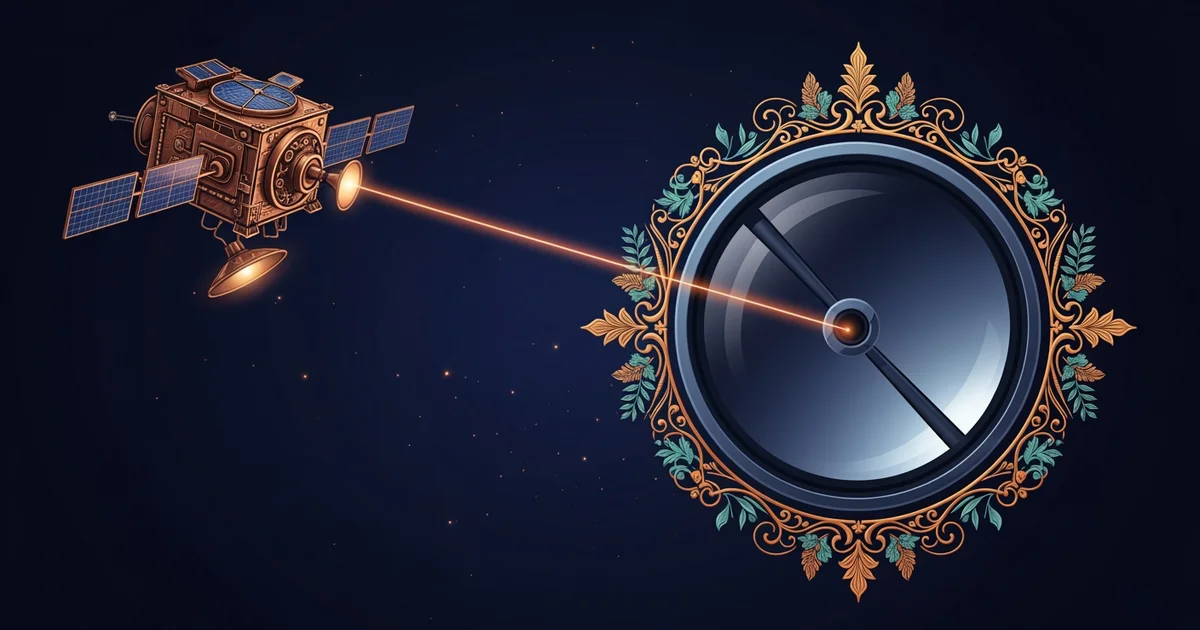
The Limitations of Radio Frequency
Radio waves are a type of electromagnetic radiation that travels at the speed of light, which makes them a reliable tool for long-distance signaling. Because radio waves have long wavelengths, they can pass through dust clouds and planetary atmospheres with very little interference or signal loss. This reliability has made them the workhorse of space communication for decades, allowing us to maintain contact with probes that are billions of miles away. However, the physical nature of these waves limits how much information they can carry in a single second.
Key term: Bandwidth — the total capacity of a communication channel to transmit information over a specific interval of time.
Think of the radio spectrum like a narrow highway that can only accommodate a few vehicles at once. Because the frequency of radio waves is relatively low, the amount of data that can be encoded onto these waves is strictly capped by physics. When we attempt to send high-resolution video from a distant probe, the data must be compressed heavily to fit through this narrow channel. This compression process often results in lower quality images and slower transmission times, which limits the scientific value of the data we receive back on Earth.
The Optical Advantage
Optical communication, which uses laser beams to transmit data, acts like a massive upgrade to our digital infrastructure in deep space. By using light waves that vibrate much faster than radio waves, we can pack significantly more information into every single pulse of light. This shift in technology allows us to transmit high-definition video and massive datasets at speeds that were previously impossible with older radio systems. The physics of light allows for much higher precision, which helps us focus our signal directly toward receiving stations on our home planet.
| Feature | Radio Frequency | Optical Laser |
|---|---|---|
| Wave Frequency | Low | Extremely High |
| Data Capacity | Limited | Very High |
| Signal Focus | Wide Beam | Narrow Beam |
| Interference | Low | High Sensitivity |
This table highlights the fundamental differences between these two methods of communication. Radio waves are easier to maintain because they spread out as they travel, making them easier for a receiver to catch. In contrast, laser beams are incredibly narrow and require extreme precision to hit a tiny target across millions of miles of empty space. This requirement for accuracy is the primary reason we still rely on radio waves as a backup for our most critical mission commands.
We must overcome significant engineering challenges to make optical systems the standard for all future missions. Because laser light is so tightly focused, even a tiny vibration on a spacecraft can cause the signal to miss its target entirely. Engineers are currently developing sophisticated tracking systems that can keep a laser pointed at a receiver while the spacecraft moves at high speeds. Once we perfect these pointing mechanisms, the ability to send massive amounts of data will transform our understanding of the universe. This evolution in technology is the key to unlocking the mysteries of the outer planets and beyond.
Optical communication offers a massive increase in data capacity compared to traditional radio signals, though it requires much greater precision for successful transmission.
The next step involves addressing the unique difficulties of maintaining these delicate light beams across the vast, empty vacuum of space.