
Mars Mission Applications
When the Curiosity rover landed on the Martian surface in 2012, it relied on traditional radio waves to send data back to Earth. This method is like sending a handwritten letter through the mail because it takes a long time and offers very limited space for information. As we plan for human missions to Mars, we need a faster way to share high-definition video and scientific data. Optical communication offers a solution by using light instead of radio waves to carry signals across the deep void of space.
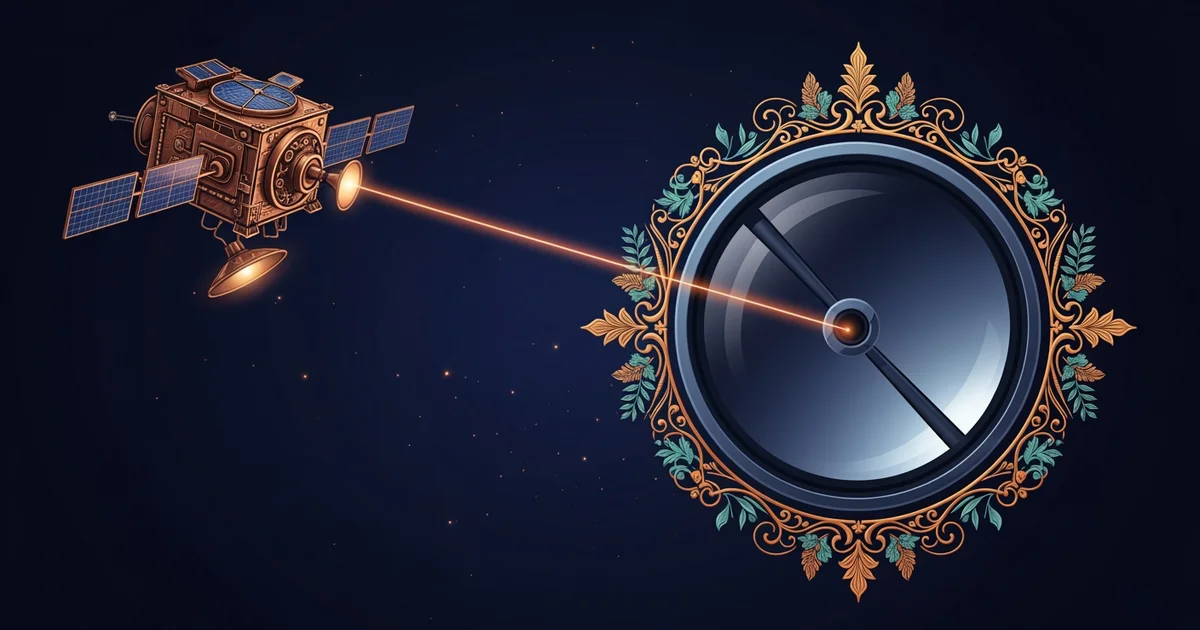
The Need for High-Speed Data Transmission
Modern space missions generate massive amounts of data that current radio systems struggle to handle efficiently. Radio waves have a long wavelength, which limits how much data they can carry at one time. If you try to send a high-resolution video file through a thin straw, the process becomes slow and prone to errors. By switching to laser-based systems, we can effectively widen that straw into a massive pipe. This allows scientists to receive complex data sets from Mars in near real-time. This shift represents a major upgrade in how we manage mission logistics compared to the radio systems discussed in Station 11.
Key term: Free-space optical communication — the transmission of data using light beams sent through open space without the need for physical cables or fiber optics.
Moving from radio to lasers is much like replacing a dial-up internet connection with high-speed fiber optics. While radio waves served us well during early exploration, they lack the bandwidth required for modern research needs. A laser system uses much shorter wavelengths, allowing it to pack significantly more information into every second of transmission. This increase in capacity is vital for missions where astronauts need to send large files back to Earth. Without this technology, the data backlog would grow until it overwhelmed our current network capabilities during peak mission hours.
Implementing Laser Links on Mars
Deploying these systems on Mars requires overcoming the unique challenges of the Martian atmosphere and distance. The distance between Earth and Mars changes constantly, ranging from about km to over km. A laser beam must be incredibly precise to hit a target across such a vast, moving gap in space. Engineers use specialized tracking systems to ensure the light stays focused on the receiver. The following table highlights why optical systems are superior for high-volume data needs during future planetary exploration missions.
| Feature | Radio Frequency Systems | Optical Laser Systems |
|---|---|---|
| Data Capacity | Low bandwidth limits | High bandwidth potential |
| Signal Focus | Broad beam spread | Tight, precise beam |
| Power Usage | High power required | Efficient power usage |
| Interference | Vulnerable to noise | Highly secure and stable |
These systems must also withstand the harsh conditions found on the surface of the red planet. Dust storms and atmospheric turbulence can distort light beams, which complicates the connection between the surface and orbiters. To maintain a constant link, engineers design robust systems that can adjust in real-time to atmospheric changes. This ensures that the data stream remains steady even when the weather on Mars becomes unpredictable. By using multiple ground stations, we can ensure that the signal always has a clear path through the atmosphere.
- Signal Generation: The rover creates a digital data stream that needs to be sent to Earth.
- Beam Modulation: A laser encodes this information into pulses of light that travel through the vacuum.
- Tracking and Pointing: Advanced sensors keep the laser aimed at the receiver on Earth or an orbiter.
- Data Reception: A telescope on Earth captures the light pulses and converts them back into digital files.
This process ensures that critical mission data arrives safely without losing any information during the long journey. As we prepare for human arrival, these systems will become the primary lifeline between the two planets. The ability to transmit high-definition video will change how we monitor human health and mission progress during long stays on the surface.
Optical communication provides the necessary bandwidth to support complex human missions by using focused laser light instead of traditional radio waves.
But this model breaks down when we consider how to maintain these connections during the strict safety and regulatory standards required for interplanetary travel.