
Future Navigation Challenges
Deep space missions face a massive hurdle because current timing methods rely on Earth-based signals that degrade over vast distances. Imagine trying to coordinate a meeting across different continents while your watch loses a few seconds every single hour. This is the reality for spacecraft traveling toward Mars or the outer planets where signals take minutes to arrive. As we push further into the solar system, we must move beyond relying on constant contact with ground stations to maintain our spatial awareness. We need a new way to keep time that functions independently of our home planet.
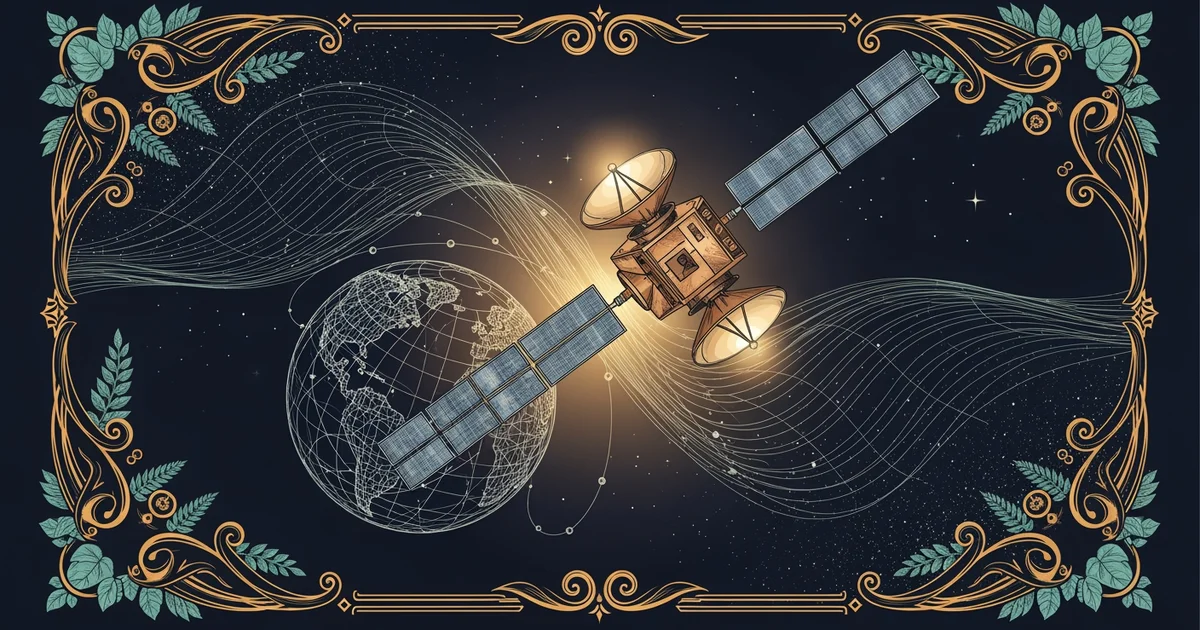
The Need for Autonomous Timing Systems
Spacecraft currently use Relativistic Time Dilation to adjust their internal clocks so they match the time recorded on Earth-based systems. This process ensures that the tiny differences caused by gravity and velocity do not ruin navigation data for global positioning. However, this method requires a constant two-way exchange of data between the satellite and the ground control team. If a probe travels to the edge of the solar system, the time delay makes this constant correction impossible for real-time navigation. Future explorers will require onboard systems that can calculate their own position without waiting for a signal from Earth.
Key term: Atomic Clock — a device that measures time by tracking the vibrations of atoms to provide extremely precise frequency standards for navigation.
To solve this, engineers are developing high-performance clocks that fit inside small satellites to provide local timing. These devices act like a lighthouse in the dark, allowing a ship to find its location by measuring the signals from multiple distant beacons. Because these clocks rely on stable physical properties rather than external signals, they remain accurate even when the spacecraft is millions of miles away from human help. This shift from dependent navigation to independent systems marks a major turning point in how we explore the stars.
Future Navigation Challenges and Solutions
Transitioning to these autonomous systems involves overcoming several technical hurdles that currently limit our reach into deep space. The following table highlights the differences between our current reliance on ground-based timing and the future of independent space-based navigation systems.
| Feature | Ground-Based Timing | Autonomous Space Timing |
|---|---|---|
| Signal Source | Earth control centers | Pulsars or onboard clocks |
| Delay Impact | High latency issues | Near zero latency impact |
| System Range | Limited to inner orbits | Deep space capability |
| Reliability | Dependent on link status | Works without active links |
By using these new methods, we can navigate the void with higher precision than ever before. We can also use natural sources like pulsars, which are rotating neutron stars that emit regular pulses of radiation. These stars act as cosmic clocks that provide a universal reference frame for any craft moving through the galaxy. By observing these pulses, a spacecraft can determine its position in three-dimensional space with incredible accuracy. This method is similar to a sailor using the stars to find their way across the ocean at night.
We must integrate these technologies to ensure that future missions remain on track while traveling through deep space. The foundation question of our journey asks why satellites need relativity to tell you where you are on Earth. We now know that relativity is not just a tool for Earth-based maps, but a fundamental requirement for any movement through the curvature of space and time. As we master the art of timekeeping, we unlock the ability to travel further than our ancestors ever dreamed possible. The path forward relies on our ability to bring the precision of Earth-based physics into the vast, silent reaches of the outer solar system.
Future deep space navigation requires switching from Earth-dependent signals to autonomous timing systems that use cosmic references to maintain spatial accuracy.
Mastering autonomous timekeeping allows humanity to navigate the vast distances of the solar system without relying on ground-based communication links.